[Q&A] Bank of Korea: "Growth Rate Will Depend on Whether Semiconductor Boom or Middle East Downside Pressure Prevails"
Press Briefing on Preliminary First Quarter GDP
Background of Outperforming Projections: "Semiconductors Fared Better Than Expected"
Middle East Impact Was Limited in Q1: "Downward Pressure on Growth Remains Clear"
"Semiconductor Export Boom Continues After the War, Future Outlook Uncertain"
The Bank of Korea assessed that uncertainty regarding South Korea's economic growth outlook has increased since the first quarter of this year. While the growth downside pressure has intensified due to the Middle East war, the unexpectedly robust semiconductor export performance has persisted even after the outbreak of the war, resulting in both positive and negative factors coexisting. The bank believes that the growth rate for the second quarter and the entire year could vary depending on which effect proves to be stronger.
Dongwon Lee, Director of Economic Statistics II Division at the Bank of Korea, stated during a press briefing on the "Preliminary GDP for the First Quarter" held on the 23rd, "From the perspective of our economy's key drivers, it is true that the negative impact from the Middle East war has grown." He added, "However, the favorable trend in semiconductor exports continues, and the effects of government policies are expected to appear starting from the second quarter."
He explained that the sharp rebound in the first quarter's growth rate to 1.7% was driven by private consumption serving as a pillar, strong export performance centered on semiconductors, and investments aimed at expanding semiconductor production capacity. He further noted, "The positive shift in construction investment was also attributable to increased semiconductor plant expansion and a rise in new housing starts." Regarding the fact that the figure significantly exceeded the Bank of Korea's initial forecast of 0.9%, he remarked, "Even as of February, we expected a bullish semiconductor market, but it was difficult to foresee such a substantial improvement."

The following is a Q&A session with Director Lee.
- Please provide the first quarter growth rate to the second decimal place.
▲It is 1.69%.
- There was a considerable gap between the Bank of Korea's February projection and the actual result.
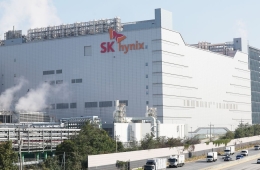
▲Everyone anticipated a favorable semiconductor industry, but considering the performance of the two leading semiconductor companies, their results in the first quarter of this year surpassed or nearly matched their total results for last year. Although we expected a strong semiconductor market, it was difficult to foresee such a dramatic improvement at the start of the year.
▲Another factor is construction investment. Construction investment performed better than initially feared. Although the growth rate of private consumption was not high, private consumption accounts for 50% of our economy. Had private consumption deteriorated as it did in the first quarter of last year, it would have been difficult to sustain the growth rate. Private consumption provided the basic foundation.
- What is the estimated percentage of the growth downside factor due to the Middle East crisis?
▲I can say that the impact of the Middle East war on the first quarter was not significant. The war broke out on February 28, but until late March, domestic vessels continued to pass through the Strait of Hormuz. Simply put, out of the 90 days in the first quarter, the influence from the Middle East amounted to about ten days. I believe the full impact will become evident in April.
- Please provide your outlook for the second quarter.
▲Due to the Middle East war, upward pressure on prices has increased and downward pressure on growth has emerged. However, there is great interest in how the impact of the Middle East war will unfold, but in reality, no one can know for sure. Even the forecasts of the Organisation for Economic Co-operation and Development (OECD) and the International Monetary Fund (IMF) point in different directions.
▲Additionally, exports centered on semiconductors have remained strong even after the outbreak of the Middle East war. While consumer sentiment weakened in April, credit card monitoring data up until last week showed no impact. Therefore, if we focus on the core factors of our economy, it is true that the negative effects from the Middle East war have grown, but on the other hand, the continued strength in semiconductor exports and the policy effects expected from the second quarter will have a positive impact. Ultimately, whether the negative or positive effects prevail will determine second-quarter and annual growth outcomes.
- There are concerns about a significant contraction in domestic demand going forward. Is there a possibility that the outlook for the second quarter or the full year will be revised upward due to the first quarter's impact?
▲If oil prices rise, this could have a negative impact on domestic prices, which may affect domestic demand. However, real Gross Domestic Income (GDI) increased sharply, mainly due to a significant rise in export prices. In practical terms, this means corporate operating profits are likely to increase, which could in turn drive up facility investment. If corporate performance improves, there is also a possibility that wages will rise significantly. If business results improve substantially, corporate tax revenue could also increase significantly this year and next year. In the end, the outcome will depend on whether the negative impact from rising oil prices or the positive impact from improved corporate results is stronger.
- What would the growth rate be without the contribution from semiconductors?
▲The manufacturing sector, including semiconductors, accounts for about 55%. The exact figure for growth contribution excluding semiconductors will be available in the provisional data to be released in June.
- Taiwan is forecasting growth of more than 7.3% year-over-year, buoyed by the semiconductor boom cycle. Although South Korea's first-quarter growth rate is considered high, there is still a significant gap. Why is that?
▲The proportion of IT exports in Taiwan is three times higher than in Korea. On a year-over-year basis, Korea also recorded 3.6% growth. From that standpoint, if you simply compare 7.3% and 3.6%, Korea's first-quarter performance was not bad.
- Real GDI increased significantly. Can this be interpreted as an improvement in the terms of trade?
▲The fact that real GDI outpaced GDP is largely due to the rise in export prices, mainly semiconductor prices, which led to improved terms of trade.
Hot Picks Today
 Chilling Timing "Did They Know Again?"... $640 ...
- Trump: "Iran in a Crazy Situation... Orders to Fire on Mine-Laying Vessels in th...
- "I Spent Money in a Truly Meaningful Way"... How an SK hynix Employee Donated 10...
- "If You Have This at Home, Remove It Immediately"... 'This Item' Is as Harmful a...
- Foreign Vessels Once Swept Up the Seas Every Season... Now Face Fines of Up to 1...
- Please explain why both facility and construction investment increased.
▲Investment in facilities was led primarily by machinery for semiconductor manufacturing. In addition, investment in machinery for display manufacturing was also strong, and corporate purchases of electric vehicles contributed to the positive shift in facility investment. For construction investment, since September last year, the government has implemented a policy to expand public housing supply, which has resulted in an increase in construction starts. Progress on redevelopment projects had been delayed due to construction cost issues, but in some areas, these issues were resolved, which also had an impact. However, construction investment has not yet reached the level seen in the first quarter of last year, and if raw material prices surge, construction cost issues could resurface. It is still too early to be complacent.
© The Asia Business Daily(www.asiae.co.kr). All rights reserved.