Koo Yuncheol: "Q1 GDP Up 1.7%, Highest in 5.5 Years... All-Out Response to Prices and Oil"
7th Meeting of the Special Task Force for Managing Livelihood Prices
Deputy Prime Minister and Minister of Economy and Finance Koo Yun-cheol stated on the 23rd, "Gross Domestic Product (GDP) grew by 1.7% in the first quarter compared to the previous quarter, marking the highest growth rate in five and a half years since the third quarter of 2020."
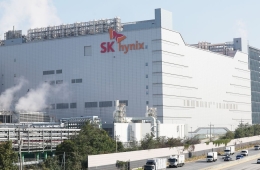
At the 7th meeting of the "Special Management Task Force on Living Cost Inflation" held on the same day, Deputy Prime Minister Koo evaluated the recent economic trend, saying, "Export growth driven by the semiconductor boom, the revitalization of the capital market, and policy effects such as consumption support measures all contributed to this growth."

Deputy Prime Minister and Minister of Strategy and Finance Koo Yun-cheol is delivering opening remarks while presiding over the "Special Management Task Force on Living Cost Inflation" held at the Government Complex Seoul in Jongno-gu, Seoul on April 23. Ministry of Economy and Finance
View original imageHe added, "Swift responses to the Middle East war also had a positive impact, and the oil price cap measures helped lower consumer prices by up to 0.8 percentage points. As a result, there are assessments that consumption has not been dampened."
During the meeting, the government designated the "Fourth Oil Price Cap Proposal" as the main agenda item. Deputy Prime Minister Koo said, "We are making every effort to stabilize supply by securing 118 million barrels of alternative crude oil between April and May and ensuring smooth supply of 32 million barrels of inventory swap crude oil from refiners."
He continued, "We will determine the price cap after comprehensively considering international oil price trends, oil consumption, and the fiscal and cost-of-living burdens," adding, "The designated price will be applied starting at midnight on the 24th following inter-agency consultations, and will be announced at 7 p.m. on the 23rd."
Regarding response measures on living costs, the government will strengthen policies focusing on the burden felt by the public. Deputy Prime Minister Koo said, "Through the public suggestion channel jointly operated with the Korea Consumer Organization Council, a total of 117 suggestions have been received, with demands concentrated on easing burdens related to food, energy, housing, and communication costs. Accordingly, we are moving forward with improvements to the non-apartment management fee system and restructuring of mobile phone plans."
Deputy Prime Minister Koo also announced, "We will invest 32 billion won from April to June to provide up to 50% discounts on major agricultural, livestock, and marine products, and expand the reduction of the fuel tax on liquefied petroleum gas (LPG) butane—a key fuel for low-income households—from the current 10% to 25%, extending this measure through the end of June."
Response measures to address the instability in the supply of construction materials will also be implemented in parallel. Deputy Prime Minister Koo explained, "We will strengthen monitoring of supply conditions through special on-site inspections and push for simplified import procedures and diversification of supply chains." He added, "For items that require price adjustments, we will promptly reflect changes in public construction contract prices. Financial support, such as supplying new funds to the construction sector and offering discounts on guarantee fees, will also continue."
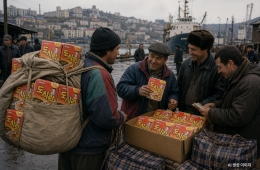
Meanwhile, the government has detected price-fixing in the printing paper market and decided to impose a total fine of 338.3 billion won. In addition to filing a criminal complaint with prosecutors, an independent order for price re-determination will also be issued.
Hot Picks Today
 KOSPI Hits All-Time High, but "Why Is My Accoun...
- If It Were Like Nvidia... The Question Raised by SK Hynix's 1.2 Billion Won Per ...
- "If You Have This at Home, Remove It Immediately"... 'This Item' Is as Harmful a...
- "If You Visit the National Museum, You Must Try This": The Most Popular Coffee M...
- "I Spent Money in a Truly Meaningful Way"... How an SK hynix Employee Donated 10...
Deputy Prime Minister Koo stated, "We will strengthen sanctions so that businesses that undermine market trust through repeated collusion can be swiftly removed from the market." He continued, "For repeated collusion, fines will be increased by 100%, and, if necessary, we will improve the system so that business registrations and licenses can be canceled." He further emphasized, "We will expand sanctions not only to bid rigging but also to other forms of price collusion, and extend the period of bidding restrictions for both ringleaders and participants in collusion in order to prevent such practices altogether."
© The Asia Business Daily(www.asiae.co.kr). All rights reserved.