"Why Are the Same Shares Priced Differently?" Will SK hynix Also See a 'U.S. Listing Premium'? [SK hynix ADR Column ①]
Yao-Tung Chen, Professor at Ming Chuan University, Shares Insights in Written Interview
TSMC ADR: Persistent Premiums Under Study
"The U.S. Offers Abundant Liquidity, Investor Base, and Information Accessibility"

"Given SK hynix's significance in memory and artificial intelligence (AI)-related technologies, it could also receive a similar (U.S. listing) premium benefit as TSMC," he said.
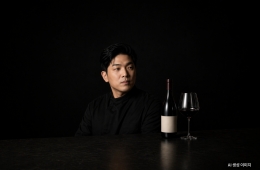
Yao-Tung Chen, Professor at Ming Chuan University in Taiwan (pictured), recently shared this view in a written interview with The Asia Business Daily. He was responding to the question of whether SK hynix could enjoy a stock price premium if it were listed on the U.S. stock market, similar to TSMC. However, he added a caveat: "The size and persistence of the premium will depend on investor perceptions, the liquidity environment, and the degree of segmentation between the Korean and U.S. markets."

Yao-Tung Chen, Professor at Ming Chuan University, Taiwan. Author of the paper "An Empirical Analysis of the Persistent Premium of TSMC American Depositary Receipts (ADR) Compared to Common Stocks Listed on the Taiwan Stock Exchange."
View original imageProfessor Chen is the lead author of the paper titled "An Empirical Analysis of the Persistent Premium of TSMC American Depositary Receipts (ADR) Compared to Common Stocks Listed on the Taiwan Stock Exchange." As indicated by the title, TSMC's ADR has maintained a premium of around 2% over its Taiwan-listed common shares. Over the past 24 years (from 2000 to 2023), TSMC's ADR listing premium has averaged about 1.8% to 3.3%. In the most recent three years (2020 to 2023), the average was 2.58%. This paper was published in October of last year in Applied Economics Letters.
ADR Premium Maintained Over Domestic Shares
Typically, in arbitrage markets, the prices of dual-listed stocks should be equal. An arbitrage market is one where the same asset is traded simultaneously, and investment opportunities arise from price differences. Therefore, if a price gap emerges between the U.S. and Taiwan, investors engage in switching their holdings between the two markets. Expensive shares experience more selling pressure and become cheaper, while cheaper shares see increased buying and rise in price, eventually aligning the stock prices in both countries.
However, TSMC's shares have traded at higher prices in the U.S. than in Taiwan. This phenomenon, which Professor Chen—himself a "Taiwanese retail investor"—found both persistent and difficult to explain, motivated his research. He recalled, "There was the investor's perspective, but what really drove my research was observing a phenomenon that was both persistent and somewhat difficult to explain: TSMC's ADR consistently traded at a premium over its domestic shares, even after accounting for exchange rates."
"The U.S. Plays a Major Role in Price Discovery"
The reasons ADRs trade at higher prices than their domestic counterparts are complex. The paper points to abundant liquidity, investor composition, and information accessibility as background factors. It particularly highlights the possibility that the U.S. market plays a greater role in price discovery.
Professor Chen stated, "The fact that ADRs have a greater impact on price discovery than domestic shares is a general trend observed in global financial markets," adding, "The U.S. market's high liquidity and the participation of institutional investors play crucial roles in price discovery." In other words, the U.S. market, with its larger capital flows, is more likely to see active trading.

He further explained, "In TSMC's case, both markets influence each other, but especially during periods of heightened global information flow or uncertainty, the impact of the ADR tends to be greater."
Addressing concerns raised by some that the U.S. market premium could affect the domestic share price, he noted, "In an ideal, frictionless environment, arbitrage would eliminate price differences between markets, but in reality, trading costs, capital constraints, and regulatory frictions exist, preventing perfect arbitrage."
SK hynix Could Also See an ADR Premium
Applying this to SK hynix, it suggests that an ADR premium could be sustained, meaning the value of its Korea-listed shares would likely be maintained at a certain level. This runs counter to concerns that the release of SK hynix ADRs would dilute the price of its Korean shares. He pointed out, "It is more appropriate to interpret the ADR premium not as a 'loss' for the domestic market, but as a reflection of differences in investor base and market environment."
Regarding the impact of geopolitical risks—inescapable for Asian companies like TSMC—on ADRs, he described them as "still an important factor." He said, "While markets may sometimes appear to respond insensitively, geopolitical risks have the characteristic of prompting rapid asset price adjustments when events occur. This is especially true for companies like TSMC, which play a strategically important role in the global supply chain."
However, Professor Chen emphasized that while the ADR listing acted as a "catalyst" for TSMC's growth, it was not the only factor behind its success. For example, TSMC's dominant position in advanced semiconductor manufacturing, strong interest from global investors, and its critical role in the AI and high-performance computing supply chain have all created sustained demand in the U.S. market.
He stated, "ADR listing played an important facilitating role but was not the sole reason for success. It contributed to improving international capital access, expanding the investor base, and enhancing corporate visibility. While these factors supported growth, TSMC's long-term success ultimately rested on its technological capabilities and operational excellence."
Hot Picks Today
 The Quoted 800,000 Won, the Bill Was 5 Million....
- Tragedy in Luxury Apartment: Woman in Her 20s Found Dead, Suspect Identified
- "You Can Only Have This in Korea": Which National Museum Cafe Menu Is Captivatin...
- Ministry of Justice Wins Against Descendants of Pro-Japanese Collaborator Im Seo...
- "Never Hike Alone as a Woman" "Even Two Are at Risk"... Growing Fear of Crime on...
In the case of Korean listed companies, a negative premium (reverse premium) has often occurred. For example, as of the close on the 8th (local time), KB Financial Group ADRs were priced at $106.97, up 24.1% from the beginning of the year (January 2). In the same period, the domestic shares rose 26.5% as of the 8th, meaning the U.S. ADRs underperformed the Korean shares in terms of returns.
© The Asia Business Daily(www.asiae.co.kr). All rights reserved.