"Pentagon Says Mine Removal in Strait of Hormuz Could Take Over Six Months"
"Mine removal can only begin after the war"
Concerns over delayed normalization of oil supply after the end of hostilities

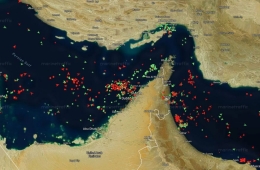
The U.S. Department of Defense has stated that it could take up to six months to completely remove the naval mines laid in the Strait of Hormuz. The department also explained that mine removal would only be possible after the Iran war has ended. Even after the end of the war, it is expected that a significant amount of time will be needed before crude oil transportation through the Strait of Hormuz is fully normalized.
The Washington Post (WP) reported on April 22 (local time), citing U.S. officials, that "a senior Pentagon official stated during a closed-door briefing to the House Armed Services Committee that Iran may have laid more than 20 mines in the Strait of Hormuz and its surrounding areas. Some of these mines were deployed remotely using GPS technology, making detection difficult for U.S. forces." The official estimated that it would take over six months to remove the mines and clarified that mine clearance operations could only begin after the end of the war.
The U.S. Central Command previously announced on April 11, when a two-week ceasefire with Iran was declared, that it would commence mine removal operations in the Strait of Hormuz. At the time, U.S. President Donald Trump also shared the news via his social media platform, Truth Social, but it appears that the actual mine removal operation has not yet begun.
It is believed that Iran started laying mines in the strait in early March, immediately after the U.S. airstrikes. Since then, ship passage has become difficult, and Iran has taken this as an opportunity to blockade the Strait of Hormuz, coercing vessels to transit only through waterways controlled by Iranian forces.

President Trump has repeatedly claimed in response to media reports about the mine issue that "all mines have been removed or are being removed." However, major foreign media outlets, including The New York Times (NYT), have reported that even within Iran, officials are uncertain about the exact locations of the mines they deployed.
Hot Picks Today
 Chilling Timing "Did They Know Again?"... $640 ...
- Trump: "Iran in a Crazy Situation... Orders to Fire on Mine-Laying Vessels in th...
- "I Spent Money in a Truly Meaningful Way"... How an SK hynix Employee Donated 10...
- "If You Have This at Home, Remove It Immediately"... 'This Item' Is as Harmful a...
- Foreign Vessels Once Swept Up the Seas Every Season... Now Face Fines of Up to 1...
Meanwhile, after receiving a report on the mine removal operation from the Department of Defense, both Republican and Democratic lawmakers in the United States expressed dissatisfaction, according to WP. WP pointed out, "If international oil prices do not stabilize even after the end of the war, it will be a major blow to the Republican Party ahead of the November midterm elections." WP also noted, "Midterm elections are typically unfavorable for incumbent presidents, and the current rise in oil prices due to the Iran war poses a significant challenge for Republicans."
© The Asia Business Daily(www.asiae.co.kr). All rights reserved.