KB: War-Induced Growth Slowdown...Supplementary Budget to Offset, 2.1% Growth Maintained
Growth Rate Expected to Fall by Up to 0.3 Percentage Points
Most of the Decline Likely to Be Offset by Fiscal Injection
According to analysis from the securities industry, the impact of a war between the United States and Iran on South Korea's economic growth rate is estimated to be about 0.2 to 0.3 percentage points. However, it is expected that most of this decline will be offset by the so-called "wartime supplementary budget" totaling 26.2 trillion won.
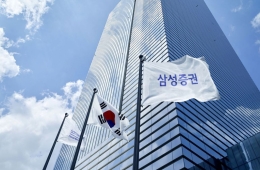
On April 9, Jinlee Ryu, a researcher at KB Securities, stated in the report titled "South Korea: Growth Rate Check After the Iran Crisis (feat. Supplementary Budget)" that "about a month has passed since the Iran war began, and global economic growth forecasts are being revised downward one after another," but added, "South Korea's growth forecast for this year remains at 2.1%."
First, Ryu cited a previous analysis by the National Assembly Budget Office (NABO), which examined the impact of the war on South Korea's growth rate depending on the trend of international oil prices: if the average price rises to $75 per barrel, it would result in a -0.2 percentage point change, and in the case of $100 per barrel, a 0.4 to 0.5 percentage point change. However, for South Korea, ▲refineries are expected to be able to operate at full capacity during April and May, and ▲the decrease in petrochemical production, which has been concentrated in Asia, is also expected to be managed relatively well through domestic naphtha procurement.
He emphasized, "Therefore, South Korea should be able to maintain a relatively high manufacturing operating rate," and added, "Although war-related uncertainties remain, there is no need to reflect the worst-case scenario at this point." He continued, "The Business Survey Index (BSI) released in March also remains more robust than expected," and assessed, "The recent Iran situation is a factor that will lower this year's growth rate by about 0.2 to 0.3 percentage points."
In addition, the wartime supplementary budget formulated in response to the crisis is considered a key factor in offsetting a significant portion of the decline in the growth rate. The wartime supplementary budget is largely composed of ▲alleviating the burden of high oil prices ▲stabilizing people's livelihoods, and ▲minimizing industrial damage and stabilizing supply chains.
Hot Picks Today
!["Stock Set to Double: This Company Smiles Every Time a Data Center Is Built [Click e-Stock]"](https://cwcontent.asiae.co.kr/asiaresize/93/2026050416112750184_1777878687.jpg) "Stock Set to Double: This Company Smiles Every...
"Stock Set to Double: This Company Smiles Every...
- "Is Yours Just Gathering Dust at Home? Millennials & Gen Z Rediscover Digicams O...
- International Oil Prices Plunge Over 7% on Hopes for US-Iran Deal...Largest Drop...
- "Continuous Groundwater Pumping Causes Mexico City to Sink 24cm Annually... 'Gia...
- “She Shouted, ‘The Rope Isn’t Tied!’... Chinese Woman Falls from 168m Cliff ...
Ryu explained, "Given that most of the spending is transfer payments with a relatively low fiscal multiplier, the estimated impact on the growth rate is an increase of about 0.19 to 0.22 percentage points." He also noted that the Organisation for Economic Co-operation and Development (OECD) lowered its forecast for South Korea's growth rate at the end of last month from 2.1% to 1.7%, but added, "There is a high possibility that this will be revised upward again in the future, reflecting the possibility of a ceasefire and the government's fiscal policy."
© The Asia Business Daily(www.asiae.co.kr). All rights reserved.