Lee: "Concerns Over Prosecution Reform Are Unfounded... Changing Prosecutor General's Title and Reappointing Prosecutors Are Not Essential"
"Unwavering Commitment to Separating Investigation and Indictment"
"Should Not Provide Grounds for Pushback Through Debates Unrelated to the Essence of Reform"
"Must Not Miss Critical Reform Opportunities Due to Overreach"
"Party-Gove
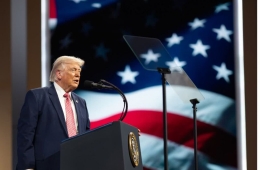
On March 16, President Lee Jaemyung addressed concerns over prosecution reform, stating that "some of the worries about prosecution reform are groundless," and reaffirmed his unwavering commitment to the fundamental principle of separating investigation and indictment, as well as excluding the prosecution from investigative authority. He made it clear that amid ongoing debates within the ruling party over the renaming of the head of the Public Prosecution Office and the issue of dismissing all prosecutors followed by selective reappointment, the focus must not be diverted to symbolic disputes unrelated to the essence of reform, thereby providing justification for a counterattack.

In a post on X (formerly Twitter) that day, President Lee stated, "The core of prosecution reform is to separate investigation and indictment, thereby excluding prosecutors from investigative powers." He added, "The people’s government has a clear policy to ensure that through prosecution reform, prosecutors will neither conduct direct investigations nor intervene in investigations by investigative agencies, except for the powers stipulated by the Constitution such as requesting warrants." He further emphasized, "The separation of investigation and indictment, and the exclusion of the prosecution from investigations, have already been confirmed as state policy tasks and are irreversible."
President Lee specifically drew a line, stating that whether to retain the constitutional title of 'Prosecutor General' for the head of the Public Prosecution Office or to change it to 'Chief Prosecutor,' as well as whether to selectively reappoint prosecutors after dismissing all of them, are not directly related to the essence of separating investigation and indictment.
He said, "What matters in reform is substantive achievement. There is no need to give vested interests, which must be dismantled, a justification for a counteroffensive or a chance to regroup due to excessive competition for ideological clarity or unnecessary measures that are unrelated to the essence." He continued, "We must recall our historical experience, where we lost crucial opportunities for reform and ultimately allowed the return of vested interests because of excess." This can be interpreted as a message that, while maintaining the direction of prosecution reform, a sophisticated design is needed to avoid weakening reform momentum through unconstitutional controversies or excessive measures.
Regarding the issue of changing the title of Prosecutor General, there has been debate in legal circles over potential constitutional concerns. The government's drafted Public Prosecution Office Act reportedly stipulates that 'the head of the Public Prosecution Office shall be the Prosecutor General.' Given that Article 89 of the Constitution specifies the title Prosecutor General, many believe caution is needed before making any changes through subordinate laws.
Accordingly, President Lee also stated, "It is hard to understand why we should insist on changing the title of Prosecutor General to Chief Prosecutor in the Public Prosecution Office, to the extent that it leaves room for constitutional controversy and provides justification for a counterattack." He added, "With the reappointment standards still unclear, there is also no clear reason to take on the burden of dismissing all prosecutors and selectively reappointing them, especially if that creates grounds for claims of organizational privatization and pushback." This suggests that stability and sustainability in institutional design should take precedence over symbolic name changes or personnel purges.

President Lee also stated that the agreement prepared by the party and government could be further revised through subsequent discussions if necessary. He said, "Although the government proposal has been officially announced, the party and government have already created a revised bill through party-government consultations, and this revised bill was adopted as the ruling party's official position. Therefore, it is not the government bill but the party-government agreement," adding, "If necessary, it can be further discussed and revised during the legislative process." However, he emphasized, "Any such revision must help uphold the fundamental principles of separating investigation and indictment, as well as the exclusion of the prosecution from investigative authority."
He also stressed that the discussion on prosecution reform should not be limited to controlling the abuse of investigative powers. President Lee said, "It has been said, 'They profit by covering up, and succeed by fabricating.' Just as fabricated cases by political prosecutors are a problem, so too is the cover-up of cases by corrupt prosecutors." He continued, "While it is important to restrict the investigative powers of prosecutors who abuse them, it is equally important to protect crime victims and regulate corrupt criminals in cases covered up by other investigative agencies such as the police." He added that the issue of supplementary investigations for cases transferred after investigative closure will be discussed in depth during future amendments to the Criminal Procedure Act.
President Lee further refuted reports that he had asked ruling party lawmakers to pass the government proposal. He said, "The so-called government proposal is actually the party-government revised bill, and a bill can always be amended during deliberation as opinions are gathered," directly denying the related coverage. He also argued that reports suggesting he said, "Not all prosecutors are bad," had distorted his remarks, stating that there is no need to insult even those prosecutors who faithfully fulfill their duties by subjecting them to the logic of collective dismissal and reappointment.
Hot Picks Today
!["Stock Set to Double: This Company Smiles Every Time a Data Center Is Built [Click e-Stock]"](https://cwcontent.asiae.co.kr/asiaresize/93/2026050416112750184_1777878687.jpg) "Stock Set to Double: This Company Smiles Every...
"Stock Set to Double: This Company Smiles Every...
- "Is Yours Just Gathering Dust at Home? Millennials & Gen Z Rediscover Digicams O...
- "I Take Full Responsibility"... Seongjae Ahn Issues Direct Apology for 'Wine Swi...
- "Continuous Groundwater Pumping Causes Mexico City to Sink 24cm Annually... 'Gia...
- “She Shouted, ‘The Rope Isn’t Tied!’... Chinese Woman Falls from 168m Cliff ...
President Lee concluded, "Prosecution reform, a clear state task of this government to separate investigation and indictment and to exclude the prosecution from investigations, will be pursued with unwavering determination." He added, "We must create a system that is rational, efficient, and difficult to abuse, which will always be applicable regardless of how times and power dynamics change."
© The Asia Business Daily(www.asiae.co.kr). All rights reserved.