KIET: "10% Oil Price Increase Raises Manufacturing Production Costs by 0.71%"...Petrochemical Industry Hit Hard
Supply Chain Instability Worsens Amid Middle East Risks
Cost Pressure Mounts on Energy-Dependent Industries

An analysis has found that if the rise in international oil prices continues for an extended period, the cost burden of production across the domestic manufacturing sector could increase significantly. In particular, industries with high energy dependence, such as petroleum products and chemicals, are expected to face substantial upward pressure on costs.
According to the report "Spreading Risks of the United States-Iran War and Its Impact on Korea," released by the Korea Institute for Industrial Economics and Trade (KIET) on March 16, a 10% increase in international oil prices leads to an average increase of approximately 0.71% in domestic manufacturing production costs.
By industry, the production cost increase rate was highest for the petroleum products sector at 6.30%, followed by chemical products (1.59%) and rubber and plastic products (0.46%), all of which are industries with a high proportion of energy input. In contrast, steel (0.08%), semiconductors (0.05%), and automobiles (0.14%) were found to be relatively less affected.
This is due to the high proportion of energy input, such as crude oil and petrochemical feedstock, in domestic manufacturing. An increase in international oil prices leads to higher prices for refined and petrochemical products, which then spreads to increased production costs in various industries such as plastics, chemical materials, and transportation equipment. In particular, the petroleum products and chemical industries are considered the most sensitive to oil price hikes, as fluctuations in crude oil prices are directly reflected in raw material costs.
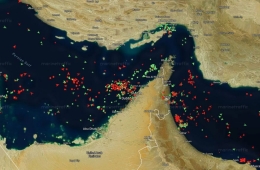
Recently, with geopolitical tensions in the Middle East intensifying, uncertainty in the international energy supply chain has been growing. Risks surrounding the Strait of Hormuz, a key route for transporting crude oil and natural gas, have expanded, raising the possibility of simultaneous increases in international oil prices and maritime logistics costs.
In particular, Korea may be vulnerable to such shocks due to its high dependence on imports of Middle Eastern crude oil. The report points out that over 70% of Korea’s crude oil imports come from the Middle East, with most of this oil transported by sea via the Strait of Hormuz. As a result, if conflict escalates, Korea could face supply disruptions, increased shipping costs, and mounting cost pressures all at once.
The impact of rising oil prices is not limited to increased manufacturing production costs. The rise in energy prices pushes up the overall cost structure across industries, which could translate into upward pressure on consumer prices. At the same time, there is concern that it could dampen corporate investment and lead to an economic slowdown. The report notes that if the increase in international oil prices is prolonged, the simultaneous rise in production costs and consumer prices could result in "stagflation," where global inflation and economic slowdown occur together.
The report especially emphasized the need for industry-specific tailored responses, given the energy-dependent industrial structure. For oil-based material industries such as petrochemicals, refining, and plastics, it is necessary to strengthen price pass-through capabilities and inventory management strategies to cope with surges in raw material prices. Across the broader manufacturing sector—including steel, machinery, and automobiles—enhancing production efficiency and improving processes to respond to energy cost fluctuations are also required.
The need for policy responses at the government level was also raised. The report recommended that, in preparation for rising Middle East risks, policies to stabilize the energy supply chain should be reinforced, and that supply stabilization measures such as diversifying crude oil import sources and utilizing strategic oil reserves should be actively employed. At the same time, it emphasized that risk management strategies for the supply chain—such as securing alternative transportation routes and strengthening logistics response systems—should be implemented in parallel to prepare for possible maritime logistics disruptions, including a potential blockade of the Strait of Hormuz.
Furthermore, as the impact of prolonged oil price increases may differ across industries, there is a need to establish tailored support systems that consider the circumstances of each sector and each company. The report stated that continuous monitoring of the energy supply and demand situation in response to changes in the Middle East, as well as checking for damages and difficulties faced by export companies and preparing necessary support measures, will be required.
Meanwhile, the Korea Institute for Industrial Economics and Trade assessed that such increases in energy prices and the spread of geopolitical risks could also become a burden on domestic economic growth. While the institute previously projected South Korea’s economic growth rate for this year at 1.9%, it analyzed that, given the recent surge in international oil prices and increasing supply chain uncertainties due to worsening Middle East conditions, a downward revision of the growth outlook cannot be ruled out.
Hot Picks Today
 Chilling Timing "Did They Know Again?"... $640 ...
- Trump: "Iran in a Crazy Situation... Orders to Fire on Mine-Laying Vessels in th...
- "I Spent Money in a Truly Meaningful Way"... How an SK hynix Employee Donated 10...
- "If You Have This at Home, Remove It Immediately"... 'This Item' Is as Harmful a...
- Foreign Vessels Once Swept Up the Seas Every Season... Now Face Fines of Up to 1...
Hong Sungwook, Head of the Industrial Economic Data Analysis Department at the Korea Institute for Industrial Economics and Trade, hinted at a revision to the growth forecast, saying, "If rising energy prices lead to increased manufacturing production costs and upward pressure on prices, both corporate investment and consumer sentiment could weaken simultaneously, so we see trends in the Middle East situation and international oil prices as key variables for this year’s growth trajectory."
© The Asia Business Daily(www.asiae.co.kr). All rights reserved.