At President Lee's Directive, "Cherry Blossom Supplementary Budget" Accelerates from Today: "Work Through Weekends to Identify Projects"
Speeding Up Supplementary Budget Planning
Government Races to Finalize Relief Measures for the Middle East Crisis
Direct Support and Local Currency Vouchers Under Review for Targeted Groups
The government has officially begun working on the supplementary budget to minimize the economic impact of the Middle East crisis. This rapid push follows President Lee Jaemyung's directive to "complete the supplementary budget within a month." The goal is to submit the government’s proposal to the National Assembly no later than next month, so that actual budget execution can be carried out within the first half of the year. As direct support for targeted groups is being considered, measures mentioned by the President, such as local currency vouchers, a freeze on public utility rates, and fuel tax reductions, are expected to be included in the supplementary budget plan.
According to relevant government ministries on the 13th, the Office for Planning and Budget will launch an investigation into projects requiring additional fiscal input from each central ministry within the next few days, in order to determine the precise scale of the supplementary budget. While the guidelines for formulating the supplementary budget have not yet been finalized, the main priorities are reducing the burden of logistics and fuel costs in response to high oil prices, stabilizing the livelihoods of ordinary citizens, small business owners, and farmers and fishers, as well as supporting export companies affected by the crisis.

Im Gi-geun, Acting Vice Minister and Deputy Minister of Planning and Budget, is speaking at the "Middle East Situation Review Vice Ministers Meeting" held at the Government Seoul Office in Jongno-gu, Seoul, on the morning of the 13th. Planning and Budget Office.
View original imageAt the "Middle East Situation Review Vice Ministers Meeting" chaired on the morning of this day, Deputy Minister Im Kigeun of the Office for Planning and Budget urged, "The Office and all ministries should give up weekends and holidays to swiftly prepare the supplementary budget proposal." Im emphasized, "Each ministry should thoroughly review the impact of the Middle East situation and high oil prices on livelihoods, the economy, and industry, and, based on this, promptly identify supplementary budget projects that can alleviate difficulties on the ground."
If Park Honggeun, the nominee for Minister of Planning and Budget, passes the confirmation hearing scheduled for the 23rd, he will immediately take charge of the supplementary budget formulation and its passage through the National Assembly. It has been reported that, in a meeting with the confirmation hearing support team consisting of senior officials from the Office for Planning and Budget the previous day, Park discussed practical matters regarding the supplementary budget process. Park, who served as the Democratic Party’s secretary and chair of the National Assembly Special Committee on Budget and Accounts in 2020–2021, played a role in ensuring the swift passage of supplementary budgets to address the COVID-19 pandemic.
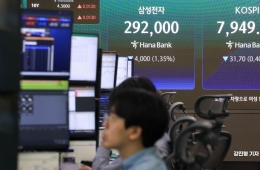
The supplementary budget is expected to be around 20 trillion won. Given the unpredictable situation in the Middle East and the simultaneous surges in oil prices and exchange rates accelerating this year’s economic downturn, there is an outlook that the supplementary budget will exceed the initially anticipated 10 trillion won to achieve timely effects. On the 10th, Deputy Prime Minister Koo stated at a cabinet meeting that excess tax revenues are expected from corporate taxes due to the semiconductor boom and from securities transaction taxes due to the active stock market, adding, "We should be able to formulate the supplementary budget without issuing government bonds."

The exact size of the supplementary budget depends on the excess tax revenue estimate, which will be calculated at the end of this month based on corporate tax filings by companies. The government expects tax revenues, especially from corporate taxes, to surpass the projections made when this year’s budget was formulated. Increases in corporate tax prepayments and performance bonuses due to strong corporate earnings during last year’s semiconductor boom are expected to drive up both corporate and income tax revenues. The government also forecasts a rise in securities transaction tax revenue thanks to last year’s buoyant stock market. The specific figure for excess tax revenue will be revealed at the end of this month when the Ministry of Economy and Finance releases its corporate tax revenue estimates.
The supplementary budget plan will focus on direct and differentiated support for vulnerable groups. In a senior secretariat meeting at the Blue House the previous day, President Lee emphasized "direct support through local currency rather than cash" and instructed to "generate a dual effect by converting it into sales for small businesses and local markets." He also ordered a freeze on public utility rates such as electricity and gas for the first half of the year, expansion of discounts on agricultural and marine products, and provision of fuel subsidies to freight trucks, public transportation, and farmers and fishers.
Hot Picks Today
 Cerebras Soars 70% on IPO Debut: Is Nvidia's Reign Ending as a New AI Semiconductor Power Emerges?
- [Breaking] Trump: "Achieved a Fantastic Trade Deal with China"
- Flight Cancellations End With "We Refunded You"... Consumers Left to Bear Hotel and Rental Car Losses
- "Mom, Isn't It Comfortable Living With Me?"... 'Unexpected Result' Shows Increased Drinking Out of Frustration
- "After Vowing to Become No. 1 Globally, Sudden Policy Brake Puts Companies’ Massive Investments at Risk"
Formulating the supplementary budget using excess tax revenues without issuing deficit government bonds also means the plan will be less susceptible to opposition from the National Assembly, which is controlled by opposition parties. However, with local elections approaching, the scope of this supplementary budget may extend beyond addressing the Middle East crisis. Earlier, in January, President Lee cited the need for a supplementary budget by mentioning support for cultural and artistic professionals, operation of local government delinquency management teams, and entrepreneurship audition projects.
© The Asia Business Daily(www.asiae.co.kr). All rights reserved.