"Lowering Generic Drug Prices Urgent for Health Insurance Fiscal Soundness"
Drug Expenditures Account for 20.5% of Healthcare Spending, Exceeding OECD Average
Reforms Needed, Including Prescriptions by Active Ingredient and Promotion of Substitution Dispensing
There have been calls to improve the generic (copy drug)-centered pharmaceutical pricing structure in order to ensure the sustainability of health insurance finances. Despite the high proportion of generic drug use in Korea, the current system delivers only limited cost savings, prompting arguments for institutional reforms such as expanding ingredient-based prescriptions and activating substitution dispensing.
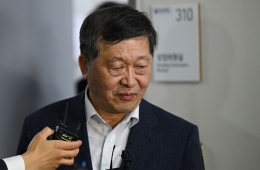
Na Younggyun, Professor of Health and Medical Welfare at Paichai University, stated at the forum on "Ensuring the Sustainability of Health Insurance Finances Through Pharmaceutical Pricing System Reform" held at the National Assembly in Yeouido, Seoul on March 11, "In Korea, drug costs account for 20.5% of total national healthcare expenditures, which is significantly higher than the OECD average of 14.4%, as well as major countries such as the UK (11.8%) and France (13.1%). Excessive spending on pharmaceuticals is putting pressure on the health insurance finances," he said.

On the 11th, a forum on "Ensuring the Sustainability of Health Insurance Finances Through Pharmaceutical Pricing System Reform" was held at the National Assembly in Yeouido, Seoul. Photo by Lee Sungmin
View original imageAccording to Professor Na, although Korea has a high rate of generic drug use, the cost-saving effect is limited. Korea’s generic efficiency ratio is 1.2 to 1, meaning the expenditure ratio (41.7%) is high compared to the usage rate (49%), so using generics does not significantly reduce costs. In contrast, in the United States, generics account for 90% of prescription volumes, but only 20% of expenditures. Currently, when the patent for an original drug expires in Korea, the price of the generic is set at 53.55% of the original, but this price essentially acts as a floor, preventing price reductions through competition.
Professor Na said, "In the United States and Europe, when multiple generics enter the market, prices drop to as low as 10-20% of the original due to competition. Korea should also establish a price competition structure through measures such as mandatory ingredient-based prescribing, the introduction of a reference pricing system, and ensuring pharmacists’ rights to substitution dispensing."
Jung Hyeongjun, Chief Director of Wonjin Green Hospital, also commented, "Having global pharmaceutical companies does not necessarily mean high pharmaceutical expenditures. In Switzerland and Denmark, for example, drug costs make up around 10% of total national healthcare expenditures, which is relatively low." He argued, "There is no correlation between pharmaceutical spending and funding for new drug development."
In addition to the issue of generic drug prices, there were also calls for the phased introduction of ingredient-based prescriptions. Noh Sujin, Director of the Korean Pharmaceutical Association, stated, "There is an issue of excessive prescription volumes in Korea, so just reducing the number of prescribed medicines could have a considerable fiscal impact. For certain medicines such as those in shortage, there is a need to mandate ingredient-based prescriptions rather than prescribing by brand name."
Hot Picks Today
 "Stocks Are Not Taxed, but Annual Crypto Gains Over 2.5 Million Won to Be Taxed Next Year... Investors Push Back"
- [Breaking] Samsung Electronics Union: "Mediation Ends Due to Management's Rejection... General Strike Tomorrow"
- "Not Jealous of Winning the Lottery"... Entire Village Stunned as 200 Million Won Jackpot of Wild Ginseng Cluster Discovered at Jirisan
- "Looks Even More Like Him in Person": Crowds Gather to See 'Trump Lookalike' Albino Buffalo
- "Even With a 90 Million Won Salary and Bonuses, It Doesn’t Feel Like Much"... A Latecomer Rookie Who Beat 70 to 1 Odds [Scientists Are Disappearing] ③
Kim Hansook, Director of Insurance Policy at the Ministry of Health and Welfare, commented, "Reforming the pharmaceutical pricing system is an issue involving a wide range of interests, making social consensus difficult to achieve. In order to ensure the sustainability of health insurance, a mutually beneficial ecosystem across the entire process of pharmaceutical development, production, and distribution must be established." She added, "The government maintains the fundamental principle of pursuing policies that benefit public health and allow for the efficient use of finances."
© The Asia Business Daily(www.asiae.co.kr). All rights reserved.