Kim Seungwon of Democratic Party: "Stock Market Plunge... High-Frequency Trading Must Be Regulated"
A technique that places thousands of orders per second
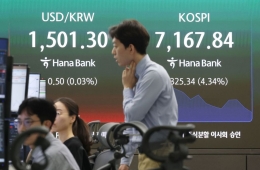
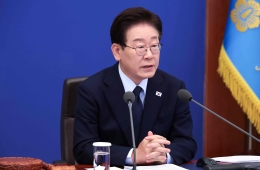
On March 5, Assemblyman Kim Seungwon of the Democratic Party of Korea commented on the recent sharp decline in the Korean stock market driven by the Middle East crisis, stating, "It is because of an uneven playing field," and argued, "High-frequency trading (HFT) should be regulated."
On his social networking service (SNS) account that day, Assemblyman Kim wrote, "Behind the extreme volatility and sharp swings recently seen in our stock market, there is some large foreign capital disrupting the capital markets through high-frequency trading." He explained that high-frequency trading refers to techniques where thousands of orders are placed per second.

Assemblyman Kim noted, "High-frequency trading is only possible when massive capital is invested to build dedicated facilities and when there is direct access to the exchange system through faster internet connectivity than anyone else," adding, "Because of this, ordinary individual investors cannot even attempt it, and it remains a quintessentially and fundamentally uneven playing field that only large foreign and institutional investors can enjoy."
He continued, "Even the Korea Capital Market Institute, which provides policy recommendations on the domestic capital market, has consistently warned of the need for strict regulation of such market-disrupting high-frequency trading," and added, "Experts are also deeply concerned that high-frequency trading increases market volatility and, in markets experiencing sharp declines like today, can pass on massive losses to ordinary investors."
Assemblyman Kim insisted on the need for legislative action to introduce the excessive order fee system by amending the Capital Markets Act, a bill he proposed last year.
He pointed out, "Korea Exchange is in a conflict of interest situation, as it operates both as a for-profit market operator earning commission revenues and as a market surveillance authority responsible for detecting unfair trading," and continued, "The higher the trading volume, the greater the exchange's profits, so high-frequency trading participants, who flood the market with massive orders, are the largest customers providing astronomical commissions to the exchange."
Assemblyman Kim stated, "Korea Exchange provides these large capital players with preferential communication channels under the name of the Global Advisory Committee for the derivatives market," and, "Citing the high proportion of foreigners in the derivatives market, it has for years listened to their opinions and operated customized response channels under the pretext of creating a trading environment in line with global standards." He went on to say, "It is as if the referee is leading the way in creating an uneven playing field solely in favor of HFT traders," and added, "This must be corrected to ensure fairness in the market."
Hot Picks Today
 "Samsung and Hynix Were Once for the Underachievers"... Hyundai Motor Employee's Lament
- After Topping 8,000 Instead of Hitting 10,000... KOSPI Plunges—When Will It Rebound?
- "They Said It's Impossible to Get—Already Selling for Triple the Price: Crowds Worldwide Line Up for $600 Luxury Watch"
- Real Estate PF Fees Reduced from 32 to 11 Types... Penalty and Maturity Extension Fees Abolished
- "That? It's Already Stashed" Nightlife Scene Crosses the Line [ChwiYak Nation] ③
Assemblyman Kim concluded, "Ultimately, it is ordinary individual investors who suffer the most in painful markets marked by extreme swings," and pledged, "For greater growth of our market, I will ensure that the justice of the capital market and investor protection are realized through bills and policies to level the playing field."
© The Asia Business Daily(www.asiae.co.kr). All rights reserved.