"The Decisive Factor in the Humanoid Robot Race Is the Hand... 'Physical AI Is a Semiconductor Game'"
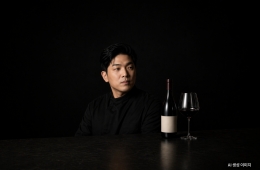
Former Small and Medium Business Administration Chief Joo Youngsub, Specially Appointed Professor at Seoul National University
"Victory in the Humanoid Robot Race Depends on the Hand"
"We Must Compete with Industry-Specialized Robots"
"A Na
Joo Youngsup, Special Professor at Seoul National University College of Engineering and former Administrator of the Small and Medium Business Administration, analyzed that the decisive factor in the humanoid robot competition will not be artificial intelligence (AI) models, but rather the "hand." He emphasized that, for Korea to survive in the robotics race, a national-level "physical AI" strategy must be promoted, focusing on semiconductor-based cooperation among enterprises.

Professor Ju Youngseop, Special Appointed Professor at the College of Engineering, Seoul National University, is giving a lecture at the 'CES2026 Fabless Summit Korea' event held at Gachon University in Seongnam, Gyeonggi Province on the 4th. Photo by Paek Jongmin, Tech Specialist
View original imageOn the 4th, during his lecture on "Three Insights from CES 2026" at the "CES 2026 Fabless Summit Korea" held at Gachon University in Seongnam, Gyeonggi Province, Professor Joo made these arguments.
Professor Joo stressed that semiconductor technology will become the core competitive edge in the era of physical AI. This is because most systems, such as humanoid robots, autonomous vehicles, and drones, are shifting to "on-device AI" structures that process AI computations internally rather than relying on the cloud.
He stated, "Physical AI ultimately comes down to a semiconductor game," and added, "On-device AI semiconductors will be the key."
He further diagnosed that if Korea combines its manufacturing competitiveness with its semiconductor technology, it can create new opportunities. Therefore, he argued that Korea should move away from strategies centered on individual companies and instead build a cooperative ecosystem.
Next, he predicted that following the humanoid boom sparked by Boston Dynamics' "Atlas" robot unveiled at CES 2026, the increasing dexterity of the "Optimus" humanoid robot being developed by Tesla could transform the landscape of manufacturing automation.

Professor Joo explained, "The human hand’s degree of freedom is about 27 to 28, while Tesla’s Optimus is estimated to have reached about 22. For robots to be deployed on actual worksites, precise hand movements are crucial. Once the degree of freedom surpasses a certain threshold, robots will be able to perform tasks in manufacturing environments."
He assessed that Korean robot companies have reached a technical level of about 20 in terms of hand degrees of freedom, and analyzed, "Korea is not completely lagging behind technologically, but the pace of competition is extremely fast."
Professor Joo judged that the market for general-purpose humanoids is not favorable for Korean companies. This is because the United States is expanding its market based on technological prowess, while China is doing so through price competitiveness.
He said, "It is difficult to beat the United States in technology and China in price," and proposed the concept of "vertical (industry-specialized) robots" instead of general-purpose humanoids. He suggested that robot systems tailored to specific industries—such as steel, shipbuilding, chemicals, and automotive—based on the work environment and data of each sector, are a realistic strategy for Korea.
Professor Joo emphasized, "Our current competitors are the giant companies and nations like the United States and China. We can never win alone. Companies must cooperate to create an ecosystem."

On the 4th, a Mobillint representative gave a presentation at the 'CES2026 Fabless Summit Korea' event held at Gachon University in Seongnam, Gyeonggi Province. Photo by Paek Jongmin, Tech Specialist
View original imageMeanwhile, fabless semiconductor companies such as DeepX, Boss Semiconductor, Mobillint, Nemesis, Nextchip, Dinotisia, Itta Semiconductor, and Telechips participated in the event to share the outcomes of CES 2026.
Hot Picks Today
 After Firing 1,000 $3.6 Million Missiles, U.S. ...
- "We Can't Hold Out Any Longer": Airlines Reduce Seats, Cut Routes, and Face Bank...
- "Grandma, This Isn't Made by AI, Right?"... Thought It Was Old-Fashioned, But No...
- "Stabbing Pain" Should Not Be Ignored... This Disease Linked to Obesity Injectio...
- "My Wife Is 9 Years Older Than My Mother": 20s Student Marries 60s Teacher, Prom...
Kim Yongseok, Distinguished Professor at the Gachon University College of Semiconductor, who hosted the event, said, "The importance of the semiconductor field, as revealed at CES 2026, will become the core of the physical AI era," expressing his expectations for the achievements of the participating companies.
© The Asia Business Daily(www.asiae.co.kr). All rights reserved.