"The Very First Step Is Already Wrong"...Superintendent Kim Daejung Launches a Scathing Critique of the Integrated Special Act
Government Rejects 5 Provisions Including Special Treatment for International Students
"Hollow Integration Shakes the Foundations of Educational Autonomy"
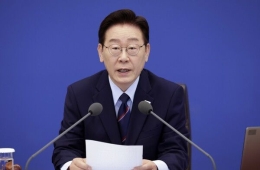
Kim Daejung, Superintendent of Education of South Jeolla Province, strongly raised his voice in criticism of the government's decision not to accept special educational provisions for the proposed "Integrated Metropolitan City of South Jeolla and Gwangju," saying the government was "getting the very first step wrong."
On the 10th, Superintendent Kim stated, "The central government has expressed a 'non-acceptance' opinion on 5 out of 22 provisions related to educational autonomy in the special act currently under discussion in the National Assembly," adding, "I am worried that the very foundation of educational autonomy may be shaken even before the integration takes place."

According to the South Jeolla Provincial Office of Education, the provisions the government has refused to accept reportedly include measures such as "special treatment for international students," which is considered a key element in overcoming the crisis of local universities disappearing.
Regarding this, Superintendent Kim warned, "If we take into account even the education-related matters included in the general autonomy provisions, the scope of the government's rejection will be much broader," and added, "If this is not corrected now, it will result in educational autonomy drifting away from the very beginning." This reflects his view that even the provisions the government has agreed to may be revised or scaled down during inter-ministerial consultations.
In particular, Superintendent Kim strongly pointed out the risks of a mechanical integration without "expanded financial resources." He said, "To prepare for the surge in administrative and educational demand that will follow integration, provisions for separate financial support, such as an 'Integrated Special Educational Grant,' are essential," and emphasized, "Only by going beyond a simple administrative merger to achieve large-scale improvements in educational infrastructure and to operate region-specific programs can we overcome the educational gap between South Jeolla and Gwangju and generate synergy."
He also criticized the fact that this stance runs counter to the government's own national agenda of "5 Poles and 3 Special Zones (five mega-regions and three special self-governing provinces)." Superintendent Kim argued, "Striking out key provisions based on the central government's one-size-fits-all standards undermines the very purpose of local-led growth and integration," and stressed, "To truly overcome the crisis of regional extinction, bold devolution of educational authority must come first."
In line with Superintendent Kim's stance, the South Jeolla Provincial Office of Education launched an all-out response timed with the schedule of the National Assembly's Public Administration and Security Committee's bill review subcommittee, which began on the 10th. The provincial office plans to strengthen cooperation with political circles so that all 22 special provisions, including those on securing sufficient teaching staff and ensuring autonomy in the curriculum, can be reflected in the law as originally drafted.
Hot Picks Today
 "Stocks Are Not Taxed, but Annual Crypto Gains Over 2.5 Million Won to Be Taxed Next Year... Investors Push Back"
- "Don't Throw Away Coffee Grounds" Transformed into 'High-Grade Fuel' in Just 90 Seconds [Reading Science]
- Signed Without Viewing for 1.6 Billion Won... Jamsil and Seongbuk Jeonse Prices Jump 200 Million Won in a Month [Real Estate AtoZ]
- [Breaking] President Lee: "Sharing operating profit before taxes are deducted?... I don't understand"
- "Even With a 90 Million Won Salary and Bonuses, It Doesn’t Feel Like Much"... A Latecomer Rookie Who Beat 70 to 1 Odds [Scientists Are Disappearing] ③
Superintendent Kim added, "The government and the National Assembly must not turn a deaf ear to the desperate voices of local residents," and said, "The provincial office of education will also concentrate all its capabilities to ensure that our demands are fully reflected in the legislative process in the National Assembly."
© The Asia Business Daily(www.asiae.co.kr). All rights reserved.