NH Investment & Securities Enters 1 Trillion Won Net Income Era... Yoon Byungwoon’s Blueprint "4-3-2-1"
NH Investment & Securities has opened the era of 1 trillion won in net income in 2025. Market observers say this is not the result of a short-term market boom or reliance on a few large deals, but rather the tangible outcome of an overall restructuring of its earnings model.
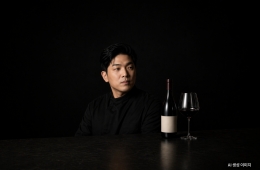
At the core lies the "4-3-2-1 strategy" put forward by CEO Yoon Byungwoon after he took office in 2024. The idea was to redesign the business portfolio so that Wealth Management (WM) accounts for 4, Investment Banking (IB) for 3, Proprietary Trading for 2, and Wholesale and Others for 1, thereby diversifying profit sources without overconcentration in any specific segment. In fact, in 2024, his first year in office, the company already posted operating profit of 901.1 billion won (up 24.2% year-on-year) and net income of 686.6 billion won (up 23.4%), confirming that it was on the right track.

By business segment, the IB division focused on selecting large, high-quality deals rather than simply increasing the number of transactions. It secured a competitive edge in the tender offer market and built a total solution platform that encompasses acquisition finance and M&A advisory. In real estate finance as well, it reshaped its portfolio around large landmark assets such as Parc1 and the Millennium Hilton, thereby securing both profitability and stability.
In the retail division, a strategy centered on high-net-worth individuals produced results. The number of clients with assets of 100 million won or more increased by 246%, from about 90,000 at the end of 2019 to around 310,000 at the end of 2025. The number of ultra-high-net-worth clients with assets of 3 billion won or more also rose 51% year-on-year to 6,323. In the asset management division, client-product assets under management (AUM) grew about 33%, from an average balance of 17.5 trillion won in 2023 to 23.2 trillion won in 2025, helping to reduce dependence on trading.
Capital efficiency indicators also improved. Return on equity (ROE) climbed from 7.5% in 2023 to 11.8% in 2025, approaching the mid- to long-term target of 12%. The share price has also risen by about 88% since Yoon took office.
Hot Picks Today
 "You Can Only Have This in Korea": Which Nation...
- "I Just Want to Sleep": Prime Minister Takaichi's Struggles?Frozen Meals, Two Ho...
- Iran Begins Collecting Hormuz 'Transit Fee' in Cash, Not Cryptocurrency
- This Is Truly "Unbelievable Stories"... Went to Renew License, Flagged as Identi...
- "This Has Never Happened to Me in Korea"... Gwangjang Market Stall That Charged ...
Key tasks going forward include stabilizing the Integrated Investment Account (IMA) business and internalizing artificial intelligence (AI) capabilities. Through a 650 billion won rights issue, the company secured more than 8 trillion won in equity capital, satisfying the licensing requirements for IMA. In AI, it is pursuing a strategy that links capabilities directly to the investment decision-making process, including chart analysis and summarizing stock-specific issues. As both areas depend more on long-term accumulation than short-term performance, the continuity of these strategies is seen as a critical variable that will determine success or failure.
© The Asia Business Daily(www.asiae.co.kr). All rights reserved.