"Concerns Over Market Distortion From Budget Gas Station Policy... Phased Transition Needed"
National Assembly Forum on "Measures to Improve the Oil Distribution Market"
"Excessive Government Intervention... Limited Impact on Price Stability"
Urban Closures Increase, Equity Issues Highlighted as Limitations
There have been criticisms that the budget gas station policy is reducing market efficiency in the long term and weakening the capacity for investment in the energy transition. While its effect on price stability is limited, the side effects are increasing, prompting calls for a phased exit strategy.
At the "Measures to Improve the Oil Distribution Market" policy forum held at the National Assembly Members' Office Building on the 18th, hosted by the Korean Resource Economics Association and Democratic Party lawmakers Kim Won-i and Oh Sehee, participants pointed out that the budget gas station system is distorting market prices amid a recent contraction in the oil market. They explained that restructuring the oil distribution business is inevitable and proposed measures such as converting the sales volume of budget gas stations into a public fund and strengthening oversight of acts that disrupt distribution order.

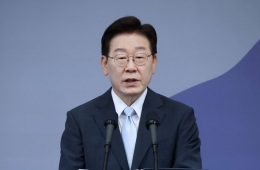
Namsu Cha, Head of Policy Headquarters at the Korea Federation of Micro Enterprise (left to right), Taehwan Kim, Director of Oil Policy Research at the Korea Energy Economics Institute, Hyunggeon Kim, Professor of Economics and Statistics at Kangwon National University, Hongjong Cho, President of the Korean Resource Economics Association, Yeonjae Jang, Professor of Economics at Soongsil University, Hanseo Park, Director of the Oil Industry Division at the Ministry of Trade, Industry and Energy, and Sinae Jung, Director of Distribution Business at Korea National Oil Corporation, are speaking at the discussion forum on "Improvement Measures for the Oil Distribution Market" held at the National Assembly Members' Office Building on the 18th. Photo by O Ji-eun
View original imageHyunggeon Kim, Professor of Economics and Statistics at Kangwon National University, who delivered the keynote presentation, noted that the budget gas station policy was expanded by the government in the 2010s to manage prices during a period of high oil prices. However, he pointed out that its efficiency is declining amid a rise in gas station closures and changes in market structure. Professor Kim said, "A portion of producers' profits is being transferred to the operators of budget gas stations, leading to growing equity issues," and added, "With a clear decrease in demand, the low-margin, high-volume model can no longer be sustained."
Taehwan Kim, Director of Oil Policy Research at the Korea Energy Economics Institute and a panelist at the forum, discussed the problems in the supply structure of budget gas stations. He stated, "Currently, Korea National Oil Corporation, NongHyup Agribusiness Group, and Korea Expressway Corporation effectively serve as distribution agents for budget gas stations. Unlike private agents who compete within the market mechanism, a public enterprise-centered structure inevitably restricts market functions." Regarding urban gas stations, he added, "With the current low operating profit margins, continuing business operations leads to inefficient capital allocation. Even without policy intervention, it is highly likely that urban gas stations will naturally decrease in number."
Director Kim also analyzed that the phenomenon of 'exiting the gas station business' is accelerating because real estate values far exceed operating profits. Citing the example of a gas station on Samseong-ro in Gangnam-gu that sold its 840-pyeong (approximately 2,776 square meters) land for 220 billion won, he said, "Urban gas stations in the Seoul metropolitan area face high pressure to close due to low operating profits relative to land prices."
Hot Picks Today
 "Stocks Are Not Taxed, but Annual Crypto Gains Over 2.5 Million Won to Be Taxed Next Year... Investors Push Back"
- "Don't Throw Away Coffee Grounds" Transformed into 'High-Grade Fuel' in Just 90 Seconds [Reading Science]
- Signed Without Viewing for 1.6 Billion Won... Jamsil and Seongbuk Jeonse Prices Jump 200 Million Won in a Month [Real Estate AtoZ]
- Despite Warnings of "Do Not Enter, You May Not Make It Out Alive"... Foreign Tourist Stranded After Unauthorized Climb on Jeju Sanbangsan
- "Even With a 90 Million Won Salary and Bonuses, It Doesn’t Feel Like Much"... A Latecomer Rookie Who Beat 70 to 1 Odds [Scientists Are Disappearing] ③
At the forum, participants agreed that while the budget gas station policy initially had some effect in promoting competition, it is difficult to maintain the current approach in the era of energy transition. They emphasized that the government should redefine its role to facilitate industrial transformation rather than focusing solely on short-term price adjustments. As directions for policy transition, a phased roadmap was proposed, including: abolishing mandatory price discounts, shifting the budget brand toward future energy infrastructure functions, reducing preferential benefits, and restoring market functions.
© The Asia Business Daily(www.asiae.co.kr). All rights reserved.