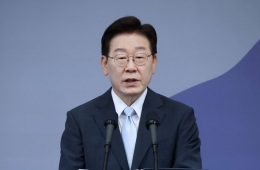
Jin Jinsuk: "728 Children in Welfare Facilities Live Separated from Their Siblings"
Urgent Need to Revise the "Age Seven Separation Rule"
"Policies Should Prioritize Children's Emotional Well-Being Over Administrative Convenience"

It has been revealed that over 10% of children living in domestic child welfare facilities are separated from their siblings, raising concerns about violations of children's basic rights and calls for improvements to related regulations.
On October 28, Jin Jinsuk, a member of the Democratic Party of Korea representing Gwangju Buk-gu Eul, analyzed data submitted by the Ministry of Health and Welfare for the National Assembly audit. The analysis found that, out of 5,317 children residing in 772 child welfare facilities nationwide, 728 children (13.7%) are living separated from their siblings.
The main reason for this forced separation is the regulation in the Enforcement Rules of the Child Welfare Act, which stipulates that “children aged seven or older must be separated by gender in living spaces.” As a result, siblings of different genders are mandatorily separated after the age of seven.
During the National Assembly audit, Jin criticized this age standard, stating, “Seven years old is far too young to be separated from siblings,” and argued that the separation age is focused more on administrative convenience than on the emotional stability of the children. She emphasized, “Siblings are family and the only emotional safety net for these children,” and urged that “this standard should be raised to better reflect reality.”
She also pointed out the difficulty in identifying sibling relationships upon admission to facilities, and proposed, “The DNA matching function within the Missing Children Information System of the National Center for the Rights of the Child should be institutionalized as a means to facilitate family reunification.”
Jin stated, “Except for special circumstances such as domestic violence, the right of children in welfare facilities to meet with their biological families and siblings should be institutionally guaranteed.” She added, “In particular, there are many cases where children of parents with borderline intellectual functioning or mental disorders are separated for protection. Policies that support the restoration of family relationships from the child’s perspective should be implemented in parallel.”
Hot Picks Today
 "Stocks Are Not Taxed, but Annual Crypto Gains Over 2.5 Million Won to Be Taxed Next Year... Investors Push Back"
- "Don't Throw Away Coffee Grounds" Transformed into 'High-Grade Fuel' in Just 90 Seconds [Reading Science]
- Signed Without Viewing for 1.6 Billion Won... Jamsil and Seongbuk Jeonse Prices Jump 200 Million Won in a Month [Real Estate AtoZ]
- Despite Warnings of "Do Not Enter, You May Not Make It Out Alive"... Foreign Tourist Stranded After Unauthorized Climb on Jeju Sanbangsan
- "Even With a 90 Million Won Salary and Bonuses, It Doesn’t Feel Like Much"... A Latecomer Rookie Who Beat 70 to 1 Odds [Scientists Are Disappearing] ③
Jin repeatedly emphasized, “Policies should prioritize children’s basic relationships and emotional well-being-such as the right to grow up with siblings and the right to know their families-over administrative efficiency.”
© The Asia Business Daily(www.asiae.co.kr). All rights reserved.