Did the Pension Reform Suspension Gamble Work? France's Lecornu Survives No-Confidence Crisis
No-confidence Motion Defeated in National Assembly Vote
Majority of Socialist Party, Holding the Casting Vote, Abstains
The 'Lecornu Cabinet' of France, which had been on the brink of collapse, narrowly survived a no-confidence vote in the National Assembly on the 16th (local time).

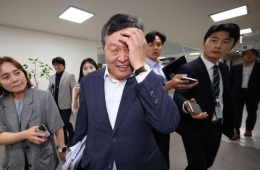
Sebastien Lecornu, Prime Minister of France, is responding to questions from lawmakers after delivering a policy speech at the French National Assembly in Paris on the 14th (local time). Photo by AP Yonhap News
View original imageAccording to the Financial Times (FT), the no-confidence motion against the government, submitted by the far-left party France Unbowed (LFI), was rejected with 271 votes in favor. The motion required 289 votes, a majority in the lower house, to pass, but fell short by 18 votes. A separate no-confidence motion submitted by the far-right National Rally (RN) was also rejected.
The Guardian had previously analyzed that "if Prime Minister Lecornu survives today's vote, it will be thanks to the support of the Socialist Party (PS)."
Earlier, on the 14th, Prime Minister Lecornu proposed suspending pension reform, a core initiative of President Emmanuel Macron, during his policy speech. This bold move to suspend pension reform was intended to break through the political crisis. It was a strategy to bring the Socialist Party (PS), which holds 65 seats and thus the casting vote in parliament, to the government's side. As a result, a majority of Socialist Party lawmakers abstained from the vote, allowing Prime Minister Lecornu to narrowly escape the no-confidence crisis.
The opposition has strongly opposed the Macron administration's measure to raise the retirement age from 62 to 64. The Macron government pushed for an austerity budget that included raising the pension age, but faced fierce backlash from opposition parties and civil society, which intensified the political crisis. Amid massive protests and mounting political pressure, Prime Minister Lecornu offered his resignation on the 6th, but President Macron reappointed him four days later, on the 10th.
Hot Picks Today
!["Rather Than Endure a 1.5 Million KRW Stipend, I'd Rather Earn 500 Million in the U.S." Top Talent from SNU and KAIST Are Leaving [Scientists Are Disappearing] ①](https://cwcontent.asiae.co.kr/asiaresize/93/2026051914165468840_1779167814.png) "Rather Than Endure a 1.5 Million KRW Stipend, I'd Rather Earn 500 Million in the U.S." Top Talent from SNU and KAIST Are Leaving [Scientists Are Disappearing] ①
"Rather Than Endure a 1.5 Million KRW Stipend, I'd Rather Earn 500 Million in the U.S." Top Talent from SNU and KAIST Are Leaving [Scientists Are Disappearing] ①
- Given Grants, Then Says "No Launch" ... Innovative Korean Technology Ultimately Forced Overseas
- "If That's the Case, Why Not Just Buy Stocks?" ETFs in Name Only, Now 'Semiconductor-Heavy' and a Playground for Short-Term Traders
- Singer Kim Minjong Responds to MC Mong's Gambling Allegations: "Clearly False... Legal Action to Follow"
- "No Cure Available, Spread Accelerates... Already 105 Dead, American Infected"
Reuters commented that "the proposal to suspend pension reform threw a lifeline to the government in a divided parliament," but also pointed out that "Prime Minister Lecornu now faces a tough negotiation process to pass the 2026 budget, during which he could again face a no-confidence crisis at any time."
© The Asia Business Daily(www.asiae.co.kr). All rights reserved.
![Cheaper Than Candy, Yet Impossible to Find... Fears of a 'Pediatric Medical Crisis' as Pharmaceutical Companies Halt Production [Why&Next]](https://cwcontent.asiae.co.kr/asiaresize/307/2026051910065268365_1779152813.jpg)