Cabinet Reshuffle Stalled Amid 'Government Paralysis'... Lee Ju-ho Tightens Control Over Education Policy
Medical School Expansion, AI Textbooks, and Other National Tasks Concentrated
Lee Ju-ho "Will Manage Even More Diligently"
As the Yoon Seok-yeol administration declared martial law and entered an impeachment crisis, facing a paralysis of state affairs, government ministries also fell into chaos. However, Lee Ju-ho, the Deputy Prime Minister for Social Affairs and Minister of Education, appears to be taking the lead by pledging to complete education policies such as increasing medical school quotas and AI (artificial intelligence) digital textbooks.
According to the Ministry of Education on the 9th, Lee convened an emergency executive meeting the previous afternoon, urging unwavering implementation of education policies and calm execution of duties. Unlike other ministers from the Ministry of Health and Welfare, Ministry of the Interior and Safety, and Ministry of National Defense who expressed their intention to resign, he has shown a strong will to continue his work. After the declaration of martial law on the 5th, he stated, "I said I would run at the speed of a 100-meter dash for education, and I will keep running," emphasizing, "(Education policies) are on track, so I will manage them even more diligently."
However, with the possibility of the president’s early resignation due to impeachment and shortened term already anticipated, there is an assessment that major policies have lost their driving force. It is highly likely that each ministry will only continue ongoing tasks.

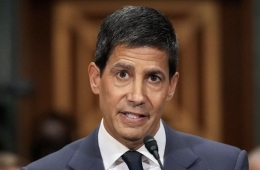
Lee Ju-ho, Deputy Prime Minister for Social Affairs and Minister of Education, is making an announcement on the flexible operation guidelines for medical school academics on the 10th at the Government Seoul Office in Jongno, Seoul. This guideline was prepared to support medical students so that they can study without worrying about failing after returning. Photo by Jo Yong-jun jun21@
View original imageIn particular, the Ministry of Education houses key reform policies and national agendas of the Yoon administration. The three major education reform policies?▲national responsibility for education and care (including integration of early childhood education and care), ▲digital education innovation, and ▲university reform?as well as the increase in medical school quotas pursued as a national agenda, are either already being implemented or scheduled for introduction next year, requiring momentum for their advancement.
Hot Picks Today
 "Buy on Black Monday"... Japan's Nomura Forecasts 590,000 for Samsung, 4 Million for SK hynix
- "Plunged During the War, Now Surging Again"... The Real Reason Behind the 6% One-Day Silver Market Rally [Weekend Money]
- "We're Now Earning 10 Million Won a Month"... Semiconductor Boom Drives Performance Bonuses at Major Electronic Component Firms
- Supreme Court: U.S. Firms Must Pay Tax in Korea on Technology Sale Proceeds
- Experts Are Already Watching Closely..."Target Stock Price 970,000 Won" Now Only the Uptrend Remains [Weekend Money]
Coincidentally, the possibility of a ministerial reshuffle planned for the end of the year has disappeared. As a result, Deputy Prime Minister Lee, who was also considered a candidate for the reshuffle before martial law, can continue his duties. With the president indicating his intention to delegate major powers, including the term of office, to the ruling party and the cabinet led by Prime Minister Han Duck-soo, there is also a possibility that Lee will take the lead in education policy. Koo Yeon-hee, spokesperson for the Ministry of Education, said, "(The ministry) operates as a system, so since next year’s plans have already been announced, we can proceed step by step," adding, "There is nothing particularly problematic except for legal amendments."
© The Asia Business Daily(www.asiae.co.kr). All rights reserved.