[Inside Chodong] Growing Anxiety Among SMEs Ahead of Trump’s Second Term
![[Inside Chodong] Growing Anxiety Among SMEs Ahead of Trump’s Second Term](http://www.asiae.co.kr/news/img_view.htm?img=2024011507520628954_1705272726.jpg)
"I took out loans using my house as collateral to purchase equipment, and even flew to countries at war for export consultations. I risked my life to grow the company, but these days, there’s nothing I can do."
This is the lament of Mr. K, a representative of a small and medium-sized manufacturing company I recently met. He generates annual sales of 50 billion won through bolt exports, but has been deeply troubled lately as imports of finished bolts from China have increased. Mr. K said, "Chinese products have greatly improved in quality and are 20-25% cheaper, so domestic companies are all on the brink of collapse."
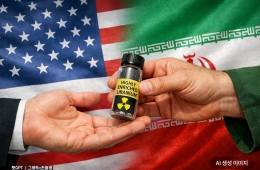
In this situation, with former President Trump, who calls himself a 'tariff man,' succeeding in regaining power, the anxiety among small and medium enterprises has grown more than ever.
Mr. K said, "One-third of our products go to the United States. If tariffs rise, we either have to absorb the losses and sell at the old price or raise prices, but do you know how sensitive customers are to price?" He raised his voice, saying, "There are too many external factors that companies cannot solve. The government must step up quickly."
The United States is the largest export market for domestic small and medium enterprises. In the third quarter of this year, the export value from domestic SMEs to the U.S. was $4.55 billion, exceeding that to China ($4.36 billion). On the other hand, from the U.S. perspective, Korea ranks eighth among countries with a trade deficit. Last year, Korea’s trade surplus with the U.S. reached a record high of $44.4 billion. It is expected that the Trump administration’s trade pressure on Korea will intensify.
At a seminar titled "Impact and Response Measures for Small and Medium Enterprises According to the U.S. Presidential Election Results," held by the Small and Medium Business Research Institute on the 19th of last month, Kim Jeong-hyun, a senior research fellow at the Korea Institute for Industrial Economics and Trade, forecasted, "If the second Trump administration imposes universal tariffs on trading partners, our SMEs’ exports to the U.S. will decrease by 12.6 to 21.6%, with major affected product groups including electrical and electronic products, machinery, steel, textiles and apparel, and chemicals."
Additionally, proposals were made such as, "Due to the decrease in large corporations’ exports to the U.S., SMEs supplying to large corporations are also expected to reduce production, and countermeasures are needed for the possibility of companies relocating production bases to the U.S.," and "Because of the bargaining power gap between large and small companies, large companies might pass foreign exchange risks onto SMEs, so an investigation into payment methods is also necessary." These suggestions take into account the reality of Korean SMEs.
Large corporations gather information on global trends to formulate strategies and may consider investing in relocating factories with massive capital to capture the U.S., the most attractive market on earth, or pursue changes in raw material supply chains. However, SMEs struggle with soaring material costs and labor expenses, barely managing to meet contracted delivery volumes. They may be helpless despite clearly anticipating imminent changes.
The most frequently heard remarks from SME owners were, "The government’s diplomatic efforts are urgent," and "Practical government-level support measures must be introduced as soon as possible." These reflect the frustration of SME owners who have no choice but to rely on the government.
Hot Picks Today
!["Rather Than Endure a 1.5 Million KRW Stipend, I'd Rather Earn 500 Million in the U.S." Top Talent from SNU and KAIST Are Leaving [Scientists Are Disappearing] ①](https://cwcontent.asiae.co.kr/asiaresize/93/2026051414165763158_1778735817.jpg) "Rather Than Endure a 1.5 Million KRW Stipend, I'd Rather Earn 500 Million in the U.S." Top Talent from SNU and KAIST Are Leaving [Scientists Are Disappearing] ①
"Rather Than Endure a 1.5 Million KRW Stipend, I'd Rather Earn 500 Million in the U.S." Top Talent from SNU and KAIST Are Leaving [Scientists Are Disappearing] ①
- "Most Americans Didn't Want This"... Americans Lose 60 Trillion Won to Soaring Fuel Costs
- As Samsung Falters, Chinese DRAM Surges: CXMT Returns to Profit in Just One Year
- "China's Growth Rate Expected to Fall Short of Last Year... High-Tech Industries Remain the Pillar"
- "Why Make Things Like This?" Foreign Media Highlights Bizarre Phenomenon Spreading in Korea
On the 22nd of last month, Deputy Prime Minister and Minister of Strategy and Finance Choi Sang-mok chaired a meeting of ministers in charge of external economic affairs and announced, "Until the next Trump administration takes office, we will hold weekly meetings of ministers in charge of external economic affairs in principle, share relevant information, and coordinate government-level response directions." The Ministry of SMEs and Startups also launched a "TF for Supporting SMEs in Preparation for the Second Trump Administration" on the 26th of last month. We hope that government-level countermeasures will be presented as soon as possible.
© The Asia Business Daily(www.asiae.co.kr). All rights reserved.