Gwangju City's AI and Future Car Regional Projects Gain Momentum
Gwangju City Reflects KRW 3.3244 Trillion in Next Year's Government Budget Proposal
Mayor Kang Gijeong and Local Lawmakers' Persuasion of Central Ministries Effective
5.8% Increase Compared to Last Year... Transition to National Assembly Response System
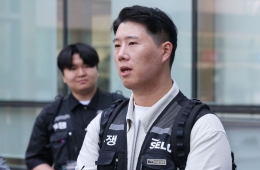
![Gwangju Mayor Kang Ki-jung is explaining the results of the 2025 government budget proposal reflection on the morning of the 27th in the briefing room. <br>[Photo by Gwangju City]](http://www.asiae.co.kr/news/img_view.htm?img=2024082712114397934_1724728303.jpg)
Gwangju Mayor Kang Ki-jung is explaining the results of the 2025 government budget proposal reflection on the morning of the 27th in the briefing room.
[Photo by Gwangju City]
Gwangju City announced on the 27th that 3.3244 trillion won has been reflected in the 2025 government budget proposal. This is an increase of 181.8 billion won, or 5.8%, compared to last year's government proposal of 3.1426 trillion won. It is also 79.8 billion won more than the National Assembly's final confirmed amount of 3.2446 trillion won.
Gwangju City evaluated this as an achievement surpassing the government's total budget growth rate of 3%, despite the Ministry of Economy and Finance's strong expenditure restructuring in line with the government's sound fiscal policy.
Accordingly, Gwangju City added that it will accelerate the promotion of future industries such as artificial intelligence (AI) and future cars, as well as regional pending projects.
The major projects of Gwangju City reflected in this government budget proposal include ▲‘Establishment of a Shared Platform for Core Future Car Parts Development Support’ (300 million won / total project cost 23.5 billion won), a parts company support project that allows future car manufacturing and certification to be carried out at once in the Gwangju future car materials, parts, and equipment (SoBuJang) complex ▲‘On-device AI Service Demonstration Expansion’ (3 billion won / total project cost 8.5 billion won) to apply and demonstrate on-device AI technology in regional specialized industries ▲‘Operation of Gwangju AI Academy’ (4.2 billion won / total project cost 43 billion won) for training AI practical talents, enabling the smooth execution of Gwangju future industry development projects linked with the national AI data center and the materials, parts, and equipment specialized complex.
Also, with an additional approximately 10 billion won secured compared to the previous year for the ‘Urban Railway Line 2 Construction Project’ (139.8 billion won), the city plans to speed up the urban railway construction scheduled for completion in the second half of next year to minimize citizen inconvenience.
Projects such as ‘Bitgoeul Floating Performance Hall Construction’ (840 million won / total project cost 37.2 billion won) for creating a cultural tourism hub in the Yeongsan River area and ‘Asia Water History Theme Experience Center Construction’ (4.4 billion won / total project cost 25.6 billion won) were also reflected, enabling the stable progress of the Y Project for a fun city.
Plans to secure national funding through exemption or passage of preliminary feasibility studies include the ‘AI Phase 2 Project’ utilizing the national AI data center, the ‘Gwangju-Daegu Dalbit Inland Railway Construction’ under the Dalbit Railway Special Act passed by the National Assembly in January, and the ‘Chonnam National University Future-type New Smart Hospital Construction Project.’
Budget for operating the ‘AI Gifted High School’ and the ‘National Trauma Healing Center for Violence,’ which are national institutions established by the state but are demanding excessive local government contributions, will also be secured during the National Assembly's review process.
Gwangju City attributed these achievements to starting the national budget securing process about two months earlier than the previous year with a national budget briefing session in January, and the active efforts of Mayor Kang Gi-jung and public officials to discover national budget projects that contribute to the local economy.
In particular, they frequently visited central government ministries such as the Ministry of Economy and Finance, the National Assembly, and lawmakers from both ruling and opposition parties to logically explain and persuade them of the necessity and urgency of regional pending projects.
Additionally, Gwangju-area lawmakers formed a one-team partnership with the city to support securing national funds. Lawmakers shared information on national budget projects with Gwangju City and maintained regular contact with related central government ministries, playing a significant role in reflecting regional pending projects in the government budget proposal, which was a major achievement.
Gwangju City plans to go further by switching to a National Assembly response system from September to fully devote efforts to securing additional national funds during the National Assembly's review process.
They plan to hold national budget briefing sessions to review national fund securing strategies and persuade regional lawmakers, party leadership, and budget committee members of the necessity of securing national funds until the government budget is finally confirmed by the National Assembly.
Hot Picks Today
!["Heading for 2 Million Won": The Company the Securities Industry Says Not to Doubt [Weekend Money]](https://cwcontent.asiae.co.kr/asiaresize/93/2025061015355092669_1749537351.jpg) "Heading for 2 Million Won": The Company the Securities Industry Says Not to Doubt [Weekend Money]
"Heading for 2 Million Won": The Company the Securities Industry Says Not to Doubt [Weekend Money]
- Chinese Ambassador Visits Wonsan Food Factory in North Korea... Pays Respects at Chinese Military Cemeteries
- "Drink Three Cups of Coffee and Stay Up All Night Before the Test"... Manual of Insurance Planner Who Collected 1 Billion Won in Payouts
- "Persistence Pays Off: Wins $1.4 Billion Lottery After 30 Years Using the Same Numbers"
- Did Samsung and SK hynix Rise Too Much?... Foreign Assets Grow Despite Selling [Weekend Money]
Mayor Kang Gi-jung of Gwangju said, “Securing more national budget than last year is an achievement made by Gwangju City officials and regional lawmakers working as one team,” and added, “Starting with ‘Gwangju Day at the National Assembly,’ we will fully switch to the National Assembly response system and devote all efforts to securing as much additional national funding as possible during the National Assembly review process.”
© The Asia Business Daily(www.asiae.co.kr). All rights reserved.