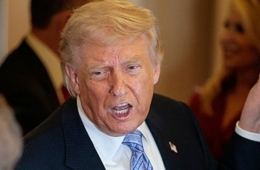
[2025 Budget Proposal] Ministry of Unification Shifts 'North Korean Residents' Information Access Rights' to Private Sector
Ambitiously Announced 'Unification Doctrine'... Budget Specificity↓
Information Access Rights Issue... "As Subsidy Projects for Private Organizations"
North Korea Rejects 'Relief Aid'... Over 100 Billion Won Allocated
President Yoon Suk-yeol ambitiously announced the '8.15 Unification Doctrine,' but there are criticisms that next year's Ministry of Unification budget to implement the follow-up tasks lacks specificity. In particular, contrary to the declaration to implement strategies to improve North Korean residents' access to information, the Ministry of Unification has presented a plan to effectively substitute direct projects with subsidies to private organizations.
The Ministry of Unification's budget for next year, approved at the Cabinet meeting on the 27th, is composed of 229.3 billion KRW from the general account and 826.1 billion KRW from the Inter-Korean Cooperation Fund, totaling 1.0554 trillion KRW. A Ministry of Unification official explained the budgeting principle, saying, "We have faithfully reflected key projects to implement the seven promotion plans and other follow-up tasks presented in the President's unification doctrine, while slightly reducing the budget for underperforming projects funded by the Inter-Korean Cooperation Fund."
![President Yoon Suk-yeol is announcing the '8.15 Unification Doctrine' at the 79th Liberation Day Celebration held at Sejong Center for the Performing Arts in Jongno-gu, Seoul on the 15th. <br>[Image source=Yonhap News]](http://www.asiae.co.kr/news/img_view.htm?img=2024081511022386290_1723687343.jpg)
President Yoon Suk-yeol is announcing the '8.15 Unification Doctrine' at the 79th Liberation Day Celebration held at Sejong Center for the Performing Arts in Jongno-gu, Seoul on the 15th.
[Image source=Yonhap News]
Earlier, President Yoon Suk-yeol announced the 8.15 Unification Doctrine, which inherits and develops the government's official unification plan, the 'National Community Unification Plan,' in his Liberation Day speech. The core points include forming a working-level dialogue consultative body between South and North Korea and improving North Korean residents' access to information. Unlike the dialogue consultative body, which requires North Korea's cooperation, improving access to information is a task the South Korean government can pursue independently. Minister of Unification Kim Young-ho hinted at the possibility of using 'advanced technology' when asked about expanding access to information during a press conference at the Seoul Foreign Correspondents' Club (SFCC) on the 22nd.
However, the budget to implement these follow-up tasks appears to be vaguely reflected. There is no budget allocated for direct projects to improve access to information; instead, the plan is to incorporate this task into the existing subsidy support projects for private organizations.
When asked whether there is no budget related to access to information as stated by the President, a Ministry of Unification official responded, "I think there are various projects aimed at expanding access to information," adding, "We have reflected the necessary budget through the North Korean human rights promotion support project, including research on the actual conditions of North Korean human rights."
The 'North Korean Human Rights Promotion Support' project provides subsidies to private organizations that apply for North Korean human rights-related projects. The budget increased by 1.13 billion KRW from 1.83 billion KRW this year to 2.96 billion KRW next year. The project’s application categories include ▲international cooperation ▲culture and arts ▲content development ▲raising awareness of North Korean human rights realities ▲academic events, five categories that are far from a strategy to introduce information inside North Korea. In the case of 'content development,' it is possible to produce information needed by North Korean residents, but how to disseminate it inside North Korea is not evaluated during the project application review.
![North Korean Supreme Leader Kim Jong-un called children affected by floods in Pyonganbuk-do and other areas to Pyongyang. <br>[Image source=Yonhap News]](http://www.asiae.co.kr/news/img_view.htm?img=2024082208575392676_1724284674.jpg)
North Korean Supreme Leader Kim Jong-un called children affected by floods in Pyonganbuk-do and other areas to Pyongyang.
[Image source=Yonhap News]
The plan to adjust the budget for underperforming projects funded by the Inter-Korean Cooperation Fund also contains inaccuracies. Among the budgets executed with the fund, the Ministry of Unification allocated a whopping 112.23 billion KRW for the 'relief support' category. This is an increase of 15.923 billion KRW (16.5%) from 96.37 billion KRW this year. It is also the only category among next year's Inter-Korean Cooperation Fund projects to be increased by more than 10%.
North Korea is known to have suffered severe flood damage recently in the Yalu River basin, but it rejected the flood relief support proposed by our government. Looking at the 2023 budget settlement details, the 'relief support' category has no execution amount. In a situation where North Korea refuses even humanitarian relief support by emphasizing the 'hostile state theory,' the budget has been greatly increased despite being unusable.
Regarding the reason for increasing the underutilized relief support budget, a Ministry of Unification official said, "Humanitarian aid to guarantee the survival rights of North Korean residents is pursued regardless of political and military situations," adding, "The President also stated such a policy through the unification doctrine, and we must prepare financial backing to implement such policies."
Hot Picks Today
 "Buy on Black Monday"... Japan's Nomura Forecasts 590,000 for Samsung, 4 Million for SK hynix
- "Plunged During the War, Now Surging Again"... The Real Reason Behind the 6% One-Day Silver Market Rally [Weekend Money]
- "We're Now Earning 10 Million Won a Month"... Semiconductor Boom Drives Performance Bonuses at Major Electronic Component Firms
- UAE Barakah Nuclear Power Plant Hit by Drone Attack, Fire Erupts... IAEA: "No Radiation Leak"
- Experts Are Already Watching Closely..."Target Stock Price 970,000 Won" Now Only the Uptrend Remains [Weekend Money]
![Kim Young-ho, Minister of Unification, delivers a commemorative speech at the unveiling ceremony of the North Korean Defectors' Day monument held on the morning of the 1st at Odusan Unification Observatory in Paju, Gyeonggi Province. <br>[Image source=Yonhap News]](http://www.asiae.co.kr/news/img_view.htm?img=2024082711314497895_1724725904.jpg)
Kim Young-ho, Minister of Unification, delivers a commemorative speech at the unveiling ceremony of the North Korean Defectors' Day monument held on the morning of the 1st at Odusan Unification Observatory in Paju, Gyeonggi Province.
[Image source=Yonhap News]
Meanwhile, the project budget from the general account is 167.6 billion KRW, an increase of 9.7 billion KRW (6.1%) from 157.9 billion KRW this year. The Ministry of Unification explained that this increase is due to the rise in the settlement basic allowance and the budget to support multidimensional activities to improve North Korean human rights. The settlement basic allowance, which helps North Korean defectors' initial settlement after entry, will increase from 10 million KRW to 15 million KRW starting next year. Additionally, new projects include support for Korean language education for children born to defectors in third countries (100 million KRW), improvement of alternative education institutions for defectors (370 million KRW), and support for participation fees in the Korea-US Student Exchange (WEST) program for defector university students (170 million KRW). The budget was also increased for hosting the International Korean Peninsula Forum addressing North Korean human rights issues (1.58 billion KRW).
© The Asia Business Daily(www.asiae.co.kr). All rights reserved.