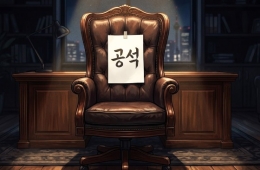
Death from COVID-19 during treatment for work-related injury aftereffects... Court says "Difficult to recognize connection"
A court ruling has determined that it is difficult to recognize a work-related injury for a person who contracted COVID-19 and died while receiving hospital treatment for aftereffects following recognition of a work-related injury.

According to the legal community on the 29th, the Administrative Division 3 of the Seoul Administrative Court (Chief Judge Choi Su-jin) ruled against the plaintiff in a lawsuit filed by the family of Mr. A against the Korea Workers' Compensation and Welfare Service, seeking cancellation of the denial of survivor benefits and funeral expenses.
In June 2018, Mr. A fell while working on a wall at a single-family house construction site. Mr. A was recognized as having a work-related injury due to incomplete spinal cord injury and other conditions from this accident and received medical treatment until October 2019. Later, in January 2022, Mr. A was diagnosed with COVID-19 and received hospital treatment before passing away in March of the same year.
Mr. A’s family claimed that his death was due to a work-related injury and requested survivor benefits and funeral expenses from the Korea Workers' Compensation and Welfare Service. However, the Service rejected the claim, stating, “Mr. A was infected with COVID-19 and died while voluntarily receiving treatment after his convalescence ended, so there is no causal relationship between the injury sustained during work and his death.” The family filed an administrative lawsuit in response.
The court stated, “Based on the evidence and circumstances submitted by the plaintiff alone, it is difficult to see a substantial causal relationship between Mr. A’s COVID-19 infection or worsening and his injury,” and sided with the Korea Workers' Compensation and Welfare Service.
The court further noted, “The deceased visited the hospital about two years and three months after the end of convalescence, and there is no indication that he notified or obtained approval from the Korea Workers' Compensation and Welfare Service regarding inpatient treatment,” adding, “It appears that the visit was not for direct treatment of the injury but to treat residual aftereffects fixed after the end of convalescence.”
Hot Picks Today
 "Over 20 Times More Than Overseas": 104.5 Milli...
- "Only the Top 1% Winning Big in Stocks Smile... '300 Million Won Splurges' or '1...
- “Nothing Left to Protect” as Japan Drops Its “Peace State” Banner... Lifts B...
- "Even Luxury Cars Drive Off Without Paying"... UK Sees Surge in Fuel Theft at Ga...
- "Please Launch It in Korea!" After All the Hype... This Coffee Finally Arrives i...
While acknowledging that “the injury may have somewhat affected the deceased’s weakened immunity,” the court concluded, “COVID-19 is a disease that anyone can contract, and considering that the deceased was hospitalized and exposed to the risk of group infection, it is difficult to prove that a substantial causal relationship has been established.”
© The Asia Business Daily(www.asiae.co.kr). All rights reserved.