Korea Federation of SMEs Holds Forum on 'Expanding Allowance of Joint Actions by Cooperatives'
Discussion on Clarifying Consumer Definition and Introducing Collective Bargaining Rights
The Korea Federation of SMEs announced on the 16th that it held a "Discussion on Expanding the Allowance of Joint Actions by Cooperatives" at the Federation of SMEs in Yeouido, Seoul.

This discussion was organized to discuss measures to expand the allowance of joint actions, such as clarifying the definition of consumers and introducing collective bargaining rights, which are necessary to revitalize joint projects and strengthen the competitiveness of cooperatives.
Namju Kim, lead attorney at Dodam Law Firm, analyzed the "exceptions to joint actions" and "collective bargaining systems" of SMEs in major countries such as Japan, Australia, and Germany, emphasizing the need to introduce these systems domestically to alleviate the economic power imbalance between large and small-to-medium enterprises. Attorney Kim pointed out, "Looking at Korea's joint action approval system and regulations on certain cooperative actions, the intention to allow joint actions by SMEs can be seen. However, only ineffective systems have been created, and although attempts were made to improve them through amendments to the Small and Medium Enterprise Cooperative Act in the 21st National Assembly, these improvements were ultimately not realized."
Professor Bong-ui Lee of Seoul National University School of Law served as the discussion chair. Panelists included Sikwon Kim, chairman of the Gyeonggi Concrete Industry Cooperative; Seungkwon Jang, professor of business administration at Sungkonghoe University; Jaeil Song, professor of law at Myongji University; Sujeong Choi, research fellow at the Korea Institute for Small and Medium Enterprises and Startups; and Jinhyung Cho, head of the Cooperative Division at the Federation of SMEs.
Chairman Sikwon Kim stated, "If the collective bargaining rights system is introduced, the concrete industry expects to enhance its negotiating power with large corporations and public institutions when purchasing raw materials or delivering products, which will be helpful." Professor Seungkwon Jang emphasized, "SMEs can be developed through cooperatives, and joint projects are essential for this. The government must actively implement promotion policies."
Additionally, Professor Jaeil Song said, "Since determining whether consumer interests are harmed affects the rights and obligations of the subjects, it is appropriate for this to be implemented through an order (Presidential Decree) delegated by law rather than a notice in consultation with the Fair Trade Commission." Research fellow Sujeong Choi argued, "Article 11-2 of the Small and Medium Enterprise Cooperative Act contains several indefinite concepts such as the necessity of achieving objectives and consumer interest infringement, causing confusion in the field. Clear standards are needed for practical use."
Hot Picks Today
 "Stocks Are Not Taxed, but Annual Crypto Gains Over 2.5 Million Won to Be Taxed Next Year... Investors Push Back"
- [Breaking] Central Labor Relations Commission: "Second Post-Mediation Fails for Samsung Electronics"
- "Not Jealous of Winning the Lottery"... Entire Village Stunned as 200 Million Won Jackpot of Wild Ginseng Cluster Discovered at Jirisan
- "Looks Even More Like Him in Person": Crowds Gather to See 'Trump Lookalike' Albino Buffalo
- "Even With a 90 Million Won Salary and Bonuses, It Doesn’t Feel Like Much"... A Latecomer Rookie Who Beat 70 to 1 Odds [Scientists Are Disappearing] ③
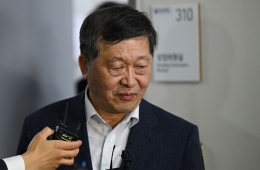
Yunmo Jeong, full-time vice president of the Federation of SMEs, said in his opening remarks, "To improve the economic status of small and medium entrepreneurs, which is the purpose of the Small and Medium Enterprise Cooperative Act, SME cooperatives must be revitalized through the allowance of joint actions by cooperatives." He added, "With the 22nd National Assembly opening in two weeks, I hope that diverse and reasonable discussions at today's forum will lead to the actual introduction of the system."
© The Asia Business Daily(www.asiae.co.kr). All rights reserved.