[Inside Chodong] Value-Up Program Only Highlights the Gap with the Market
Government's Corporate Value-Up Support Measures Fall Short of Market Expectations
Stock Market Weakens Amid Disappointment
Bold Incentives Needed for Improvement
![[Inside Chodong] Value-Up Program Only Highlights the Gap with the Market](http://www.asiae.co.kr/news/img_view.htm?img=2023033011314472553_1680143505.jpg)
"Expectations ran ahead, but reality fell short of them."
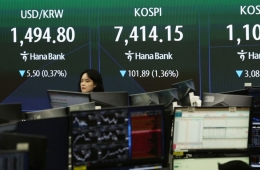
This is the overall assessment of the government's detailed plan for the 'Corporate Value-Up Program' released on the 26th. At the '1st Seminar for Gathering Opinions on Corporate Value-Up Support Measures,' the Financial Services Commission presented support measures including voluntary disclosure of companies' plans to enhance corporate value at least once a year, the development of the Korea Value-Up Index composed of companies with excellent corporate value and related Exchange-Traded Funds (ETFs), preferential treatment for exemplary taxpayers, and five types of tax support. The plan did not significantly deviate from what the financial authorities had mentioned when announcing the program introduction plan or from market expectations, falling far short of market hopes. Reflecting this, the KOSPI showed weakness that day, dropping below the 2650 level. Disappointing sell-offs emerged in sectors such as automobiles, finance, and holding companies, which had been rising continuously on expectations for corporate value-up, dragging the index down sharply. The KOSPI, which had previously climbed to 2694.8, setting a 52-week high, saw its upward momentum falter just shy of the 2700 mark.
There is also an aspect where market expectations ran excessively ahead. The KOSPI, which had shown a sluggish trend with one of the lowest returns among major global stock markets since the beginning of the year, began to rise sharply, especially in low price-to-book ratio (PBR) stocks, after the corporate value-up program plan was disclosed. In a situation where there was no significant momentum amid companies' poor performance at the start of the year, the program instantly revitalized the market, which had been shaken by macroeconomic variables. Additionally, some companies announced their first-ever share buyback cancellations since their founding and proposed expanded shareholder return plans, further heightening expectations. The corporate value-up program was said to benchmark Japan, and at the same time, the Japanese stock market was hitting a 34-year high, creating an atmosphere that the KOSPI could soon follow suit.
However, when the plan was unveiled, the anticipated 'surprise' did not materialize. At the seminar, Kim Ju-hyun, Chairman of the Financial Services Commission, stated, "We will encourage voluntary participation of companies through bold incentives," but the incentives presented were not bold, and the market had expected coercive inducements rather than voluntary ones, which also fell short of expectations. The seminar confirmed the gap between market expectations and reality and only deepened doubts about whether this would resolve the Korea discount.
Of course, it is premature to conclude the policy's effectiveness at this point. The Financial Services Commission plans to hold a second seminar in May to gather opinions on the detailed guidelines and finalize the guidelines within the first half of the year. There is a possibility that measures or incentives aligned with market expectations will be introduced through the final guidelines. Furthermore, since the corporate value-up support measures will be steadily pursued as a mid- to long-term task, sufficient improvements are expected during the process.
Hot Picks Today
!["Rather Than Endure a 1.5 Million KRW Stipend, I'd Rather Earn 500 Million in the U.S." Top Talent from SNU and KAIST Are Leaving [Scientists Are Disappearing] ①](https://cwcontent.asiae.co.kr/asiaresize/93/2026051914165468840_1779167814.png) "Rather Than Endure a 1.5 Million KRW Stipend, I'd Rather Earn 500 Million in the U.S." Top Talent from SNU and KAIST Are Leaving [Scientists Are Disappearing] ①
"Rather Than Endure a 1.5 Million KRW Stipend, I'd Rather Earn 500 Million in the U.S." Top Talent from SNU and KAIST Are Leaving [Scientists Are Disappearing] ①
- "No Cure Available, Spread Accelerates... Already 105 Dead, American Infected"
- "If That's the Case, Why Not Just Buy Stocks?" ETFs in Name Only, Now 'Semiconductor-Heavy' and a Playground for Short-Term Traders
- "Reporters Who First Revealed Jo Jinwoong's Juvenile Offense History Cleared of Juvenile Act Violation"
- "How Did an Employee Who Loved Samsung End Up Like This?"... Past Video of Samsung Electronics Union Chairman Resurfaces
The government must recognize and reflect what the market, companies, and investors want through subsequent opinion-gathering procedures. If the market and investors, already disappointed once, are disappointed again, they will eventually lose all expectations for government policies, and the resolution of the Korea discount will only become more distant.
© The Asia Business Daily(www.asiae.co.kr). All rights reserved.