"A Pillar for Patients Desperate to Refuse Surgery"... Public Hospitals Struggle Amid Medical Crisis [Report]
Resident Strike Intensifies
Low Resignation Rate Among Residents
No Major Medical Disruptions Yet
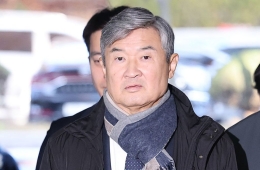
On the afternoon of the 22nd at 3 PM, Kim (34), whom we met in the lobby on the first floor of the National Medical Center in Jung-gu, Seoul, recalled the recent experience of being refused surgery. After a simple dinner with friends, Kim injured his leg on the way home and tried to get surgery for an 'open fracture.' He visited two large hospitals in Seoul on the same day but was told at both places, "Surgery is impossible due to no doctors because of the strike." Later, upon arriving here, he was able to receive surgery within about two hours.
Kim said, "Thinking about the time I was refused surgery and transferred to another hospital is terrifying. Fortunately, I received surgery, but how desperate must patients awaiting brain or cancer surgery feel? If we think about the people, both doctors and the government should each take a step back," he said.
![Mr. Kim, who underwent surgery for an open fracture at the National Medical Center. Due to the resident doctors' strike, Mr. Kim had to visit two hospitals before finally receiving surgery here. <br>[Photo by Seohee Lee]](http://www.asiae.co.kr/news/img_view.htm?img=2024022309190273327_1708647542.jpg)
Mr. Kim, who underwent surgery for an open fracture at the National Medical Center. Due to the resident doctors' strike, Mr. Kim had to visit two hospitals before finally receiving surgery here.
[Photo by Seohee Lee]
Patients Coming to Public Hospitals Instead of the 'Big 5'... "No Sense of Medical Gap"
As the resident doctors' strike intensifies, public hospitals are functioning as the frontline institutions to fill the 'medical gap.'
On the 20th, Choi (63), who underwent surgery for cardiovascular disease at the National Medical Center, was also refused surgery once at another hospital. Choi, who worked in a manual labor job, felt chest pain and collapsed while working. At a nearby hospital where he was urgently transferred, he was told, "Surgery is impossible due to the doctors' strike."
After arriving here, he was able to undergo surgery immediately without waiting. Choi said, "I was transferred to the hospital closest to my workplace, but after being refused surgery once, I came here. Fortunately, I had surgery right away and woke up in the ICU. The surgery went smoothly as planned," he said.
![On the afternoon of the 22nd, patients are waiting at the outpatient reception desk of Seoul Red Cross Hospital. <br>[Photo by Lee Ji-eun]](http://www.asiae.co.kr/news/img_view.htm?img=2024022309202373332_1708647623.jpg)
On the afternoon of the 22nd, patients are waiting at the outpatient reception desk of Seoul Red Cross Hospital.
[Photo by Lee Ji-eun]
At another public hospital, Seoul Red Cross Hospital in Jung-gu, Seoul, it was also difficult to find any 'medical gap' caused by the collective strike. Around 3 PM on the 22nd, about a dozen patients sitting in front of the reception desk were calmly waiting for their turn. Most completed registration within 10 to 20 minutes and quickly left.
Patients visiting the hospital said they did not feel any inconvenience due to the resident doctors' strike. Lee (78), who came for dermatology treatment, said, "I finished my consultation and left within 10 minutes after registering. I heard from a friend who receives treatment at Severance that it takes three to four hours just to get medicine, so I feel relieved that at least public hospitals provide treatment like this," she said.
Kim (84), who was waiting in front of the reception desk, waved off the question about knowing the resident doctors' strike. "There is no such thing here," he said. Kim added, "I visit the hospital twice a month for neuropsychiatric treatment, and the doctors here are very reliable. I believe this hospital will not participate in the strike," he said.
"No Major Medical Disruptions Yet"... Some Emergency Work Systems Activated
![On the 21st, visitors waiting for medical treatment at a large hospital in Seoul. <br>[Photo by Kang Jin-hyung]](http://www.asiae.co.kr/news/img_view.htm?img=2024022110244570470_1708647870.jpg)
On the 21st, visitors waiting for medical treatment at a large hospital in Seoul.
[Photo by Kang Jin-hyung]
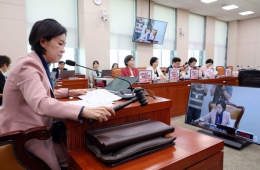
According to the Ministry of Health and Welfare, on the 22nd, about 9,000 resident doctors (interns and residents) at 100 training hospitals nationwide submitted resignation letters in protest against the expansion of medical school quotas. This accounts for about 70% of all resident doctors. Among those who submitted resignation letters, about 8,000 were confirmed not to have actually come to the hospitals.
However, in the case of public hospitals, the proportion of resident doctors who submitted resignation letters is relatively low, so no major medical disruptions have occurred yet. At Seoul Red Cross Hospital, none of the nine resident doctors and trainees submitted resignation letters.
At the Police Hospital, 22 out of 45 resident doctors submitted resignation letters, and at the National Medical Center, 71 out of 102 did so. Seoul Red Cross Hospital and Police Hospital are continuing normal operations, judging that current staffing is sufficient for treatment, while the National Medical Center has activated an emergency work system with about 100 specialists and 30 resident doctors.
Hot Picks Today
 "Now Our Salaries Are 10 Million Won a Month" Record High... Semiconductor Boom Drives Performance Bonuses at Major Electronic Component Firms
- Experts Already Watching Closely..."Target Price Set at 970,000 Won" Only Upward Momentum Remains [Weekend Money]
- "Heading for 2 Million Won": The Company the Securities Industry Says Not to Doubt [Weekend Money]
- Did Samsung and SK hynix Rise Too Much?... Foreign Assets Grow Despite Selling [Weekend Money]
- "Chanel Open Run? I Get a Free Pass"... The World of the Top 0.1% That Money Alone Can't Enter [Luxury World]
A representative of the National Medical Center said, "The average daily number of patients was about 1,200, and after the strike, it has remained similar or slightly increased. There are no major treatment disruptions yet. We are also preparing additional measures in case of unforeseen situations," he said.
© The Asia Business Daily(www.asiae.co.kr). All rights reserved.