Government "Fully Restore Nuclear Power Ecosystem"... 18% Tax Reduction on Large Nuclear Power Facility Investments
Holding a Public Discussion on Livelihood in Changwon and Proposing Measures for 'Complete Restoration of the Nuclear Power Ecosystem'
Newly Reflecting Large Nuclear Power Plant Manufacturing Technology in New Growth and Core Technologies
Supplying 3.3 Trillion Won in Nuclear Power Orders and 1 Trillion Won in Special Financing
Companies possessing large-scale nuclear power plant manufacturing technology will also receive tax reduction benefits of up to 18% on facility investments going forward. This is due to the government's decision to newly include large-scale nuclear power plant manufacturing technology in the tax credit targets for the nuclear power sector under the Restriction of Special Taxation Act to achieve a 'complete restoration of the nuclear power ecosystem.'
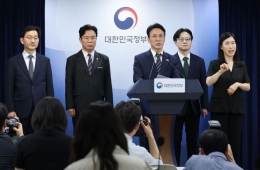
On the 22nd, President Yoon Suk-yeol held the 14th "Public Discussion on Livelihoods with the People" at the Gyeongnam Provincial Government Office in Changwon City under the theme "Revitalizing the Nuclear Power Industry, Vibrant Changwon and Gyeongnam."
President Yoon emphasized, "We will support corporate investment activities by including facility investments and research and development for nuclear power manufacturing in the scope of tax support," adding, "We will invest more than 4 trillion won in nuclear power research and development (R&D) over the next five years of the current administration so that nuclear power companies, workers, and students majoring in nuclear power at universities can focus on their business activities and studies."
![President Yoon Suk-yeol. (File photo) [Image source=Yonhap News]](http://www.asiae.co.kr/news/img_view.htm?img=2024022014424469434_1708407764.jpg)
Turning the 'Warmth' of the Nuclear Power Ecosystem into 'Heat'... Increased Investment Capacity through Tax Benefits
At the discussion, Minister An Deok-geun of the Ministry of Trade, Industry and Energy reported on efforts and achievements in normalizing nuclear power policies through the agenda "Nuclear Power Industry Bringing Warmth to Livelihoods" and presented specific plans to leap forward as a nuclear power superpower by qualitatively advancing beyond the normalization of the nuclear power industry. Minister An explained, "As a result of a series of efforts, investments in the nuclear power industry, which had decreased to 140 billion won in 2021, increased to 250 billion won in 2022, and key ecosystem indicators such as sales, investment, employment, and enrollment in university and graduate school majors have all shown clear improvement," adding, "In particular, nuclear power equipment exports have increased more than sixfold in less than two years, nearly seven times the total amount during the previous five years of government."
The government views it as important to inject seed money into new investments in the nuclear power industry, which stagnated during the nuclear phase-out period, to strengthen the warmth of the nuclear power ecosystem into heat, and has decided to significantly expand tax credits for the nuclear power sector under the Restriction of Special Taxation Act. Specifically, in addition to the current tax credit targets under the Act, which include 'design technology' in the 'large-scale nuclear power plants and small modular reactors (SMR)' fields and part of the 'SMR manufacturing technology' included in new growth and source technologies, 'large-scale nuclear power plant manufacturing technology' will be newly added. The scope of 'SMR manufacturing technology' will also be expanded to increase the investment capacity of nuclear power equipment companies.
An official from the Ministry of Trade, Industry and Energy stated, "Previously, the tax credit support target under the Act for large-scale nuclear power plants was design technology, but with the expansion to manufacturing technology, most nuclear power manufacturing companies will benefit," and added, "For small and medium-sized enterprises, the tax credit limit for facility investments in nuclear power manufacturing technology will increase from the existing 10% to 18%, and it is expected that more than 1 trillion won in facility and R&D investments will be generated in the nuclear power industry this year alone."

Nuclear Power Orders to Reach 3.3 Trillion Won This Year... Cumulative 1 Trillion Won Executed for Shin Hanul Units 3 and 4
The supply of nuclear power orders will also increase. Following 2.4 trillion won in 2022 and 3 trillion won last year, the scale of nuclear power orders supplied will be expanded to 3.3 trillion won this year. Additionally, measures will be implemented to resolve difficulties faced by nuclear power companies that, despite securing orders, could not immediately receive payments.
Companies that experienced financial difficulties during the nuclear phase-out period have hoped for immediate payment upon contract, but the existing advance payment system only allowed payments at the time of equipment delivery, which could be two to three years after the contract. Because of this, companies have expressed difficulties in lacking funds to start production immediately even after securing contracts.
The government, through consultations among related ministries, has been implementing since December last year a special advance payment system allowing small and medium-sized enterprises supplying auxiliary equipment for Shin Hanul Units 3 and 4 to receive up to 30% of the contract amount immediately upon contract. The government also plans to further ease the burden on small and medium-sized enterprises struggling with management difficulties by supporting up to 75% of the guarantee insurance fees required for advance payment applications. The government expects that this special system will ensure that orders for Shin Hanul Units 3 and 4 will be executed smoothly with a cumulative amount exceeding 1 trillion won by the first half of this year, providing much-needed relief to the nuclear power ecosystem. The special financial program for nuclear power companies, which was about 500 billion won last year, will also be doubled to 1 trillion won this year.
Developing Changwon as an SMR Hub... Establishing a Public-Private Joint Business Model
Changwon will be developed as an SMR hub. Changwon holds special significance in the nuclear power industry. Since Korea Heavy Industries & Construction (now Doosan Enerbility) moved into the Changwon General Machinery Complex in 1982, the first domestically produced main equipment for nuclear power plants was developed in Changwon. The Changwon National Industrial Complex surpassed 10 trillion won in production value in 1992 through the production of main equipment for Hanbit Units 3 and 4, and to this day, all main equipment for domestic nuclear power plants is manufactured in Changwon.
Hot Picks Today
 "Now Our Salaries Are 10 Million Won a Month" Record High... Semiconductor Boom Drives Performance Bonuses at Major Electronic Component Firms
- Living the Homebody Dream? "I Was Shocked by My Spending" How to Cut Costs to 5,000 Won for Essentials [The Principles of Benefits]
- Is It Really Like an Illness? "I Can't Wait to Go Again"—Over 1 Million Visited in Q1, Now 'Busanbyeong' Takes Hold [K-Holic]
- "Heading for 2 Million Won": The Company the Securities Industry Says Not to Doubt [Weekend Money]
- Experts Already Watching Closely..."Target Price Set at 970,000 Won" Only Upward Momentum Remains [Weekend Money]
The government plans to nurture Changwon and Gyeongnam into a global 'SMR cluster' where excellent local nuclear power equipment companies' capabilities are leveraged, similar to how Samsung Electronics and SK Hynix have concentrated foundries in the semiconductor industry. To this end, by the end of this year, a business system and strategy will be established that allows multiple private companies to participate and demonstrate expertise in the commercialization (business development, marketing, construction, etc.) of various reactor types, including the Korean small modular reactor 'i-SMR.' Since nuclear power companies in Changwon and Gyeongnam are already involved in related supply chains such as overseas SMR design companies and reactor production, support will be provided for R&D, investment benefits, and cooperation with global companies to further expand these activities.
© The Asia Business Daily(www.asiae.co.kr). All rights reserved.