From Order to Delivery AI Innovation... Hyundai Motor's Mobility Innovation Platform in Singapore
HMGICS Completion Ceremony of Hyundai Motor Group on the 21st
Platform for Innovative Mobility Demonstration
Innovation Testbed from Manufacturing to Ordering and Service
Conveyor Belts Removed, Increased Use of Robots
Era of Customized Car Production with Online Ordering Opens
Hyundai Motor Group has established a testbed in Singapore for future mobility demonstration. By applying advanced technologies such as robotics and artificial intelligence (AI), it aims to innovate the entire process from ordering to production and delivery. Consumers can order cars with desired specifications online, and manufacturers aim to flexibly respond to market demand by establishing a system capable of small-volume, multi-model production.
![Hyundai Motor Group Chairman Chung Euisun delivered a welcome speech at the completion ceremony held on the 21st (local time) at the Hyundai Motor Group Singapore Global Innovation Center located in the Jurong Innovation District in western Singapore. Provided by Hyundai Motor and Kia. [Image source=Yonhap News] Photo by Hyundai Motor and Kia](http://www.asiae.co.kr/news/img_view.htm?img=2023112204463661400_1700595996.jpg)
Hyundai Motor Group Chairman Chung Euisun delivered a welcome speech at the completion ceremony held on the 21st (local time) at the Hyundai Motor Group Singapore Global Innovation Center located in the Jurong Innovation District in western Singapore. Provided by Hyundai Motor and Kia. [Image source=Yonhap News] Photo by Hyundai Motor and Kia
View original imageOn the 21st, Hyundai Motor Group held a completion ceremony for the 'Hyundai Motor Group Innovation Center Singapore (HMGICS)' in the Jurong Innovation District in western Singapore. The ceremony was attended by key figures from both countries, including Lawrence Wong, Deputy Prime Minister of Singapore, and Ahn Duk-geun, Director-General for Trade Negotiations at the Ministry of Trade, Industry and Energy. Hyundai Motor Group's executives, including Chairman Chung Eui-sun, President Jang Jae-hoon, and Chief Technology Officer (CTO) Kim Yong-hwa, were also present.
In his welcoming speech, Chairman Chung emphasized, "Singapore and Hyundai Motor Group share a common innovation DNA that moves toward a better future," and added, "Hyundai Motor Group aims to achieve innovation through people-centered new technologies." He further stated, "Through HMGICS, we are confident in developing innovative mobility solutions that can bring positive changes to human progress."
![Hyundai Motor Group Singapore Global Innovation Center (HMGICS) exterior view <br>[Photo by Hyundai Motor Group]](http://www.asiae.co.kr/news/img_view.htm?img=2023112114534960761_1700546028.jpg)
Hyundai Motor Group Singapore Global Innovation Center (HMGICS) exterior view
[Photo by Hyundai Motor Group]
Hyundai Motor Group judged Singapore, with its open policies, economy, and excellent talent pool, as the optimal location for a 'smart urban mobility hub.' The group is fostering HMGICS as an innovative manufacturing platform by introducing advanced technologies such as AI, robotics, and digital twin technology.
HMGICS was built on a 44,000㎡ (13,000 pyeong) site within the Jurong Innovation District, with a total floor area of approximately 90,000㎡ (27,000 pyeong), consisting of two basement levels and seven above-ground floors. It is a complex space equipped with small-scale manufacturing facilities, research and development (R&D), office workspaces, and customer experience facilities all within one building. HMGICS began operations earlier this year, producing the Ioniq 5 and autonomous robo-taxis. It has the capacity to produce over 30,000 electric vehicles annually and is equipped with a multi-model small-volume production system to effectively respond to market demand.
![Lawrence Wong, Deputy Prime Minister of Singapore, and Chung Eui-sun, Chairman of Hyundai Motor Group, are touring the HMGICS manufacturing facility at the completion ceremony held on the 21st (local time) at the Hyundai Motor Group Singapore Global Innovation Center located in Jurong Innovation District, western Singapore. Provided by Hyundai Motor and Kia. [Image source=Yonhap News]](http://www.asiae.co.kr/news/img_view.htm?img=2023112204474961401_1700596069.jpg)
Lawrence Wong, Deputy Prime Minister of Singapore, and Chung Eui-sun, Chairman of Hyundai Motor Group, are touring the HMGICS manufacturing facility at the completion ceremony held on the 21st (local time) at the Hyundai Motor Group Singapore Global Innovation Center located in Jurong Innovation District, western Singapore. Provided by Hyundai Motor and Kia. [Image source=Yonhap News]
View original imageFirst, Hyundai Motor Group eliminated conveyor belts to respond to various customized orders. Instead, it introduced a 'Cell' system capable of simultaneously producing different types of mobility. This system allows workers and production robots to manufacture mobility products tailored to diverse demands within an oval-shaped cell. Even as the number of production models increases, optimized algorithms can reduce production time.
![A robot assembling an Ioniq 5 in a cell. HMGICS eliminated conveyor belts and introduced a cell-based production system for manufacturing innovation. <br>[Photo by Hyundai Motor Group]](http://www.asiae.co.kr/news/img_view.htm?img=2023112114541860762_1700546057.jpg)
A robot assembling an Ioniq 5 in a cell. HMGICS eliminated conveyor belts and introduced a cell-based production system for manufacturing innovation.
[Photo by Hyundai Motor Group]
Additionally, Hyundai Motor Group implemented a virtual 3D space that replicates the actual factory environment to simulate real operations. Utilizing 'digital twin' technology enhances overall process efficiency. It enables optimized operation rate calculations and easy management of manufacturing and logistics processes without the need for actual operation or visits.
The organic connection between robots and humans is another strength of HMGICS. Using digital twin technology, when a worker issues instructions in the virtual space, robots assigned to each process?such as parts, body, and assembly?calculate timing and routes to perform tasks. This allows workers to focus solely on creative tasks, freeing them from repetitive and heavy labor. Hyundai Motor Group plans to gradually introduce the manufacturing platform demonstrated at HMGICS to the Hyundai Motor Group Meta Plant America (HMGMA) in Georgia, USA, and the dedicated electric vehicle factory in Ulsan, Korea.
![A HMGICS worker is assembling the Ioniq 5 door using a chair-type wearable robot. <br>[Photo by Hyundai Motor Group]](http://www.asiae.co.kr/news/img_view.htm?img=2023112114550260763_1700546101.jpg)
A HMGICS worker is assembling the Ioniq 5 door using a chair-type wearable robot.
[Photo by Hyundai Motor Group]
![A HMGICS worker is assembling the Ioniq 5 while Boston Dynamics' robot 'Spot' is inspecting the quality of the assembly. <br>[Photo by Hyundai Motor Group]](http://www.asiae.co.kr/news/img_view.htm?img=2023112114551660764_1700546116.jpg)
A HMGICS worker is assembling the Ioniq 5 while Boston Dynamics' robot 'Spot' is inspecting the quality of the assembly.
[Photo by Hyundai Motor Group]
Furthermore, Hyundai Motor Group is testing a new concept of customer service through HMGICS. When consumers order various trims, colors, and options online, HMGICS produces customized mobility accordingly. Once production is complete, the vehicle is moved to the sky track located on the center's rooftop for driving tests.
![HMGICS Skytrack showing the Ioniq 5 robotaxi in operation <br>[Photo by Hyundai Motor Group]](http://www.asiae.co.kr/news/img_view.htm?img=2023112114563660770_1700546195.jpg)
HMGICS Skytrack showing the Ioniq 5 robotaxi in operation
[Photo by Hyundai Motor Group]
Finally, Hyundai Motor Group is building close collaborative relationships with the local ecosystem to develop sustainable mobility manufacturing and production solutions. At the completion ceremony, Hyundai Motor Group signed memorandums of understanding (MOUs) related to building a technology development ecosystem with Nanyang Technological University and the Agency for Science, Technology and Research, a development research institute under Singapore's Ministry of Trade and Industry.
Hot Picks Today
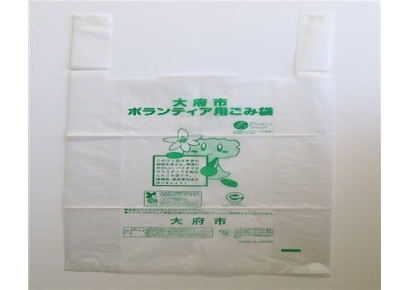 "Only Two Per Person" Garbage Bag Crisis Was Just Yesterday... Japan Also Faces Shortage Anxiety
- "Samsung Electronics Employee with 100 Million Won Salary Receiving 600 Million Won Bonus... Estimated Tax Revealed"
- Lived as Family for Over 30 Years... Daughter-in-Law Cast Aside After Husband's Death
- 'Will Demand Finally Decline Due to High Prices?'... "I'll Just Enjoy Nearby Trips" as Japan and China See a Surge
- "Wore It Once, Then This? White Spots All Over 4.15 Million Won Prada Jacket... 'Full Refund Ordered'"
It also agreed to cooperate with Singapore logistics company PTCL (Poh Tiong Choon Logistics) to establish a hydrogen mobility ecosystem. Last year, Singapore announced its national hydrogen strategy, aiming to increase the share of low-carbon energy production, including hydrogen, to half of the country's total power generation by 2050. Hyundai Motor Group President Jang Jae-hoon stated, "Hyundai Motor Group plans to engage in various collaborations with Singapore to develop future mobility production and technology innovation solutions and to build and advance a sustainable ecosystem."
© The Asia Business Daily(www.asiae.co.kr). All rights reserved.