Automotive Industry Requests President to Veto Amendments to Labor Union Act Articles 2 and 3
On the 20th, the Korea Automobile Industry Association requested the president to exercise the veto power against the amendments to Articles 2 and 3 of the Labor Union Act.
This organization is a coalition of 11 related associations and institutions, including the Korea Automobile Mobility Industry Association, which has five domestic completed car manufacturers as members, the Korea Automobile Industry Cooperative, the Automotive Parts Industry Promotion Foundation, the Korea Automotive Research Institute, and the Korean Society of Automotive Engineers. Given the complex value chain and various primary and subcontracting relationships, they foresee confusion on the ground if the so-called Yellow Envelope Act, the amendment to the Labor Union Act, is passed.

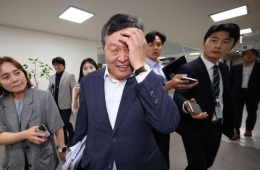
On the 9th, the partial amendment to the Labor Union and Labor Relations Adjustment Act was passed at the plenary session held at the National Assembly. Photo by Hyunmin Kim kimhyun81@
View original imageIn a statement released that day, the association said, "The automobile industry has a complex industrial structure composed of completed car manufacturers and thousands of first to third-tier suppliers," adding, "The amended law expands the scope of employers with the ambiguous concept of substantial control, requiring responses to negotiation demands and strikes throughout the year, and if negotiation demands are refused under unclear employer status, criminal liability may be imposed."
They continued, "Due to the industrial characteristic where even strikes at one or two parts suppliers or some processes can halt automobile production, union's excessive demands and frequent strikes are common," and "With the expansion of disputes over rights, including interpretations of laws and collective agreements, to subjects of industrial action, continuous strikes will occur, making normal business operations impossible." They emphasized that if claims for damages due to illegal union strikes are limited to conditions that make individual liability practically impossible, it will encourage illegal union disputes.
Hot Picks Today
!["Rather Than Endure a 1.5 Million KRW Stipend, I'd Rather Earn 500 Million in the U.S." Top Talent from SNU and KAIST Are Leaving [Scientists Are Disappearing] ①](https://cwcontent.asiae.co.kr/asiaresize/93/2026051914165468840_1779167814.png) "Rather Than Endure a 1.5 Million KRW Stipend, I'd Rather Earn 500 Million in the U.S." Top Talent from SNU and KAIST Are Leaving [Scientists Are Disappearing] ①
"Rather Than Endure a 1.5 Million KRW Stipend, I'd Rather Earn 500 Million in the U.S." Top Talent from SNU and KAIST Are Leaving [Scientists Are Disappearing] ①
- Given Grants, Then Says "No Launch" ... Innovative Korean Technology Ultimately Forced Overseas
- [Breaking] Chairman Park Sookeun: "Possibility of Agreement Instead of Samsung Electronics Labor-Management Mediation Proposal"
- "If That's the Case, Why Not Just Buy Stocks?" ETFs in Name Only, Now 'Semiconductor-Heavy' and a Playground for Short-Term Traders
- "No Cure Available, Spread Accelerates... Already 105 Dead, American Infected"
The organization argued, "As competition between the nation and companies to secure leadership in future vehicles intensifies day by day, securing production competitiveness through stable labor-management relations and expanded labor flexibility is urgent," and "The current amendment raises concerns about serious damage to production competitiveness due to frequent labor disputes and lawsuits." They also forecast difficulties in the transformation of the parts industry for future readiness and in domestic investment by foreign-invested companies.
© The Asia Business Daily(www.asiae.co.kr). All rights reserved.
![Cheaper Than Candy, Yet Impossible to Find... Fears of a 'Pediatric Medical Crisis' as Pharmaceutical Companies Halt Production [Why&Next]](https://cwcontent.asiae.co.kr/asiaresize/307/2026051910065268365_1779152813.jpg)