Lee Jae-myung's Arrest Warrant Rejected... Court States "Difficult to See Grounds and Necessity for Detention"
The arrest warrant requested by the prosecution for Lee Jae-myung, leader of the Democratic Party of Korea, in connection with allegations of 'special favors in Baekhyun-dong development' and 'Ssangbangwool Group's remittance to North Korea' did not pass the court's threshold.

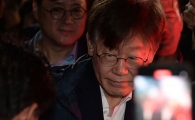
Lee Jae-myung, leader of the Democratic Party of Korea, who has been indicted on suspicion of preferential treatment in the Baekhyun-dong development project and involvement in Ssangbangwool's North Korea remittance allegations, is attending the pre-trial detention hearing at the Seoul Central District Court in Seocho-gu, Seoul on the 26th. Photo by Hyunmin Kim kimhyun81@
View original imageJudge Yoo Chang-hoon, in charge of warrants at the Seoul Central District Court, dismissed the arrest warrant for Lee, which was requested on charges including violation of the Act on the Aggravated Punishment of Specific Crimes (bribery). Accordingly, Lee is expected to be released soon from Seoul Detention Center and return home.
Judge Yoo stated, "Considering the necessity to guarantee the suspect's (Lee Jae-myung's) right to defense and the degree of concern for evidence tampering, it is difficult to find sufficient grounds and necessity for detention to override the principle of non-custodial investigation."
Regarding the charges, the judge said that the charge of subornation of perjury "appears to be substantiated," but concerning the Baekhyun-dong development, "there is considerable suspicion that the suspect was involved, considering his position, related approval documents, and testimonies of related persons, especially regarding the exclusion of Seongnam Urban Development Corporation from the project." However, "at this point, direct evidence on this matter is insufficient, and it is difficult to conclude that the suspect's defense, which disputes the facts or legal aspects, should be rejected."
Regarding the remittance to North Korea, the judge noted, "Based on the testimony of Lee Hwa-young (former Gyeonggi Province Peace Deputy Governor), a key figure, and related materials so far, there is room for dispute about the suspect's awareness, conspiracy, and degree of involvement."
Judge Yoo further stated, "In the cases of subornation of perjury and Baekhyun-dong development project, considering the human and material evidence secured so far, it is difficult to see a risk of evidence tampering. Regarding the remittance to North Korea, although there are circumstances that raise suspicion of improper involvement by people around the suspect related to Lee Hwa-young's testimony, there is a lack of evidence to conclude direct involvement by the suspect. Also, it is hard to say that Lee Hwa-young's previous statements to investigative agencies were involuntary, and changes in testimony fall within the realm of assessing credibility. Considering the suspect's attendance at separate trials and his position as the current leader of a political party subject to public scrutiny and criticism, it is difficult to conclude that there is a risk of evidence tampering."
Related Articles
 Democratic Party: "Dismissal of Lee Jae-myung's Arrest Warrant Is Natural... Distorted and Fabricated Investigations Cannot Overcome the Court's Barrier"
Meanwhile, Lee underwent a pre-arrest detention hearing (warrant review) for a total of 9 hours and 17 minutes, from 10:07 a.m. to 7:24 p.m. on the 26th. This is the second-longest duration since the introduction of the warrant review system in 1997. The longest record was 10 hours and 6 minutes during the warrant review of former National Security Office chief Suh Hoon in December last year, related to the 'West Sea public official shooting incident.'
© The Asia Business Daily(www.asiae.co.kr). All rights reserved.







