EU Launches Anti-Subsidy Investigation on Chinese Electric Vehicles... Moves to Impose Tariffs
Von der Leyen Chairperson Announces in Speech
"Tariff Rate Expected at 27.5% Level Imposed by US"
Chinese Electric Vehicles Projected to Hold 15% Market Share in EU by 2025
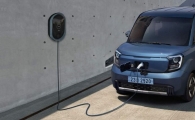
The European Union (EU) is launching a large-scale anti-subsidy investigation targeting Chinese electric vehicles imported into the region. This move is seen as an effort to curb Chinese companies, which have been expanding their market share in the European electric vehicle market through low-price strategies. If it is determined that unfair competition is occurring due to subsidies from the Chinese government, there is speculation that a form of 'punitive tariff' could be imposed.
![[Image source=Reuters Yonhap News]](http://www.asiae.co.kr/news/img_view.htm?img=2023091408340975057_1694648049.jpg)
According to Bloomberg and other sources on the 13th (local time), Ursula von der Leyen, President of the European Commission, announced during her annual policy speech at the European Parliament in Strasbourg, France, that an anti-subsidy investigation will be conducted on Chinese electric vehicles imported into the EU.
President von der Leyen criticized, "The global market is currently flooded with cheap Chinese electric vehicles, artificially priced low due to massive state subsidies." She added that the subsidy distribution policy distorts market prices and emphasized, "Just as we do not accept such distortions in the internal market, such practices should not be accepted outside the region either."
Although she did not specify the exact investigation method, it is expected to be similar to an antitrust investigation that examines violations of competition law and imposes sanctions such as fines.
Bloomberg predicted that the investigation could take up to nine months. It also forecasted that not only Chinese electric vehicle companies but also non-EU automakers producing cars in China, such as Tesla, could face new tariffs. According to sources familiar with the matter, the tariff rate could reach the 27.5% level that the United States imposes on Chinese electric vehicles.
This EU measure comes amid concerns that traditional European automakers, the 'established players' in the industry, might lose their footing even in their home market as Chinese electric vehicle companies rapidly grow in the European market with low-priced electric vehicles.
According to Innovebb, an automotive consulting firm, Chinese-made electric vehicles accounted for 8% of electric vehicles sold in Europe from January to July this year. The share of Chinese electric vehicles, which was only 4% in 2021, rose to 6% last year and increased by another 2 percentage points this year. It is projected that this share will grow to 15% by 2025, highlighting a notable growth trend.
Oliver Zipse, CEO of BMW Group, said on the 3rd that Chinese companies have exposed the European industry, especially low-cost model manufacturers, to an "imminent risk."
The EU is pursuing a 'de-risking' strategy aimed at maintaining a sustainable relationship with China while eliminating unfair trade practices. In her speech, von der Leyen mentioned China ten times and stressed the importance of a "level playing field." She pointed out that Chinese companies have dominated the European solar power market based on subsidies, leading to bankruptcies of European companies and the emigration of talent.
However, there are concerns that if the EU's investigation leads to tariff imposition, China may retaliate with corresponding measures, potentially affecting European companies operating in China. Foreign media reported that German manufacturers such as BMW and Mercedes-Benz, which hold about a 17% share of the Chinese automobile market, could be particularly impacted.
© The Asia Business Daily(www.asiae.co.kr). All rights reserved.