"The Spent Battery Market Eyes 600 Trillion Won... Current Laws Lack Even the Concept"
Mock Trial Held at Yonsei University Law School on the 28th
Ministry of SMEs and Startups' 'Regulation Breaker Part 3'... Addressing the Future Mobility Industry

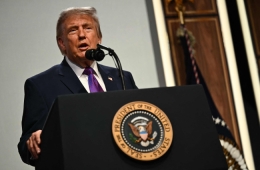
Lee Young, Minister of SMEs and Startups, is speaking ahead of a mock trial held on the 28th at the Yonsei University Law School mock courtroom.
View original image‘K Battery,’ a small and medium-sized enterprise producing energy storage systems (ESS) by recycling used batteries. Last September, K Battery purchased 30 used batteries from electric vehicles that had been scrapped through an auction held by the Environmental Management Corporation for 300 million KRW. Of these, 20 were recycled to manufacture ESS units, which were sold to overseas electrical company A for 1 billion KRW. The remaining 10 batteries were stored in the factory for 334 days due to difficulties in procuring auxiliary materials.
The problem arose here. An environmental organization reported K Battery for a potential violation of the Waste Management Act. Under current law, used batteries from electric vehicles are classified as waste, and there is a mandatory provision that the storage period for waste intended for recycling must be within 30 days. The prosecutor demanded a six-month prison sentence for the CEO of K Battery. The CEO appealed for leniency and regulatory relaxation, arguing that excessive regulations are causing Korean companies to lose competitiveness in the used battery market.
This was a case in a mock trial held on the 28th by the Ministry of SMEs and Startups at Yonsei University Law School. On that day, three mock trials were conducted on the themes of ‘Used Electric Vehicle Batteries: Future Resource vs. Waste?’, ‘Video Information That Cannot Be Used for Artificial Intelligence (AI) Learning’, and ‘Hydrogen Ships That Cannot Be Launched at Sea’. The trials consisted of company CEOs facing court due to excessive regulations, their defense attorneys, prosecutors presenting the charges, and judges reviewing both sides’ opinions.
Kim Hu-gon, lead attorney at Law Firm Robax who defended the CEO of K Battery, pointed out that there is no definition of ‘used battery’ in current Korean law. Attorney Kim stated, “There is no definition of used batteries in the Waste Management Act or any other current laws or standards. This vague regulation led to criminal charges and prosecution in this case, which clearly violates the principle of legality and the principle of clarity.”
On the 3rd, the Ministry of Environment prepared a revision of the Enforcement Rules of the Waste Management Act to relax the storage period for used electric vehicle batteries from the current 30 days to 180 days. Regarding this, Attorney Kim said, “Considering the rapidly growing battery industry, this is still an excessive regulation,” and pointed out, “It is hard to see that a slightly longer storage period would cause soil or air pollution.”
Used electric vehicle batteries have about 70-80% of their remaining lifespan. Therefore, they can be reused or recycled for ESS or electric bicycles. They are more like circular resources or secondhand products than waste. Attorney Kim said, “It is more accurate to call used batteries ‘post-use batteries’,” and added, “The concept of used batteries, which is expected to grow to 600 trillion KRW by 2040, needs to be redefined and the system reorganized.”

On the 28th, a "Mock Trial on Breaking Down Regulations in the Mobility Sector" is being held at the Yonsei University Law School mock courtroom.
View original imageThe mock trial on the theme of ‘Video Information That Cannot Be Used for Artificial Intelligence (AI) Learning’ dealt with whether video information collected by autonomous vehicles or delivery robots violates the Personal Information Protection Act.
K Mobility, a delivery robot startup preparing to enter the NEOM City project in Saudi Arabia, heard that a competing American company had dramatically improved autonomous driving safety by using AI to learn pedestrians’ facial expressions. Accordingly, from June 1 for one month, K Mobility operated 50 delivery robots near Seongsu-dong, Seongdong-gu, Seoul, capturing people’s faces.
K Mobility displayed notices of filming on the delivery robots’ electronic signboards during the filming process. There were no refusals to be filmed. K Mobility used the collected data to train AI to enhance the driving performance and safety of its delivery robots. However, a civic group that accidentally learned of this reported K Mobility for a potential violation of the Personal Information Protection Act. The prosecution demanded a 10-month prison sentence, claiming K Mobility processed sensitive information without the consent of the data subjects.
Attorney Koo Tae-eon of Law Firm Lin, representing K Mobility, argued that the facial information captured by the delivery robots had a resolution and size that made it impossible to identify individuals, and that it was difficult to find and combine other information to compare with the facial data, so it did not violate the Personal Information Protection Act. Attorney Koo stated, “K Mobility intended to develop safe autonomous driving technology using facial information, not to identify specific individuals,” and argued, “This cannot be considered ‘processing of personal information,’ so the Personal Information Protection Act should not apply.”
In the case of the ‘Hydrogen Ship That Cannot Be Launched at Sea,’ the issue was whether to punish a small hydrogen ship that could not pass construction inspection because it physically failed to meet hydrogen fuel cell bulkhead standards. Opinions were raised that a system suitable for small hydrogen ships should be established according to global standards.
This mock trial was held to highlight the mismatch between new technologies and regulations and to provide an opportunity to consider recent regulatory issues in the mobility sector. No verdict was given, with the sentencing date left open.
Park Dong-jin, dean of Yonsei University Law School, said, “Regulatory improvement must be addressed together by companies, government, citizens, and experts,” and added, “I hope that the Ministry of SMEs and Startups’ regulatory breakthrough will promote forward-looking discussions on the development direction of technology, law, and systems in various fields.”
Hot Picks Today
!["Rather Than Endure a 1.5 Million KRW Stipend, I'd Rather Earn 500 Million in the U.S." Top Talent from SNU and KAIST Are Leaving [Scientists Are Disappearing] ①](https://cwcontent.asiae.co.kr/asiaresize/93/2026051414165763158_1778735817.jpg) "Rather Than Endure a 1.5 Million KRW Stipend, I'd Rather Earn 500 Million in the U.S." Top Talent from SNU and KAIST Are Leaving [Scientists Are Disappearing] ①
"Rather Than Endure a 1.5 Million KRW Stipend, I'd Rather Earn 500 Million in the U.S." Top Talent from SNU and KAIST Are Leaving [Scientists Are Disappearing] ①
- "I Hated Myself as Much as I Craved It"... Even a Mother's Tears and Brilliant Dreams Were Shattered [ChwiYakGukga] ⑦
- "Most Americans Didn't Want This"... Americans Lose 60 Trillion Won to Soaring Fuel Costs
- Mother of Three Gang-Raped on Bus in India... Outrage as Bus Driver Implicated
- "It's Only May, but Convenience Stores Know... Iced Americano at 24°C, Tube Ice Cream at 31°C: The Thermometer of the Summer Sales Boom"
Lee Young, Minister of SMEs and Startups, stated, “The government’s role is to remove obstacles so that companies in new industries can operate freely and create an environment aligned with global standards to compete with overseas companies in the global market,” and said, “Based on the strong support of the public, we will continue efforts to achieve regulatory improvements that ensure both safety and innovation.”
© The Asia Business Daily(www.asiae.co.kr). All rights reserved.