‘Special Act on Coal-Fired Power Plants’ Enactment: Chungnam and 4 Other Cities/Provinces Join Forces with Political Circles
The metropolitan local governments where coal-fired power plants are located are joining forces with the political sphere to enact the ‘Special Act on Coal-Fired Power Plants.’

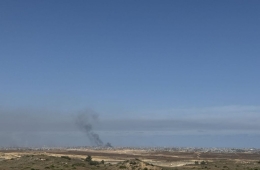
Steam is rising from the chimney of a coal-fired power plant. The photo is unrelated to the article. Source=Yonhap News
View original image◆ Legislative Forum to Build Consensus for Enacting the Special Act = Chungnam Province announced on the 11th that five cities and provinces including Chungnam, Incheon, Gangwon, Jeonnam, and Gyeongnam, along with local political circles, will hold a legislative forum to enact the ‘Special Act on Support for Areas Phasing Out Coal-Fired Power Plants’ (hereinafter referred to as the Special Act).
The legislative forum is hosted by Jang Dong-hyeok, a member of the National Assembly from the People Power Party representing Boryeong and Seocheon, and organized by the five cities and provinces along with the National Assembly Future Institute. It is scheduled to be held on the 17th of this month at the National Assembly Members’ Office Building. This event is arranged to form public opinion and consensus on the enactment of the Special Act.
At the forum, Kim Dong-il, mayor of Boryeong, will deliver a joint petition urging the enactment of the Special Act on behalf of the Administrative Council of Local Governments with Coal-Fired Power Plants (Boryeong, Ongjin, Taean, Donghae, Samcheok, Hadong, Goseong).
Following this, Jeong Hun, a research fellow at the National Assembly Future Institute, will present the main topic. Professors Jeong Nam-cheol from Sookmyung Women’s University, Kim Jong-cheon, head of the Regulatory Legislation Research Center at the Korea Legislation Research Institute, Kim Jin-su from Hanyang University, Kim In-su, editorial writer at Maeil Business Newspaper, Yang Yong-hyun, head of the Regulatory Research Center at the Korea Development Institute, Nam Tae-seop, secretary-general of the Power Federation, and Moon Yang-taek, head of the Power Industry Policy Division at the Ministry of Trade, Industry and Energy, will participate in a discussion on the enactment of the Special Act.
◆ Coal-Fired Power Plants Undergoing Phase-Out = Currently, there are a total of 58 coal-fired power plants nationwide. Among them, 29 are concentrated in Chungnam, including Boryeong and Dangjin, while the others are distributed as 14 in Gyeongnam, 7 in Gangwon, 6 in Incheon, and 2 in Jeonnam.
Coal-fired power plants have long been established as a core energy source, accounting for 34.2% of domestic power generation.
However, recently, with the acceleration of coal phase-out policies for carbon neutrality amid the climate crisis, these plants are gradually being phased out.
In fact, in December 2020, Boryeong Thermal Power Units 1 and 2 were shut down early. Subsequently, the government is promoting a plan to close 28 out of 58 thermal power plants nationwide by 2036, according to the 10th Basic Plan for Electricity Supply and Demand.

◆ Necessity of Enacting the Special Act = The Special Act is emphasized as necessary to prevent excessive damage to regions where coal-fired power plants are being phased out during the structural transition of the energy industry.
Chungnam Province points out that while the government is pushing for the phase-out of coal-fired power plants, it has not presented clear alternatives to consider the regions where these plants are being closed.
In addition, unlike the past decades when Chungnam had to endure environmental damages such as fine dust, transmission lines (total length 1,396 km), and large transmission towers while operating coal-fired power plants locally, appropriate compensation has not been provided accordingly.
Furthermore, Chungnam Province estimates that if 28 coal-fired power plants nationwide are closed as planned by the government, the nationwide economic loss will reach 75 trillion won.
This is why regions hosting coal-fired power plants are resisting the government’s coal phase-out and energy transition policies that lack alternatives.
◆ Overseas Cases of Coal-Fired Power Plant Phase-Out = Prior to South Korea’s push to phase out coal-fired power plants, the European Union (EU) finalized the European Green Deal Investment Plan (EGDIP) in January 2020.
Notably, this plan includes support of 100 billion euros (approximately 134 trillion won) by 2030 for regions undergoing plant closures and others.
Germany also enacted a law to support regions phasing out coal-fired power plants, committing 40 billion euros (approximately 53 trillion won) by 2038, and operates various support policies to strengthen local communities’ energy transition capabilities.
Overseas, the trend is to maintain the phase-out of coal-fired power plants while simultaneously implementing support policies considerate of the affected regions.
In this regard, 35 lawmakers from both ruling and opposition parties submitted a bill to the National Assembly in June to enact a special law for supporting domestic coal-fired power plant phase-out regions and fostering alternative industries.
Hot Picks Today
 At President Lee's Call to "Give Enough to Shock," Whistleblower Rewards Become a Real Lottery
- If a Samsung Electronics Employee with a 100 Million Won Salary Receives a 600 Million Won Performance Bonus, Taxes Total 247.19 Million Won
- Lived as Family for Over 30 Years... Daughter-in-Law Cast Aside After Husband's Death
- "White House Blocks Repatriation of 'Ebola-Infected' Doctor... Ultimately Transferred to Germany"
- "4.15 Million Won Prada Jacket Shows White Spots After One Wear"...Korea Consumer Agency Orders Full Refund
A Chungnam Province official said, “The Special Act is meaningful as it is the first special law proposed related to coal phase-out,” adding, “The five cities and provinces will cooperate with the political sphere to focus on enacting the Special Act to prevent excessive damage to regions where coal-fired power plants are being phased out during the structural transition of the energy industry.”
© The Asia Business Daily(www.asiae.co.kr). All rights reserved.