The R Party Innovation Committee, in Effect, 'Abolishes the Delegate System'... Strengthens Penalties for Incumbents in Candidate Nominations (Update)
Party Leader Election "70% Party Members, 30% Public Opinion Poll" Proposal
Innovation Committee Ends Activities as of Today
The Innovation Committee of the Democratic Party of Korea decided to end its activities after announcing the third innovation plan on the 10th. The committee announced that it would exclude delegate voting in the party leader election and strengthen the penalty points for incumbent lawmakers with lower evaluations during candidate nominations.
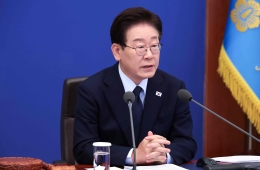
![[Image source=Yonhap News]](http://www.asiae.co.kr/news/img_view.htm?img=2023081014403136648_1691646031.jpg)
On the same day, the Innovation Committee held a press conference at the National Assembly and stated, "We propose that the party leader and supreme council members, the party's highest decision-making bodies, be elected by 70% one-person-one-vote from party members and 30% national opinion polls."
Currently, the voting weight in the National Convention for electing the party leadership is 40% party members, 30% delegates, 25% opinion polls, and 5% general party members. However, considering that the Democratic Party has 1 million party members and 16,000 delegates, concerns have been raised that the value of delegate votes is excessively high. This innovation plan essentially proposes abolishing the delegate system, which is expected to cause significant repercussions.
The committee also proposed, "A stricter standard should be applied to lower-ranked elected officials in relative evaluations," suggesting that the current rule of deducting 20% of primary election votes for the bottom 20% be changed to deduct 40% for the bottom 10%, 30% for 10-20%, and 20% for 20-30%. They also recommended increasing the deduction for party defectors or those who reject primary results from the current 25% to up to 50%.
Along with this, the Innovation Committee announced six 'policy capacity enhancement measures.' The committee pointed out, "The party has failed to develop policy capacity at the party level and has not operated the government centered on the party after coming to power," adding, "Many citizens do not consider the Democratic Party as an alternative despite repeated failures of the Yoon Seok-yeol administration because the party did not demonstrate competence when it had authority."
They proposed ▲appointing two nominated supreme council members as 'policy supreme council members,' ▲forming a 'shadow cabinet' with one 'responsible lawmaker' for each of the 18 government ministries, ▲reorganizing the policy committee, ▲lifting restrictions on the number of party secretariat staff, ▲strengthening the capacity of the Democratic Research Institute as a think tank, and ▲holding annual public reports on policy (pledge) progress.
Hot Picks Today
 "Samsung and Hynix Were Once for the Underachievers"... Hyundai Motor Employee's Lament
- KOSPI Plunges After Hitting 8000; When Will the Rebound Come?
- "They Said It's Impossible to Get—Already Selling for Triple the Price: Crowds Worldwide Line Up for $600 Luxury Watch"
- "Children Should Be Cared for at Home by Their Mother"...Opinion Reversed for the First Time in 18 Years
- "That? It's Already Stashed" Nightlife Scene Crosses the Line [ChwiYak Nation] ③
The Innovation Committee decided to end its activities after announcing the innovation plan on the same day. Kim Eun-kyung, the chairperson of the Innovation Committee, announced the conclusion of activities after presenting the plan, saying, "We will conclude the Innovation Committee's activities today." She added, "As the chairperson of the Innovation Committee, I will conclude my role here," and "I sincerely apologize for any discomfort caused by my insufficient words during this time."
© The Asia Business Daily(www.asiae.co.kr). All rights reserved.