China and Japan Implement Full Radiation Inspection on Seafood "Countermeasure Against Contaminated Water Discharge"
Interpretation of Measures to Pressure the Japanese Government for Forcing the Release of Fukushima Nuclear Plant Contaminated Water
On the 18th, Kyodo News reported that Chinese customs have begun comprehensive radiation inspections on imported seafood from Japan. This move is interpreted as a measure to pressure the Japanese government, which has announced the forced release of contaminated water from the Fukushima Daiichi Nuclear Power Plant into the ocean this summer.
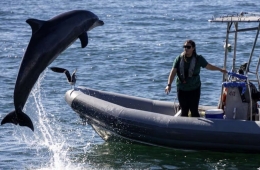
![[Image source=Yonhap News]](http://www.asiae.co.kr/news/img_view.htm?img=2023063009031281711_1688083392.jpg)
Due to this measure by China, inspections are expected to take several weeks, making it difficult to maintain the freshness of seafood. It is reported that some Chinese importers have already given up on importing Japanese seafood.
Earlier, on the 7th, the General Administration of Customs of China stated via WeChat (the Chinese version of KakaoTalk) that they are closely monitoring the impact of the contaminated water release on food, and "will take necessary measures in a timely manner while watching the situation to ensure the safety of Chinese consumers' dining tables." It is reported that the General Administration of Customs began inspecting each shipment of Japanese seafood immediately after this announcement.
Accordingly, Kyodo News reported that customs clearance for refrigerated Japanese seafood is expected to take about two weeks, while frozen products may take about a month.
Kyodo News added that Japan’s Ministry of Foreign Affairs and Ministry of Agriculture, Forestry and Fisheries are discussing responses to China’s recent measures.
Hot Picks Today
 "Over 20 Times More Than Overseas": 104.5 Milli...
- "Only the Top 1% Winning Big in Stocks Smile... '300 Million Won Splurges' or '1...
- Applied Just for Skin Soothing...Study Finds It Suppresses Antibiotic Resistance
- "If an Accident Happens, Teachers Go to Jail"... The Real Reason Behind Fewer Sc...
- "Please Launch It in Korea!" After All the Hype... This Coffee Finally Arrives i...
Chinese authorities banned the import of food, edible agricultural products, and feed produced in 12 Japanese prefectures, including Fukushima Prefecture, where the Fukushima Daiichi Nuclear Power Plant accident occurred in 2011. Currently, the ban applies to food produced in 10 prefectures.
© The Asia Business Daily(www.asiae.co.kr). All rights reserved.