[MarketING] KOSPI Recovers to 2550 Amid Eased Anxiety Sentiment
KOSPI Rebounds After 6 Days
Semiconductor Strength... Samsung Electronics Returns to '70,000 Won' Level
The KOSPI and KOSDAQ both started the day with gains, showing early strength of over 1%. The KOSPI recovered the 2550 level, and the KOSDAQ regained the 870 level. As uncertainties that had been suppressing the stock market eased somewhat, the market showed a rare sharp rise. This is interpreted as a result of easing inflation concerns due to a decline in expected inflation ahead of the U.S. June Consumer Price Index (CPI) announcement, and the rapid stabilization of the Saemaeul Geumgo issue, which has dispelled anxiety.
KOSPI rebounds after 6 days... recovers 2550 level in early trading
As of 10:15 a.m. on the 11th, the KOSPI was at 2551.75, up 31.05 points (1.23%) from the previous day. The KOSDAQ rose 13.84 points (1.61%) to 874.19.
![[Image source=Yonhap News]](http://www.asiae.co.kr/news/img_view.htm?img=2023071110192393337_1689038364.jpg)
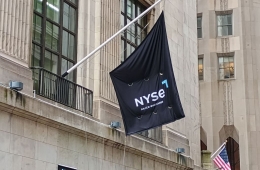
This strong performance is attributed to the U.S. stock market closing higher on easing inflation concerns the previous day. On the 10th (local time) at the New York Stock Exchange (NYSE), the Dow Jones Industrial Average rose 0.62%, the S&P 500 increased 0.24%, and the Nasdaq rose 0.18% compared to the previous day.
Na Jeong-hwan, a researcher at NH Investment & Securities, explained, "Amid caution ahead of the CPI announcement, the three major indices closed slightly higher due to a decline in expected inflation."
According to the June Consumer Expectations Survey released by the New York Federal Reserve Bank, the one-year expected inflation rate fell from 4.1% in May to 3.8% in June. Expected inflation has declined for three consecutive months, marking the lowest level since April 2021.
Along with this, the Manheim Used Vehicle Value Index, a wholesale price index for used cars, fell 4.2% month-on-month in June, also showing a decline for three consecutive months. This is the largest drop since April 2020.
Kim Seok-hwan, a researcher at Mirae Asset Securities, analyzed, "Several Federal Reserve (Fed) officials who have recently made statements continue to emphasize that expected inflation is well anchored, which can be seen as a factor reducing uncertainty about Fed monetary policy. Also, considering that the lag between wholesale used car prices and consumer prices is on average 2 to 3 months, downward pressure on goods prices is expected to increase for the time being."
The Saemaeul Geumgo issue, which had been a relative weakness factor for the domestic stock market, has also calmed down, positively affecting the indices. The five major commercial banks?KB, Shinhan, Hana, Woori, NH Nonghyup?as well as the Korea Development Bank and Industrial Bank of Korea, signed repurchase agreement (RP) purchase contracts with the Saemaeul Geumgo Central Association. Seven banks entered into RP contracts ranging from 500 billion to 2 trillion won, with over 6 trillion won either already supported or to be supported to Saemaeul Geumgo.
Han Ji-young, a researcher at Kiwoom Securities, said, "With the five major banks and policy banks signing RP purchase contracts to provide liquidity support, and the scale of bank runs (massive deposit withdrawals) at Saemaeul Geumgo reportedly shrinking, this will be a factor supporting the lower bound of the indices not only in the credit market but also in the stock market."
Semiconductor stocks showed strength in the U.S. stock market, leading Samsung Electronics and SK Hynix to rise as well. Samsung Electronics traded at 70,500 won, up 1.44% from the previous day, returning to the '70,000 won level.' SK Hynix also rose 1.54%. In the U.S. stock market the previous day, Micron rose 3.0%, Broadcom 3.7%, Texas Instruments 3.3%, and Intel 2.8%, pushing the Philadelphia Semiconductor Index up by more than 2%. Researcher Kim explained, "The semiconductor sector, sensitive to the economy, showed strength due to expectations of solid economic fundamentals. The strength of the semiconductor sector in the U.S. stock market will provide a favorable investment sentiment for the domestic stock market."
Cooling off process, respond with staggered buying at the lower bound of the index
While the domestic and global stock markets have recently shown weakness, this adjustment is analyzed as a process of resolving short-term overheating of stock prices.
Researcher Han said, "Since July, major countries' stock markets have shown vulnerable price trends, raising concerns in some quarters that the mid- to long-term upward trend is being damaged amid amplified Fed tightening uncertainties. However, the recent price adjustment is largely a resolution of short-term overheating burdens following the previous rally, and it is premature to conclude that the trend has been damaged."
It is explained that the Fed tightening issue acted as a justification for resolving overheating amid increasing short-term overheating burdens. Researcher Han said, "Based on the U.S. stock market, the Bull-Bear Spread, a sentiment indicator for individual investors predicting bull and bear markets, has shown a deepening optimism dominance since November 2021, and the overall market sentiment indicator, the Fear & Greed Index, remains in the extreme greed zone (75-100 points, 79 points as of the 10th) despite the July market correction. In this situation where short-term price and valuation burdens have accumulated, macroeconomic issues such as Fed tightening and interest rate hikes seem to have served as a justification for resolving overheating."
Hot Picks Today
 As Samsung Falters, Chinese DRAM Surges: CXMT Returns to Profit in Just One Year
- "Most Americans Didn't Want This"... Americans Lose 60 Trillion Won to Soaring Fuel Costs
- Trump: "No Concessions to Iran... They Will Soon Know What's Coming"
- Samsung Union Member Sparks Controversy With Telegram Post: "Let's Push KOSPI Down to 5,000"
- "Why Make Things Like This?" Foreign Media Highlights Bizarre Phenomenon Spreading in Korea
There is an opinion that staggered buying responses at the lower bound of the index are necessary. Researcher Han explained, "Considering that the U.S. June CPI to be announced on the 12th is expected to slow down, at this point, whenever market interest rates rise due to Fed tightening concerns amplifying market uncertainties, it is appropriate to treat this as noise and respond with staggered buying in the lower range of the index."
© The Asia Business Daily(www.asiae.co.kr). All rights reserved.