"Second Mad Cow Disease Rumor vs Japan and IAEA Collusion"
Domestic Experts Divided into Two Camps
Citizens Feel Anxious, "Whose Words Should We Trust?"
"Risk theory is the second mad cow disease rumor" vs "IAEA cannot conduct objective verification".
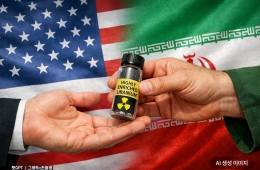
Domestic experts clashed on the 6th over Japan's Fukushima nuclear power plant contaminated water discharge issue and the contents of the International Atomic Energy Agency (IAEA) report, taking completely opposite positions.

The Korean Academy of Science and Technology held a forum at a hotel in Gwanghwamun, Seoul, in the afternoon, stating that the marine discharge of Fukushima contaminated water is not dangerous and dismissed some concerns as 'rumors.' At the event, Professor Jeong Yong-hoon of KAIST's Department of Nuclear and Quantum Engineering said, "There has been no significant change in the radioactivity concentration in the sea in front of our country for 10 years since the 2011 Fukushima nuclear accident," adding, "Even if Japan discharges, there is no impact." Regarding tritium, Professor Jeong said, "About 200g of tritium falls worldwide annually with rain, while the total annual discharge of Fukushima tritium is about 2.2g," and dismissed concerns by saying, "The discharge level is about 1500 Bq per liter, but several kilometers away, it is like river water discharge."
Professor Jeong also dismissed concerns that consuming fish grown in Fukushima contaminated water might be problematic if it is a one-time event, and that if the contaminated water meets standards, seafood imports might be necessary, saying, "The sea in front of Fukushima is different from ours," calling it 'an unfounded fear.' Regarding some demands to "prove safety by drinking the contaminated water," he rebutted as unscientific questions, saying, "If a mother-child relationship is suspected, you don't verify by making the son call the mother 'ajumma' (auntie), but by DNA testing." Professor Jeong argued, "Maintaining extreme social fear causes great harm to us," and insisted, "Salt hoarding occurs and fish sales begin to decline; such waste must be prevented."
Next, Senior Researcher Seo Kyung-seok of the Korea Atomic Energy Research Institute presented simulation results of Fukushima contaminated water marine discharge. Seo explained that the contaminated water would reach a point near Jeju Island after two years, but the tritium concentration would be only about 0.001 Bq/㎥, making the impact negligible. He said, "Similar results came out from simulations in foreign countries such as China." However, he urged, "While reducing uncertainties in future predictions, additional research should be conducted to understand ecological impacts and alleviate vague public anxiety."
Professor Kang Geon-wook of Seoul National University’s Department of Nuclear Medicine also participated as a discussant, arguing that tritium emits low radiation and is excreted through sweat and urine, so it does not accumulate in the human body and poses no risk. He explained, "Environmental groups claim risks regarding organically bound tritium, but only about 1% is organically bound and it all leaves the body in about 40 days," adding, "Even during the 1960s when the US and the Soviet Union conducted nuclear tests and tritium exposure was much higher than now, there was no effect on the human body." Professor Kang further pointed out, "Economic damage occurs to fishermen, fisheries, and restaurants due to stigma effects," and "Avoidance of seafood leads to increased cancer incidence. Red meat, classified as Group 2 carcinogen due to US lobbying, is well known as a cause of cancer." He also criticized, "(Baseless risk theories about radiation) are fear marketing and gaslighting, originating from Cold War politicians and spread through media, becoming an easy fundraising tool for environmental groups," and rhetorically asked, "Has a monster like Godzilla ever actually appeared in reality?"
Kim Seong-hwan, director of the Cancer Hospital at Catholic University St. Vincent’s Hospital, said that radiation therapy exceeding 60,000 to 70,000 Bq is routinely performed, and there is no evidence that cancer incidence is higher in countries with naturally high radiation emissions such as Iran, Brazil, and India. He added, "The tritium exposure from contaminated water is very small and it is difficult to see it as causing cancer," and said, "I am not here to support Japan’s contaminated water discharge, but to discuss how our country should respond."
Additionally, Lee Deok-hwan, emeritus professor of chemistry at Sogang University, criticized, saying, "Scientific analysis is being ignored and only emotional and political logic is rampant," calling it the second mad cow disease rumor. He said, "A certain emeritus professor at a specific school is spreading a politically motivated rumor disguised with fake science that ignores elementary school-level common sense," and argued, "The level of radioactive material reaching due to contaminated water is chemically below the measurement limit, so scientifically it is present, but it is correct to say it is not present in common sense."
On the other hand, the group of opposing experts, the Joint Action to Stop Japan’s Radioactive Contaminated Water Marine Dumping, held a press conference in Jung-gu, Seoul, in the afternoon and criticized the IAEA’s final report on contaminated water discharge released the day before, saying "There is a lack of objective verification."
At the event, Lee Jeong-yoon, representative of 'Nuclear Safety and Future,' pointed out, "Instead of international safety standards for environmental impact assessment, the concentration standards set by Japan’s Tokyo Electric Power Company were applied," and said, "It is not reasonable to apply these standards in an area where a serious accident occurred." He also criticized, "It is necessary to evaluate whether the ALPS (Advanced Liquid Processing System) multi-nuclide removal facility’s marine discharge complies with international safety standards and whether controlled discharge can be conducted for 30 years, but there is no basis for this in the report."
Baek Do-myung, emeritus professor at Seoul National University’s Graduate School of Public Health, also pointed out, "The entire process from site evaluation for facilities or programs, installation, operation, to disposal of reactors at end of life should be evaluated, but this evaluation only assessed the reactor operation stage, leaving out problematic parts." Choi Moo-young, emeritus professor of physics at Seoul National University, criticized, "There is no objective verification of whether ALPS and treated water are safe or how nuclear species are distributed in contaminated water," and said, "Instead of considering the ecosystem, it was written from a mechanistic perspective."
Hot Picks Today
 "Most Americans Didn't Want This"... Americans Lose 60 Trillion Won to Soaring Fuel Costs
- As Samsung Falters, Chinese DRAM Surges: CXMT Returns to Profit in Just One Year
- Ebola Outbreak With No Vaccine or Treatment Sparks Fears: "One American Infected"
- Samsung Union Member Sparks Controversy With Telegram Post: "Let's Push KOSPI Down to 5,000"
- "Why Make Things Like This?" Foreign Media Highlights Bizarre Phenomenon Spreading in Korea
Earlier, four environmental organizations including the Environmental Health Citizens Center held a press conference at Gwanghwamun Square on the same day opposing the visit of IAEA Secretary-General Rafael Grossi to Korea. They claimed, "Japan and the IAEA are leading efforts to pollute the Pacific Ocean."
© The Asia Business Daily(www.asiae.co.kr). All rights reserved.