"Reckless Demonization" vs "Excess Profits Are a Crime" Heated Debate Among Ruling Party's Top Instructors
Lee Cheol-gyu "Excess profits are crime and social evil"
Lee Jun-seok "Excess profits even if many emoticons are sold?"
Since President Yoon Suk-yeol announced the policy of 'including the College Scholastic Ability Test (CSAT) questions within public education,' there has been a debate within and outside the ruling party regarding the high incomes of top CSAT instructors.
Pro-Yoon figures within the People Power Party pointed out that the so-called 'killer questions' have intensified private education, leading some top instructors to earn hundreds of billions of won, which they see as problematic. On the 21st, Lee Cheol-gyu, Secretary-General of the People Power Party, said in an interview with SBS Radio's 'Kim Tae-hyun's Political Show,' "Excessive profits are problematic. Some instructors, who are suppliers in the education market, earning 10 billion or 20 billion won annually cannot be considered a fair market price."
The Secretary-General added, "Competition should be fair competition within the bounds of the law," and said, "Taking advantage of unspecified many people by causing them harm and then profiting from that harm, earning excessive profits, is both a crime and a social evil."
Jang Ye-chan, a Supreme Council member of the People Power Party, argued that the debate over the high incomes of top instructors raises questions about the current education system. In an interview with BBS Radio's 'Jeon Young-shin's Morning Journal,' he said, "If they pay taxes properly within the given legal framework, we cannot criticize top instructors for earning high incomes," but emphasized, "The current structure where certain top instructors earn not just tens of billions but hundreds of billions annually?whether this current education system is just and proper?is questionable. It is the role of the political sphere to raise these questions and seek alternatives."
![[Image source=Yonhap News]](http://www.asiae.co.kr/news/img_view.htm?img=2023062115541571542_1687330455.jpg)
However, there are concerns that policies aimed at reducing private education expenses turning into demonization and excessive criticism of certain instructors do not help solve the problem.
Kim Woong, a member of the People Power Party, wrote on Facebook that "When a problem arises, focusing on the results rather than the causes is mostly agitation," and added, "I have argued that private education should be eliminated even if it means amending the constitution, but publicly disclosing and attacking the high salaries of some instructors is not the right approach." He emphasized that the high salaries of some instructors are a result of Korea's education problems, not the cause, and therefore their wealth should not be demonized.
Former People Power Party leader Lee Jun-seok also stated on Facebook, "They keep talking about cartels and such to demonize private education," and argued, "Due to internet lectures, the burden of private education costs has significantly decreased in the CSAT area, and if you buy a (free) pass for internet lectures, it often costs less than a day’s worth of dinners for Yeouido National Assembly members." The 'free pass' is a system that allows access to all lectures within a specific period, offered as a promotion on various online lecture platforms. Usually, using a free pass is cheaper than purchasing lectures individually.
They particularly argue that it is inappropriate for a conservative party to attack free-market profit-seeking activities. Kim said, "Publicly disclosing and attacking the high salaries of some instructors is not the right direction. Above all, it goes against the basic stance of conservatism," and added, "Our education problems are not caused by some instructors making large amounts of money."
Former leader Lee argued that the private education sector should not be criticized based on the logic that excessive profits are crimes. He said, "If a party is to establish a policy direction that excessive profits are crimes, it must take responsibility," and added, "If they intend to actually address this, they should also deal with issues like 'what is an appropriate fee for lawyers' services?'"
Hot Picks Today
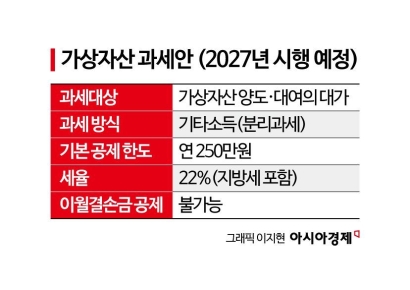 "Stocks Are Not Taxed, but Annual Crypto Gains Over 2.5 Million Won to Be Taxed Next Year... Investors Push Back"
- "Not Jealous of Winning the Lottery"... Entire Village Stunned as 200 Million Won Jackpot of Wild Ginseng Cluster Discovered at Jirisan
- General Strike D-1: Final Negotiations Between Samsung Electronics Labor and Management Over One Key Issue
- "How Did an Employee Who Loved Samsung End Up Like This?"... Past Video of Samsung Electronics Union Chairman Resurfaces
- "Even With a 90 Million Won Salary and Bonuses, It Doesn’t Feel Like Much"... A Latecomer Rookie Who Beat 70 to 1 Odds [Scientists Are Disappearing] ③
Lee also questioned, "In a world where platforms are widespread, products that break through competition sometimes make huge profits. If someone sells a 3,000 won emoticon on the KakaoTalk Emoticon Shop and it becomes so popular that they make 10 billion won, is that also excessive profit?"
© The Asia Business Daily(www.asiae.co.kr). All rights reserved.