[News Terms] The 'Nuclear Safety Grant Tax' Urged by the Jeonguk Wonjeon Alliance
The 'Nuclear Safety Local Allocation Tax' is one of the local allocation taxes currently being proposed to be newly established for use in radiation disaster prevention and other resident protection and welfare projects for approximately 5.03 million residents living near nuclear power plants.
On December 7 last year, Park Seong-min (Ulsan Jung-gu), a member of the People Power Party, took the lead in proposing an amendment to the Local Allocation Tax Act, which increases the proportion of domestic tax revenue in local allocation tax resources from the existing 19.24% to 19.30% by 0.06%, establishes the Nuclear Safety Local Allocation Tax, and distributes it equally to areas near nuclear power plants. This is when the name was decided.
![[News Terms] The 'Nuclear Safety Grant Tax' Urged by the Jeonguk Wonjeon Alliance](http://www.asiae.co.kr/news/img_view.htm?img=2023040517031979761_1680681799.jpg)
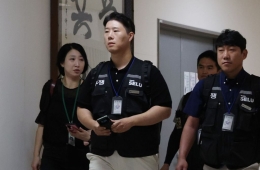
The National Alliance of Areas Near Nuclear Power Plants (Jeonguk Wonjeon Dongmaeng) held a "Policy Forum Urging the Establishment of the Nuclear Safety Local Allocation Tax" at the National Assembly Members' Office Building on the 2nd, where they signed a policy solidarity agreement and also issued a joint statement.
The National Alliance of Areas Near Nuclear Power Plants is a gathering of basic local governments near nuclear power plant sites. The alliance includes 23 local governments such as Dong-gu, Busanjin-gu, Dongnae-gu, Nam-gu, Buk-gu, Haeundae-gu, Geumjeong-gu, Yeonje-gu, and Suyeong-gu in Busan Metropolitan City; Jung-gu, Nam-gu, Dong-gu, and Buk-gu in Ulsan Metropolitan City; Yuseong-gu in Daejeon Metropolitan City; Yangsan-si in Gyeongsangnam-do; Pohang-si and Bonghwa-gun in Gyeongsangbuk-do; Muan-gun, Hampyeong-gun, and Jangseong-gun in Jeollanam-do; Gochang-gun and Buan-gun in Jeollabuk-do; and Samcheok-si in Gangwon-do.
If the Nuclear Safety Local Allocation Tax is established, local governments belonging to the National Alliance of Areas Near Nuclear Power Plants are expected to secure approximately 9.4 billion KRW in additional resources.
Following the Fukushima nuclear accident, the government amended the Radiation Disaster Prevention Act in 2014, expanding the radiation emergency planning zone to 20?30 km. Accordingly, five local governments with nuclear power plants?Uljin, Yeongdeok, Gyeongju, Gijang, and Yeonggwang?receive various supports under the Local Tax Act’s regional resource facility tax and the Act on Support for Areas Surrounding Power Plants.
Hot Picks Today
 "Samsung and Hynix Were Once for the Underachievers"... Hyundai Motor Employee's Lament
- "Was This Delicious Treat Enjoyed Only by Koreans?"... The K-Dessert Captivating Japan
- "Iran Considers Usage Fees From Surface to Seabed, Eyes $15 Billion Annual Revenue"
- Former Google CEO: "AI Is Unavoidable"... U.S. Graduates Boo
- "That? It's Already Stashed" Nightlife Scene Crosses the Line [ChwiYak Nation] ③
However, 23 basic local governments near nuclear power plants and research reactors receive no national funding. These local governments claim that their rights to life and environment are seriously infringed due to the storage of 136,412 drums of low- and intermediate-level radioactive waste and 26,555 tons of high-level spent nuclear fuel generated from electricity production and national policy implementation, as well as more than ten accidents occurring annually.
© The Asia Business Daily(www.asiae.co.kr). All rights reserved.