Savings Banks Post Deficit for First Time in 9 Years... Central Association Promises Stabilization in Second Half
600 Billion Won Loss Expected in Q1 This Year
"Delinquency Rate, BIS Ratio, and Liquidity Ratio Exceed Regulations"
Savings banks are expected to record a loss of around 60 billion won in the first quarter of this year, while the Korea Federation of Savings Banks (KFSB) announced on the 27th that the industry's loss absorption capacity remains sound.
![[Image source=Yonhap News]](http://www.asiae.co.kr/news/img_view.htm?img=2023040318241076717_1680513849.jpg)
According to the KFSB on the same day, all 79 savings banks are expected to record a net loss of about 60 billion won in the first quarter of this year. This marks the first time savings banks have posted a loss in nine years since 2014. Approximately 25 out of the 79 savings banks are expected to incur net losses, including some large institutions with substantial asset sizes. The total assets of savings banks in the first quarter of this year amounted to 135.1 trillion won, a decrease of 3.5 trillion won (2.5%) compared to the end of the previous year. The exact figures will be announced at the end of next month.
The KFSB identified the increase in interest expenses as the main cause of this loss. As deposit interest rates rose, the interest expenses that banks must bear also increased. Interest expenses for savings banks in the first quarter rose by approximately 720 billion won (about 130%) compared to the same period last year.
The rise in bad debt expenses also contributed to the losses. Due to the deteriorating repayment ability of borrowers such as small business owners, the construction industry downturn, and strengthened provisioning regulations, savings banks additionally set aside bad debt reserves in the first quarter of this year. An increase in bad debt reserves leads to greater losses.
The industry maintains that it has sufficient loss absorption capacity. This is because soundness indicators exceed regulatory standards. The KFSB explained, “Although the delinquency rate rose to 5.1% compared to 3.4% at the end of last year, it is not a concerning situation when compared to past delinquency rates. The BIS capital adequacy ratio also stands at 13.6%, exceeding the legal regulatory ratio (7-8%) and the financial authorities’ recommended ratio (11%), indicating a healthy level.” They also claimed that the liquidity ratio is 241.4%, which is 141.4 percentage points higher than the legal standard of 100%, enabling the banks to respond to liquidity risks such as deposit withdrawals.
Hot Picks Today
 "Now Our Salaries Are 10 Million Won a Month" Record High... Semiconductor Boom Drives Performance Bonuses at Major Electronic Component Firms
- Experts Already Watching Closely..."Target Price Set at 970,000 Won" Only Upward Momentum Remains [Weekend Money]
- Prime Minister Kim Minseok: "Samsung Electronics Strike Could Cost Up to 1 Trillion Won per Day, 100 Trillion Won Total... Tomorrow's Talks Are the Last Chance" (Comprehensive)
- Did Samsung and SK hynix Rise Too Much?... Foreign Assets Grow Despite Selling [Weekend Money]
- Is It Really Like an Illness? "I Can't Wait to Go Again"—Over 1 Million Visited in Q1, Now 'Busanbyeong' Takes Hold [K-Holic]
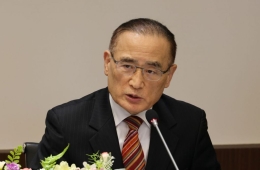
Based on this, the KFSB expects business performance to stabilize from the second half of the year. On the same day, Oh Hwa-kyung, chairman of the Korea Federation of Savings Banks, told reporters, “The funding interest rate has decreased compared to the fourth quarter of last year, and the delinquency rate is being managed stably. If the channels for absorbing non-performing loans diversify through consultations with financial authorities, we can expect a reduction in delinquency rates and an improvement in performance.”
© The Asia Business Daily(www.asiae.co.kr). All rights reserved.