[News Terms] The 'Hanmi Nuclear Consultative Group' Contained in the Washington Declaration
The Korea-US Nuclear Consultative Group (NCG) is a regular bilateral consultative body at the vice-ministerial level between South Korea and the United States on nuclear and strategic planning issues.
A senior government official explained, "It is to help South Korea understand how the United States plans for potential major contingencies and to enable South Korea to have a voice in such deliberations."
The Yoon Suk-yeol administration has been demanding institutionalized 'extended deterrence' from the United States in response to North Korea's nuclear and missile provocations. Extended deterrence is the concept that if a US ally is attacked with nuclear weapons, the United States will retaliate using nuclear weapons, missile defense capabilities, and conventional forces.
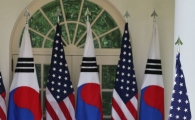
![President Yoon Suk-yeol, on a state visit to the United States, and U.S. President Joe Biden are holding a joint press conference on the 26th (local time) at the Rose Garden of the White House in Washington, DC. <br>[Photo by Yonhap News]](http://www.asiae.co.kr/news/img_view.htm?img=2023042703593612640_1682535576.jpg)
President Yoon Suk-yeol, on a state visit to the United States, and U.S. President Joe Biden are holding a joint press conference on the 26th (local time) at the Rose Garden of the White House in Washington, DC.
[Photo by Yonhap News]
So far, South Korea and the US have irregularly operated the Extended Deterrence Strategy Committee (EDSCG), which involves vice ministers or bureau chiefs from the Ministries of Foreign Affairs and Defense, and the Deterrence Strategy Committee (DSC), which involves policy directors from the Ministry of Defense. However, it was agreed that the EDSCG would be held annually after the launch of the Yoon Suk-yeol administration.
In this context, the launch of the NCG is a compromise between the South Korean government, which desires nuclear sharing for extended deterrence, and the US government, which is opposed to it. Since the NCG allows for faster and more regular consultations than the EDSCG, it also implicitly conveys the US side's intention of "do not ask for more."
The NCG is a subordinate version of the Nuclear Planning Group (NPG) that the US operates with its NATO allies. The NPG is a consultative body the US formed with its European allies during the Cold War. While both share information on how to use strategic assets such as nuclear weapons to defend Europe, the NPG differs in that it deploys tactical nuclear weapons in five member countries: Belgium, Germany, Italy, the Netherlands, and T?rkiye.
The NPG is institutionalized with NATO defense ministers attending twice a year and a permanent working group of nuclear experts dispatched by member countries. In contrast, even with the launch of the NCG, tactical nuclear weapons will not be deployed on the Korean Peninsula, and the schedule for regular consultations and the existence of a working group have not yet been concretely established. Additionally, South Korea cannot participate in US nuclear planning or nuclear decision-making.
© The Asia Business Daily(www.asiae.co.kr). All rights reserved.