The National Assembly's Budget Committee Fails to Conclude on Introducing Fiscal Rules... Opposition Says "No Rush"
Discussed at the Economic and Fiscal Subcommittee but opinions remain divided
Ryu Seong-geol: "Asked to organize it next time"
Shin Dong-geun: "Government unlikely to do supplementary budget, so not urgent"
The amendment related to the introduction of fiscal rules was discussed in the National Assembly but no conclusion was reached.
The Economic and Fiscal Subcommittee of the National Assembly's Planning and Finance Committee held a meeting on the 15th to discuss agenda items including the partial amendment to the National Finance Act. The subcommittee, which lasted from 10 a.m. until after 5 p.m., mostly spent a lot of time discussing fiscal rules but failed to narrow the differences in positions.
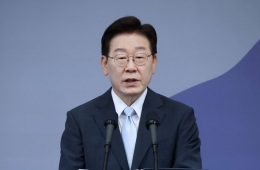
Ryu Seong-geol, the ruling party's secretary of the Planning and Finance Committee and a member of the People Power Party, told reporters during the meeting, "I asked to organize it to a level where it can be voted on next time," adding, "Everyone agreed on the necessity of introduction, and we talked about the necessity and the big picture for three hours from 10 a.m."
![[Image source=Yonhap News]](http://www.asiae.co.kr/news/img_view.htm?img=2022110914575210784_1667973472.jpg)
The government announced fiscal rules last September to keep the managed fiscal balance deficit within 3% of the Gross Domestic Product (GDP) and submitted a bill to amend the National Finance Act to legislate this. The bill also included provisions requiring specific funding plans to be attached for laws involving financial burdens.
It is reported that fierce disputes between the ruling and opposition parties continued during the subcommittee meeting. Shin Dong-geun, the opposition party's secretary of the Planning and Finance Committee and a member of the Democratic Party, told reporters after the meeting, "It is not urgent right now," and expressed opposition, saying, "The government does not seem to plan many supplementary budgets or create deficit finances, so there is no urgency."
Because the subcommittee focused solely on discussing the fiscal rules-related bill, most other bills were not even brought to the negotiation table. On that day, the subcommittee only approved two bills: the amendment to the Special Restriction Act on State-Owned Property, proposed by We Seong-gon of the Democratic Party, and the government-proposed amendment to the National Debt Act. Other bills reportedly were not discussed at all.
Some say there is concern about the clause in the National Finance Act amendment bill, which specifies that laws involving financial burdens must include specific funding plans when enacted or amended. A Democratic Party official pointed out, "It is basically an intention to prevent lawmakers from proposing bills," and added, "Even ruling party lawmakers cannot accept this."

Deputy Prime Minister and Minister of Economy and Finance Choo Kyung-ho is attending and reviewing documents at the plenary meeting of the Planning and Finance Committee held at the National Assembly in Yeouido, Seoul on the 22nd. Photo by Kim Hyun-min kimhyun81@
View original imageAt the public hearing on the introduction of fiscal rules held the previous day, the ruling and opposition parties also failed to narrow their differences. Bae Jun-young of the People Power Party pointed out, "National debt increased by 416 trillion won over the past five years and rose rapidly compared to major countries," adding, "Individuals and households set ceilings on their expenditures, so it is problematic that the country does not do this."
Song Eon-seok, also of the People Power Party, said, "As aging progresses, fiscal demand increases, and as a result, national debt has increased due to worsening fiscal balance," adding, "When Germany entered an aging society in 1974, its national debt was 18.6%. France was 21.1% in 1979, Spain was 27.9% in 1972, but Korea was 38.2% in 2017. Despite entering aging relatively late, Korea's national debt ratio was relatively high."
On the other hand, Kim Tae-nyeon of the Democratic Party said, "Looking at the Ministry of Economy and Finance's fiscal management policy so far, there is little concern," and added, "Now is the time when flexible fiscal management and effective fiscal strategies are most needed. It should be implemented in line with the era of economic crisis and great transformation."
Hot Picks Today
 "Stocks Are Not Taxed, but Annual Crypto Gains Over 2.5 Million Won to Be Taxed Next Year... Investors Push Back"
- "Don't Throw Away Coffee Grounds" Transformed into 'High-Grade Fuel' in Just 90 Seconds [Reading Science]
- Despite Warnings of "Do Not Enter, You May Not Make It Out Alive"... Foreign Tourist Stranded After Unauthorized Climb on Jeju Sanbangsan
- Signed Without Viewing for 1.6 Billion Won... Jamsil and Seongbuk Jeonse Prices Jump 200 Million Won in a Month [Real Estate AtoZ]
- "Even With a 90 Million Won Salary and Bonuses, It Doesn’t Feel Like Much"... A Latecomer Rookie Who Beat 70 to 1 Odds [Scientists Are Disappearing] ③
Jang Hye-young of the Justice Party also opposed, saying, "Globally, to respond to the climate crisis and amid the US-China decoupling situation called the semiconductor war, other countries are investing very large-scale finances to solve national tasks," and added, "In fact, fiscal management is tilted toward the Ministry of Economy and Finance rather than the National Assembly, and if fiscal rules are added, I think we will waste our political resources."
© The Asia Business Daily(www.asiae.co.kr). All rights reserved.