"Back to the Jeon Tae-il Era?"... Opposition Party 'Against' the Working Hours Reform System
Yeo "Can we really accumulate overtime and take a break?"
"It means we have to give up an evening life"
The Democratic Party of Korea has labeled the government's plan to reform the 52-hour workweek system as a "deterioration" and expressed its intention to block it at the legislative stage.
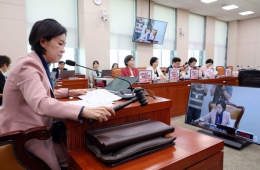
Kim Young-jin, the Democratic Party's floor spokesperson on the National Assembly's Environment and Labor Committee, said in a phone interview with this paper on the 7th, "It is inappropriate to move in a direction that harms workers' health rights due to long working hours," adding, "I have doubts about whether it will be possible to accumulate overtime hours and take time off later. We are taking this issue seriously." Kim criticized the need for reform, saying, "The 52-hour system, established in 2018, has already been settled and is functioning in the field, and if necessary, additional extended work is possible within the current legal framework." He also pointed out, "Currently, additional working hours are paid at 1.5 times the wage, but if accumulated as leave, workers' wages will decrease, and it is not appropriate to proceed with this arbitrarily."

Yoon Gun-young, a Democratic Party member of the Environment and Labor Committee, also clearly opposed the plan. He said, "This is a bizarre logic of working a lot and resting a lot, but those who can rest like that are mostly union members of large corporations," adding, "While those protected under labor laws might be able to do so, the overwhelming majority have no measures for this issue due to the dual structure of labor." Yoon said, "There is a legislative task presented, but this part seems very difficult," and added, "It cannot be passed as is."
Woo Won-shik, a Democratic Party member of the Environment and Labor Committee, appeared on KBS Radio's Choi Kyung-young's Strong Current program on the same day and said, "The government tried the annual leave accumulation system since 2015, but because there was a lot of work and many people were cautious, it ultimately failed," pointing out, "Long-term leave is not feasible." He continued, "(The government) says it will legislate long working hours but intends to handle the guarantee of rest rights as a matter of awareness improvement," adding, "Workers' bargaining power in the field is not very equal and is weaker than management, so ultimately, the life with evenings off that has been strived for must be abandoned." Woo warned, "If a total of 64 working hours per week are used all at once, it means giving a 30-minute break every 4 hours for three days straight and allowing overnight work for four days straight legally," and criticized, "This is like the situation when Jeon Tae-il was at Cheonggye Clothing, where workers took medicine to stay awake and worked without sleep."
Earlier, the Ministry of Employment and Labor and related ministries finalized a plan to reform the working hours system at an emergency economic ministers' meeting held at the Government Seoul Office the day before. The plan allows working up to 69 hours during busy times by improving the current system that limits work to 52 hours per week and enables workers to take long-term leave.
Hot Picks Today
 "Now Our Salaries Are 10 Million Won a Month" Record High... Semiconductor Boom Drives Performance Bonuses at Major Electronic Component Firms
- Wallets Open Wide on Big News...300 Trillion Won Heads to the U.S., "Tax Breaks" Fail to Keep Funds at Home
- "Hope You Enjoy the 'Welfare' for Bereavement of Children"... Ridicule of Strike Non-Participants Intensifies Union Conflict at Samsung Electronics
- "Realizing How Fast Money Disappears: Should You Try Only the Essentials for 5,000 Won? [The Basics of Benefits]"
- Experts Already Watching Closely..."Target Price Set at 970,000 Won" Only Upward Momentum Remains [Weekend Money]
The government plans to submit related bills, including amendments to the Labor Standards Act, to the National Assembly in June or July after a 40-day legislative notice period until the 17th of next month. However, since the main opposition party has clearly opposed this working hours reform, difficulties are expected in processing it in the 21st National Assembly.
© The Asia Business Daily(www.asiae.co.kr). All rights reserved.