Naju-si Accelerates Construction of Integrated Odor Control Center
[Naju=Asia Economy Honam Reporting Headquarters Reporter Kim Yukbong] Naju City, Jeollanam-do is accelerating the establishment of an integrated odor control center.
The city announced on the 20th that it plans to complete the installation of the "24-hour Integrated Odor Control Center," the control tower for odor management, in the first half of this year, and to actively establish an integrated odor management system that citizens can feel, including discovering mid- to long-term reduction policies through interdepartmental collaboration and forming an odor countermeasure committee involving experts and civic groups.

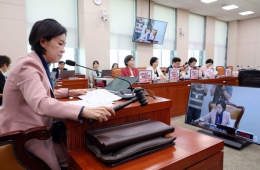
Recently, the city held its first meeting of the Odor Countermeasure Committee with appointed members, chaired by Deputy Mayor Kang Young-gu, at the Ihwa Room of the City Hall.
The committee is composed of nine members, including Deputy Mayor Kang as chairman, the dedicated departments and teams such as the Environmental Management Division and Odor Improvement Team, city council members, universities, research institutes, and representatives from civic organizations.
The committee provides advice and deliberation on discovering odor prevention and reduction policies and establishing resident-participatory policies, as well as collecting diverse opinions from various sectors.
The city plans to actively reflect the committee’s advice and discussions in agendas related to policies for solving odor problems, education, and holding explanatory meetings.
Deputy Mayor Kang Young-gu said, “Along with education to change the awareness of odor-emitting farms and facility owners and intensive guidance and enforcement, we plan to build an integrated management system including the establishment of the odor control center in the first half of this year to monitor 24 hours a day, identify odor movement routes, and collect odors.”
Odor issues are one of the 100 major tasks that must be resolved during the 8th local government term and one of the three major happiness strategy projects to improve urban living conditions.
The city is the largest livestock farming area in Jeollanam-do, ranking first in the number of livestock raised including Korean beef cattle, dairy cows, chickens, and ducks, except for pigs (ranked 2nd).
Local odor complaints have originated from complex odors emitted from composting sites and some livestock farms located near the city center since the creation of Bitgaram Innovation City in 2015.
Previously, from 2015 to 2020, the city completed the closure of 42 farms in the Hohaewon Livestock Complex, identified as a major source of odor in the Innovation City, and compensated 123 sites for obstacles.
However, complex odors generated from livestock farms and composting sites within 3 km of the city, especially in Bonghwang-myeon, are flowing into the city due to seasonal factors such as wind direction, atmospheric pressure, and temperature.
In the old downtown area, complaints about living discomfort caused by complex odors from composting sites within 2 to 3 km of the Myeon administrative districts of Gongsan and Wanggok-myeon have been prolonged.
In response, Mayor Yoon Byung-tae is focusing administrative power on establishing a dedicated department (Odor Task Force) and building a 24-hour integrated odor control center with the goal of creating a "pleasant urban environment free of odors."
The Integrated Odor Control Center will be the first of its kind in the Gwangju and Jeonnam region, with a total project cost of 1.2 billion KRW including 500 million KRW from provincial funds, and is scheduled to be installed in the third-floor computer training room of the city hall by June.
A control system that can visualize odor occurrence situations based on a Geographic Information System (GIS) will be introduced. An odor reporting system through a website (NajuOdor24) and a mobile app will also be established.
In particular, dedicated personnel in the control room will systematically collect real-time data through 24-hour monitoring without any gaps throughout the year.
To this end, 25 odor measurement sensors, 5 weather observation devices, and 2 control cameras will be installed at major odor-emitting sites and affected areas within the city.
The city plans to proactively predict odor occurrences using accumulated odor data and various measuring devices, accurately track the source routes, and respond preemptively.
Along with the center’s establishment, the city has formed an "Odor Improvement Promotion Team" that collaborates among five related departments (Environmental Management Division, Urban Sanitation Division, Water and Sewage Division, Horticulture and Distribution Division, and Livestock Division). They will focus on inspecting and managing the progress of odor-related policies through information sharing between departments.
Mayor Yoon Byung-tae said, “A pleasant air environment through odor resolution is a livelihood issue directly connected to citizens’ daily lives and a prerequisite for creating a premium innovation city. We will do our best to promote an odor reduction roadmap through public-private cooperation and coexistence with residents and livestock farmers.”
Hot Picks Today
 "Now Our Salaries Are 10 Million Won a Month" Record High... Semiconductor Boom Drives Performance Bonuses at Major Electronic Component Firms
- Experts Already Watching Closely..."Target Price Set at 970,000 Won" Only Upward Momentum Remains [Weekend Money]
- "Heading for 2 Million Won": The Company the Securities Industry Says Not to Doubt [Weekend Money]
- Did Samsung and SK hynix Rise Too Much?... Foreign Assets Grow Despite Selling [Weekend Money]
- "Chanel Open Run? I Get a Free Pass"... The World of the Top 0.1% That Money Alone Can't Enter [Luxury World]
Naju=Asia Economy Honam Reporting Headquarters Reporter Kim Yukbong baekok@asiae.co.kr
© The Asia Business Daily(www.asiae.co.kr). All rights reserved.