Sewoon District Urban Redevelopment Kicks Off in Full Swing... Increasing Building Heights and Creating Green Forests
Oh Se-hoon Visits Paris Libegoshu to Reveal Development Plans
Relaxation of Urban Regulations Such as Floor Area Ratio... Expansion of Green Spaces in Return
Leading Initiatives Around Jongmyo~Toegye-ro... Establishing Proactive Guidelines
![[Image source=Yonhap News]](http://www.asiae.co.kr/news/img_view.htm?img=2022102411505479599_1666579855.jpg)
[Asia Economy Reporter Kim Hyemin] Urban redevelopment will be in full swing starting with the Jongmyo~Toegye-ro area (Sewoon Redevelopment Promotion District) in Seoul. The Seoul Metropolitan Government has announced plans to ease building regulations such as height restrictions while securing ample green spaces through public contributions. They plan to actively consider the large-scale urban redevelopment model of Rive Gauche in Paris, France.
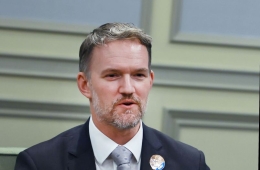
On the morning of the 23rd (local time), Seoul Mayor Oh Se-hoon visited Rive Gauche (RIVE GAUCHE) in Paris, France, and stated, "We will activate urban redevelopment by providing proactive public guidelines so that the private sector can actively propose development plans."
Since announcing in April the plan to recreate downtown Seoul as a "green ecological city" by relaxing height regulations and others, Seoul has been proceeding with legal procedures to fully implement urban redevelopment. Specifically, the '2030 Seoul Urban Residential Environment Maintenance Basic Plan' has completed public inspection and city council opinion hearings, with plans to finalize and announce the decision within the year.
The Sewoon district is undergoing a complete revision of the redevelopment promotion plan as a leading project to produce visible results in creating a green ecological city and to activate private redevelopment projects. The city has proactively prepared guidelines so that residents can modify project directions at any time in line with the green ecological city recreation strategy.
According to the guidelines, the leading project in the Jongmyo~Toegye-ro area will be promoted through an "integrated maintenance method," which consolidates small fragmented zones into appropriately sized units for development. When integrated, open green spaces will be created to cover more than 35% of the site area, and additional greenery will be added to central parks to secure over 50% green space.
In this way, height restrictions will be eased when open green spaces are created. If green spaces exceed the mandatory green ratio, additional benefits in height and floor area ratio will be granted. Especially around Euljiro, regulations such as zoning upgrades will be boldly relaxed to strategically foster urban functions. Considering the development scale due to zone integration, the net public contribution rate will be set at 10% or more, and at 20% or more when zoning upgrades occur, to secure infrastructure and convert central commercial areas into urban parks.

As this area is the core of the "green ecological city," the city plans to prepare a revised plan through consultations within the year if creative proposals are received, and to swiftly proceed with maintenance plan procedures from early next year. Other downtown areas can also promote maintenance projects based on the green ecological city strategy starting next year once the '2030 Urban Residential Environment Maintenance Basic Plan' is finalized and announced within the year.
The Rive Gauche visited by Mayor Oh was once an industrial area with developed railway and maritime transportation but has been recognized as a representative underdeveloped area with old and dilapidated factories and warehouses since the 1960s due to regional disparities and changes in industrial structure. In response, Paris has implemented the Rive Gauche project since the 1990s, relaxing building height limits from 37m to 137m to encourage active private participation. Additionally, to improve the urban environment, the railway overhead was covered and an artificial ground was created to carry out large-scale mixed-use redevelopment including commercial, residential, educational, and green spaces.
Seoul has reaffirmed that, like the Rive Gauche case, it will also consider mixed-use development of underutilized sites such as railway vehicle depots. Currently, Seoul has nine railway vehicle depots managed by the city, including the Suseo depot, and six depots managed by Korail, including the Susaek depot. The city plans to widely accept creative proposals from the private sector and actively cooperate with the central government to utilize these facilities three-dimensionally.
Hot Picks Today
 "Buy on Black Monday"... Japan's Nomura Forecasts 590,000 for Samsung, 4 Million for SK hynix
- "Plunged During the War, Now Surging Again"... The Real Reason Behind the 6% One-Day Silver Market Rally [Weekend Money]
- [Revolutionary Guards Inc.]③Unyielding in External Wars for Profit... "Unlikely to Relinquish Hormuz"
- Experts Are Already Watching Closely..."Target Stock Price 970,000 Won" Now Only the Uptrend Remains [Weekend Money]
- "That? It's Already Stashed" Nightlife Scene Crosses the Line [ChwiYak Nation] ③
A Seoul city official stated, "We are currently reviewing three-dimensional mixed-use development plans for the Suseo depot to strengthen the central function of the Suseo area, which serves as a gateway to the southeastern part of Seoul in connection with SRT, GTX-A, and others," adding, "Railway facilities such as the Susaek depot have been pointed out as factors that divide the city and hinder the development of surrounding areas, so there is a demand to establish three-dimensional utilization models for these facilities."
© The Asia Business Daily(www.asiae.co.kr). All rights reserved.