Expansion of Coverage for Congenital Craniofacial Malformations... Health Insurance Applies to Antimicrobial Low-Dose Drip Injections
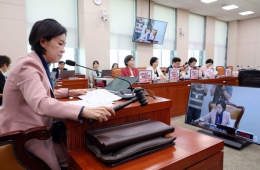
The 20th Health Insurance Policy Deliberation Committee Meeting in 2022

[Asia Economy Reporter Kim Young-won] The coverage for correction and treatment of congenital craniofacial deformities will be expanded. The antibiotic Jeobak-saju, used for complex intra-abdominal infections, will now be covered by health insurance.
On the 29th, the Ministry of Health and Welfare announced that it held the 20th Health Insurance Policy Deliberation Committee (HIPS) meeting and approved revisions to the drug benefit list and reimbursement ceiling table, as well as the expansion of dental orthodontic and orthognathic treatment coverage for congenital craniofacial deformities.
The HIPS decided to expand the coverage for dental orthodontic and orthognathic treatments for congenital craniofacial deformities, which require long-term and high-cost medical expenses, to all congenital craniofacial deformities starting November 1. This applies to patients with a history of rare disease special cases who have impaired chewing or speech functions and require dental orthodontic or orthognathic treatment. During the special case period, the patient's copayment is 10%, and after the period ends, patients will receive health insurance benefits with statutory copayments of 20% for inpatient care and 30-60% for outpatient care.
Through this expansion of coverage, the copayment for Lee Mo-gun (13), a special case patient who had to bear 19.5 million KRW over five years for orthognathic treatment of Goldenhar syndrome, will be reduced to approximately 1.95 million KRW.
Previously, coverage for dental orthodontic and orthognathic treatments was expanded in 2019 to patients with cleft lip and palate, and in October last year to four congenital craniofacial deformities: cleidocranial dysplasia, craniofacial dysostosis, Crouzon syndrome, and acrocephalosyndactyly.
Additionally, starting next month, health insurance will cover the antibiotic Jeobak-saju used for complex intra-abdominal infections, complicated urinary tract infections, and hospital-acquired pneumonia. Health insurance will also newly cover Rialtris Nasal Spray, a treatment for seasonal allergic rhinitis. As a result, the cost of Jeobak-saju treatment, which was about 4 million KRW annually without coverage, will be reduced to approximately 1.2 million KRW (with a 30% copayment).
Meanwhile, the HIPS also discussed plans to re-evaluate the reimbursement ceiling prices of previously listed pharmaceuticals.
Following the 2018 incident of impurities detected in valsartan-containing drugs, the authorities introduced a 2020 standard requirement to apply differential pricing based on compliance, reforming the insurance drug pricing system. Accordingly, previously listed drugs evaluated before the reform are granted a three-year grace period to prepare for bioequivalence testing and must undergo re-evaluation by 2023.
Hot Picks Today
 "Now Our Salaries Are 10 Million Won a Month" Record High... Semiconductor Boom Drives Performance Bonuses at Major Electronic Component Firms
- Experts Already Watching Closely..."Target Price Set at 970,000 Won" Only Upward Momentum Remains [Weekend Money]
- "Heading for 2 Million Won": The Company the Securities Industry Says Not to Doubt [Weekend Money]
- Did Samsung and SK hynix Rise Too Much?... Foreign Assets Grow Despite Selling [Weekend Money]
- "Chanel Open Run? I Get a Free Pass"... The World of the Top 0.1% That Money Alone Can't Enter [Luxury World]
The HIPS decided to conditionally extend the deadline for submitting evidence during the evaluation period, considering difficulties in conducting bioequivalence tests due to COVID-19 and requests from the pharmaceutical industry. According to the revised regulations, for items newly subject to bioequivalence proof, the evaluation timing is postponed by five months, and the deadline for data submission is extended to July 1, 2023.
© The Asia Business Daily(www.asiae.co.kr). All rights reserved.