There Was a Similar 'Woori Bank Embezzlement' Incident... Financial Supervisory Service Could Do Nothing
Forgery of Other Bank's Documents Leads to 22.5 Billion Won Embezzlement Incident
FSS Hastily Released Accident Prevention Measures
Same Financial Accident Repeated Two Years Later Due to Document Forgery
Measures Were Inadequate or FSS Did Not Follow Them
Banking Sector: "Why Doesn't FSS Admit Supervisory Failure?"

[Asia Economy Reporter Song Seung-seop] It has been confirmed that just before the embezzlement crime at Woori Bank, a similar large-scale embezzlement incident occurred at another bank using a similar method. After the Financial Supervisory Service (FSS) became aware of this fact, it recognized the seriousness of the forgery and even issued a comprehensive countermeasure, but it failed to prevent the subsequent embezzlement at Woori Bank. Criticism is being raised that the FSS, which failed to prevent financial accidents with superficial measures, is not showing proper accountability.
According to financial authorities on the 27th, at Bank A, an internal employee embezzled 22.5 billion KRW of company funds 23 times from November 2002 to September 2008. The funds included 14.2 billion KRW deposited for new deposit subscriptions, 400 million KRW obtained by unjustly terminating fixed deposits early, and 7.9 billion KRW from matured re-deposits.
The employee who committed the embezzlement at the time used forged documents (deposit balance certificates) to deceive superiors. After arbitrarily terminating customers' funds, the employee fabricated fake deposit passbooks and documents to conceal the embezzlement. The employee also received additional interest payments at their discretion. The document forgery was carried out without approval from the bank's IT operations department by unauthorized installation of one external internet communication line, one personally owned computer, one laptop PC, and two printers in the branch manager's office and other locations.
The document forgery method was also used in the Woori Bank embezzlement case. Jeon, an employee of Woori Bank's Corporate Improvement Department, embezzled a total of 69.73 billion KRW from June 2012 to June 2020 by forging official and private documents. The documents were approved manually rather than electronically, and in four out of eight embezzlement cases, the employee even obtained bank approval.

The 'Accident Prevention Checklist' Created by the FSS Was Useless
The fact that the employee's word was blindly trusted or that the monitoring system did not function properly is also similar to the Woori Bank embezzlement case. At Bank A, despite discrepancies between forged documents and computer records, they only trusted the employee's claim that "copies were not kept." The inspection supervisors also failed to detect abnormal financial transactions. At Woori Bank, Jeon falsely reported verbally to the department head that he was "going on a dispatch," but this was not noticed. It was also identical that the embezzlement employee was solely in charge of fund transaction tasks.
The FSS belatedly identified these facts, and as embezzlement incidents continued at other banks, it formed a task force (TF) in 2010 and announced the ‘Comprehensive Measures for Preventing Financial Accidents in the Banking Sector.’ At that time, the FSS confirmed that 64.7% of major financial accidents were caused by internal employees' forgery and alteration. They also prepared a checklist to prevent major financial accidents, which was intended to be used during on-site inspections.
However, the fact that the Woori Bank embezzlement incident began just two years after the announcement of the measures raises criticism that the FSS cannot avoid responsibility. This implies that the checklist created by the FSS was not an effective preventive measure or that the FSS inspection supervisors themselves did not thoroughly implement the measures they created. In particular, the FSS checklist required verification of whether long-term employees were given rotational duties and mandatory leave. Jeon committed embezzlement for about 10 years without taking a single mandatory leave, yet the FSS failed to detect this despite conducting more than 11 inspections.
Hot Picks Today
 "Now Our Salaries Are 10 Million Won a Month" Record High... Semiconductor Boom Drives Performance Bonuses at Major Electronic Component Firms
- Experts Already Watching Closely..."Target Price Set at 970,000 Won" Only Upward Momentum Remains [Weekend Money]
- "Heading for 2 Million Won": The Company the Securities Industry Says Not to Doubt [Weekend Money]
- "Only DS Was Considered": 4,000 Members Resign from Samsung's Largest Union in a Month... Majority Status 'at Risk'
- "Chanel Open Run? I Get a Free Pass"... The World of the Top 0.1% That Money Alone Can't Enter [Luxury World]
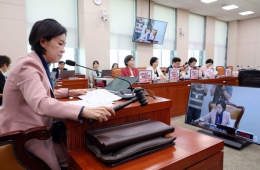
Within the banking sector, there is frustration that the supervisory authorities irresponsibly place excessive blame only on the banks. Lee Joon-soo, Deputy Director of the Banking and SME Division at the FSS, stated while announcing the results of the Woori Bank embezzlement inspection the day before, "The final responsible parties for the accident are the bank president and chairman," but regarding the FSS's responsibility, he responded, "There are limits." A banking industry official said, "It is true that the major accident was primarily due to Woori Bank's fault," but added, "This is an incident serious enough to mention the bank's CEO, so it is questionable why the FSS's supervisory failure is not acknowledged."
© The Asia Business Daily(www.asiae.co.kr). All rights reserved.