Household Loans Decrease for the First Time in the First Half of This Year, What About the Second Half?
![[Image source=Yonhap News]](http://www.asiae.co.kr/news/img_view.htm?img=2022063011054132803_1656554741.jpg)
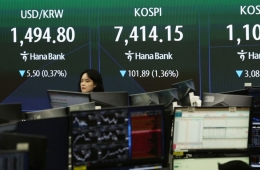
[Asia Economy Reporter Song Hwajeong] Household loans decreased for the first time in the first half of this year since statistics began in 2015, and the downward trend is expected to continue in the second half as well.
According to the Financial Services Commission on the 17th, household loans across all financial sectors decreased by 800 billion KRW in the first half of this year, marking the first semiannual decline since statistics began in 2015. In the first half of 2020, loans increased by 36.4 trillion KRW, and in the second half of 2020, they rose by 75.8 trillion KRW. Last year, loans increased by 63.5 trillion KRW in the first half and 44 trillion KRW in the second half, respectively.
It is anticipated that the sluggishness in household loans will not be easily resolved in the second half either. In particular, the application of the third phase of the Debt Service Ratio (DSR) regulation began in July, and with the continued rise in interest rates, household loans are expected to contract further. From this month, the third phase of the DSR regulation has been implemented to manage household debt, expanding the DSR application target to individual borrowers with total loans exceeding 100 million KRW.
Last month, the COFIX based on new loan amounts rose to 2.38%, up 0.4 percentage points from the previous month. This is the largest increase in 12 years and 5 months since the COFIX based on new loan amounts was first announced in January 2010. The July COFIX is expected to reflect the Bank of Korea's big step (a simultaneous 0.50 percentage point increase in the base interest rate) on the 13th, which will likely push interest rates even higher.
Jeon Baeseung, a researcher at Ebest Investment & Securities, said, "Although banks are expanding household loan issuance through preferential interest rates, the sluggish housing market and unfavorable stock market conditions continue to suppress investment demand," adding, "With further interest rate hikes, the upward trend in loan interest rates will continue, making it difficult for household loan growth to recover easily."
Hot Picks Today
!["Rather Than Endure a 1.5 Million KRW Stipend, I'd Rather Earn 500 Million in the U.S." Top Talent from SNU and KAIST Are Leaving [Scientists Are Disappearing] ①](https://cwcontent.asiae.co.kr/asiaresize/93/2026051414165763158_1778735817.jpg) "Rather Than Endure a 1.5 Million KRW Stipend, I'd Rather Earn 500 Million in the U.S." Top Talent from SNU and KAIST Are Leaving [Scientists Are Disappearing] ①
"Rather Than Endure a 1.5 Million KRW Stipend, I'd Rather Earn 500 Million in the U.S." Top Talent from SNU and KAIST Are Leaving [Scientists Are Disappearing] ①
- [Breaking] Park Sukeun, Central Labor Relations Commission Chair: "Some Gaps Narrowed Between Samsung Electronics Labor and Management"
- Is This the Peak? As Others Hesitate..."The Answer Is Clear for Surviving the KOSPI 10,000 Era"
- Former Journalist and Investor Released on Bail After Gaining 11.2 Billion Won by Inflating Stock Prices Through News Articles
- "No Cure Available, Spread Accelerates... Already 105 Dead, American Infected"
In particular, changes in mortgage loans are expected to be difficult due to the increased burden of home purchases. According to IBK Investment & Securities, the Housing Purchase Burden Index by the Korea Housing Finance Corporation, which shows the repayment burden when a middle-income household purchases a median-priced home, has risen nationwide by 44%, in Seoul by 99%, and in Gyeonggi Province by 68% from early 2017 to the first quarter of 2022 due to rising housing prices. Kim Eungap, a researcher at IBK Investment & Securities, analyzed, "If housing prices fall, the purchase burden may decrease, but when prices drop, more people tend to postpone home purchases expecting further declines, so the growth rate of mortgage loans is unlikely to change significantly in the short term."
© The Asia Business Daily(www.asiae.co.kr). All rights reserved.