Oil and Bond Markets Breathe Easier as Ceasefire Talks Resume... Inflation Remains a Ticking Time Bomb
July Brent crude trades at $109
Drops after surging to $112 the previous day
Global bond yields hit record highs
After U.S. President Donald Trump announced that he would postpone an attack on Iran at the request of Gulf allies, international oil prices and bond yields gave back some of their earlier gains. Just one day after the threat of a Middle East war intensified, the prospect of ceasefire negotiations has reemerged, leading to a sense of relief in the markets for now.

U.S. President Donald Trump is attending an event at the White House on the 18th (local time). Photo by AP Yonhap News
View original imageAccording to Investing.com, as of 8 p.m. Eastern Time on the 18th, July Brent crude futures, the international oil price benchmark, were trading at $109.11 per barrel, down 0.19% from the previous session. Brent crude had previously surged to $112, but fell back as war-related tensions with Iran eased. At the same time, July West Texas Intermediate (WTI) crude was also trading down about 1.7% at $102.66 per barrel.
Bond yields also eased somewhat. The U.S. 10-year Treasury yield stood at 4.597%. During the session the previous day, when war fears peaked, it climbed as high as 4.635%, marking the highest level in a year. The U.S. 30-year Treasury yield registered at 5.131%. In the bond market, yields and prices move inversely. The rise in bond sales led to a drop in prices.
President Trump revealed on his own social networking service, Truth Social, that he had received requests from Gulf nation allies to hold off on a military strike against Iran. This came just a day after he had hinted at war with Iran and increased pressure. Additional relief came as Iran reportedly responded to the U.S. proposal. Esmail Baghaei, spokesperson for Iran’s Foreign Ministry, stated that "exchanges are ongoing through a Pakistani mediator." However, he did not disclose specific details.
While the markets have found temporary relief, the global bond market remains on high alert amidst a sell-off triggered by inflation concerns. According to a prior report from the U.S. Department of Labor, the Consumer Price Index (CPI) in April rose 3.8% year-on-year. Month-on-month, it increased by 0.6%. This was attributed to gasoline prices soaring 5.4% over the month. Other wholesale price indices showed annualized increases of up to 6%, the highest level since 2022.
The Financial Times (FT) pointed out that U.S. inflation data, which was sharper than expected, reignited market fears over rising prices. Traders have also increased bets that the Federal Reserve will have to hike rates to curb inflation. Swap market pricing currently reflects that investors see a 75% chance of a 0.25 percentage point rate hike by the end of 2026.
Bond yields in countries outside the United States are also hitting record highs. In the UK, the 10-year gilt yield at one point climbed to 5.19%, the highest in 18 years, before settling at around 5.15%. In Japan, the 30-year government bond yield rose to a record 4.2%, and the 10-year yield hit 2.8%, the highest since October 1996. Eurozone government bond yields also rose early in the session before paring some gains. Against this backdrop, the Japanese government is reportedly considering additional government bond issuance to secure funds in response to the shock of the Middle East conflict.
Christine Lagarde, President of the European Central Bank (ECB), also expressed concerns about the heightened volatility in the bond market. Speaking at the G7 finance ministers’ meeting in Paris, France, she said, “I always worry. That’s my job.”
Hot Picks Today
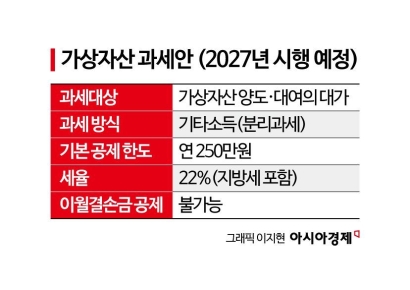 "Stocks Are Not Taxed, but Annual Crypto Gains Over 2.5 Million Won to Be Taxed Next Year... Investors Push Back"
- "Not Jealous of Winning the Lottery"... Entire Village Stunned as 200 Million Won Jackpot of Wild Ginseng Cluster Discovered at Jirisan
- "Even With a 90 Million Won Salary and Bonuses, It Doesn’t Feel Like Much"... A Latecomer Rookie Who Beat 70 to 1 Odds [Scientists Are Disappearing] ③
- "Rather Than Endure a 1.5 Million KRW Stipend, I'd Rather Earn 500 Million in the U.S." Top Talent from SNU and KAIST Are Leaving [Scientists Are Disappearing] ①
- "How Did an Employee Who Loved Samsung End Up Like This?"... Past Video of Samsung Electronics Union Chairman Resurfaces
There was also analysis that rising bond yields are having a negative impact on stock markets. Jack McIntyre, portfolio manager at Brandywine Global Investment Management in the U.S., commented, “Yields will keep rising until something breaks,” adding, “What’s interesting is that Iran knows this too.” He further noted, “We are currently in a phase where the stock market is becoming increasingly aware of the bond market. As the 10-year yield approaches 5%, the pressure will intensify.”
© The Asia Business Daily(www.asiae.co.kr). All rights reserved.







