Former Jeonnam Superintendent Kim Dae-jung Promises "Introduction of Basic Education Income Next Year"
Jeonnam Education Superintendent's First Press Conference After Inauguration, Presents 4 Major Indicators and 3 Key Tasks

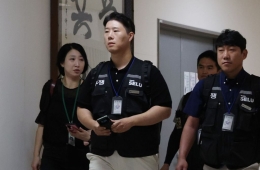
On the 14th, Kim Dae-jung, the former Superintendent of Education of Jeonnam, held his first press conference since taking office in the main conference room of the government building, presenting the policy direction and vision for the 4th term of directly elected Jeonnam education. Photo by Jeonnam Office of Education
View original image[Asia Economy Honam Reporting Headquarters Reporter Lee Jun-kyung] Kim Dae-jung, Superintendent of Education for Jeonnam, held his first press conference since taking office on the 14th in the main conference room of the government building, presenting the policy direction and vision for the 4th term of directly elected Jeonnam education.
On this day, Superintendent Kim said, “We will open an era of unlimited responsibility for education and childcare through decentralization and balance,” adding, “To realize unlimited responsibility education, we will introduce the Jeonnam Education Basic Income starting with elementary school students in high-risk population extinction areas next year.”
Superintendent Kim stated, “Regional extinction is the greatest challenge for South Korea that everyone must solve together,” and expressed, “We will cooperate with local governments and respond jointly to secure funding for the Jeonnam Education Basic Income, which is the cornerstone of the great transformation of Jeonnam education.”
He continued, “The goal and policy direction of the 4th term of directly elected Jeonnam education is to ‘realize a solid Jeonnam education that opens the future together and nurture creative and inclusive people who cultivate the future.’”
As the four major indicators, he presented ▲ Participatory, cooperative, and solidarity-based educational community ▲ Schools that study with questions, elasticity, and laughter ▲ Future education of imagination, challenge, and creation ▲ Trust administration based on fairness, safety, and respect.
Additionally, he set three major tasks for the ‘Great Transformation of Jeonnam Education’: ▲ Customized academic improvement based on edutech ▲ Jeonnam-type educational autonomy coexisting with the region ▲ Creating a school culture of empathy and consideration.
Superintendent Kim also mentioned measures to resolve educational gaps and enhance educational capacity, which are pressing issues.
He emphasized, “The top priority is to create classrooms where lessons can be conducted,” adding, “We will cooperate with the council to establish institutional grounds to guarantee not only students’ learning but also teachers’ rights to teach and evaluate.”
Practical tasks for enhancing educational capacity include ▲ Establishing customized curricula and learning history management systems ▲ Implementing evaluations for individual academic diagnosis and support ▲ Expanding training to strengthen teacher capabilities ▲ Implementing a systematic college admission support system.
Along with this, he expressed concerns about government policies that go against decentralization and balance, such as the reduction of local education finance grants and cuts in teacher quotas, and showed determination to oppose them.
Superintendent Kim pointed out, “The government’s recent policy to reduce local education finance grants citing a decrease in student numbers is a regressive act,” adding, “This violates the constitutionally guaranteed basic right to education and evades the state’s responsibility for education.”
Hot Picks Today
 "Samsung and Hynix Were Once for the Underachievers"... Hyundai Motor Employee's Lament
- "Was This Delicious Treat Enjoyed Only by Koreans?"... The K-Dessert Captivating Japan
- Despite Captivating the Nation for Over a Month... "Timmy" the Whale Ultimately Found Dead
- "Record Heat Expected"...Warning of the Strongest 'Super El Nino' Since 1877
- "That? It's Already Stashed" Nightlife Scene Crosses the Line [ChwiYak Nation] ③
He further argued, “Reducing teacher quotas without reflecting future education demands and regional educational conditions is out of sync with the new government’s education policies, such as the high school credit system,” and insisted, “We will reduce the number of students per class and expand teacher quotas to create conditions for future education.”
© The Asia Business Daily(www.asiae.co.kr). All rights reserved.