Gwangju TP, 20 Years of Medical Industry Development... A Key Driver for Regional Economic Revitalization

[Asia Economy Honam Reporting Headquarters Reporter Park Jin-hyung] Gwangju Technopark, together with Gwangju City, has been continuously supporting the development of the local medical industry, and as a result, the industry is now experiencing rapid growth, playing a significant role in revitalizing the regional economy.
Since 2002, when the local medical industry was virtually nonexistent, Gwangju Technopark has fostered the medical healthcare industry starting with the Titanium Special Alloy Center. Initially focused on dentistry, the support areas expanded to cover the entire medical industry including bio, photomedicine, orthopedics, cosmedi-care, and ophthalmology. As a result, a biohealth industry cluster was naturally formed, and related companies have achieved an average annual sales growth of 17.4% over the past three years.
In particular, Gwangju's medical industry, which had only two related companies and sales of 200 million KRW about 20 years ago, grew significantly to 501 companies and sales of 1.084 trillion KRW in 2020. The number of employees increased dramatically from 22 to 4,525, creating jobs and being recognized as a successful case of local government industrial development.
Gwangju Technopark operates the Titanium Center, which researches and develops titanium, an implant material based on alloy materials, and has supported companies mainly producing dental parts in collaboration with local universities such as Chonnam National University and Chosun University. In the early 2000s, regulations on biomaterial components were very strict, causing medical companies in other regions to give up production. However, Gwangju medical device manufacturers persevered through an industry-academia-hospital-government network, and external companies relocated to Gwangju, leading to continuous growth.
Furthermore, since 2014, Gwangju City has selected biomaterials as a regional core industry, expanding support from metal materials centered on implants to polymers, ceramics, and silicone materials. The scope has broadened to include dental, orthopedic, ophthalmic optical medical devices, bioabsorbable materials, and cosmetics industries. Together with universities, hospitals, research institutes, and companies, they provide full-cycle corporate support from product development to clinical application.
Through this, the company cluster formed around biomaterial components that are harmless and easily adaptable to the body?such as materials and parts for artificial joints and implants in orthopedics and dentistry, as well as ophthalmic and optical medical devices?is regarded as the best nationwide.
Recently, Gwangju TP, together with the city, has been selected to promote the ‘Hospital-Centered AI Project,’ where doctors and companies collaborate throughout the entire process from idea discovery to product development, clinical trials, and usability evaluation. They are also advancing the ‘High-Purity Peptide National R&D Project,’ recognized as a core raw material for the future bio-pharmaceutical industry, along with projects such as ‘Dementia Prevention.’
Additionally, to support about 200 cosmetics-related companies in Gwangju, which mostly have technological competitiveness but are small-scale and have a weak industrial base, they are promoting the ‘Cosmedi-care Industry Demonstration Center Construction Project,’ a new concept combining dermatology with new product development, efficacy evaluation, clinical trials, usability verification, and small-lot multi-product customized production facilities (CGMP).
Hot Picks Today
 "Now Our Salaries Are 10 Million Won a Month" Record High... Semiconductor Boom Drives Performance Bonuses at Major Electronic Component Firms
- Experts Already Watching Closely..."Target Price Set at 970,000 Won" Only Upward Momentum Remains [Weekend Money]
- Seoul Apartment Sales, Jeonse, and Rents in 'Triple Bull Run'... Worst Supply Shortage in 5 Years
- Did Samsung and SK hynix Rise Too Much?... Foreign Assets Grow Despite Selling [Weekend Money]
- Is It Really Like an Illness? "I Can't Wait to Go Again"—Over 1 Million Visited in Q1, Now 'Busanbyeong' Takes Hold [K-Holic]
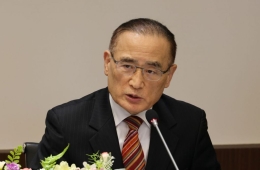
Kim Sun-min, Director of Gwangju TP, stated, “We are striving to nurture the medical healthcare industry as a future growth engine for Gwangju. By fostering the medical industry, which is a high value-added industry in the aging era and a promising new growth industry, we aim to establish a virtuous cycle structure that leads to attracting external companies, creating jobs, and increasing exports, thereby becoming a major pillar of our regional economy. We will do our best to support this.”
© The Asia Business Daily(www.asiae.co.kr). All rights reserved.