'Nominal' National Petition, Parliament Silent for 3 Years
Public Petition Gathering National Consent for Legal Revisions Including the Anti-Discrimination Act
No Way to Prevent Committee Neglect Even with 50,000 or 100,000 Signatures
Urgent Need to Establish System to Prevent 'Indefinite Extension of Review Period'

National Assembly Public Consent Petition Online Homepage. Homepage screen capture.
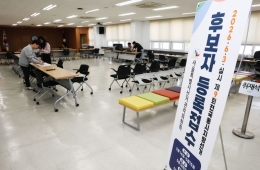
View original image[Asia Economy Intern Reporter Yunjin Kim] Questions are being raised about the effectiveness of the National Assembly's National Consent Petitions, which have entered their third year of implementation. Despite more than 50,000 citizens agreeing to petitions urging the enactment or amendment of laws, many petitions have been neglected without even being reviewed by the relevant standing committees for over a year, leading to criticism that the system is not functioning properly. Institutional improvements, such as setting deadlines for review, are needed to effectively guarantee the right to petition.
The National Consent Petition system is an electronic petition system introduced on January 10, 2020. Unlike the 'Blue House National Petitions' operated under the Moon Jae-in administration without legal grounds and solely for public communication, this system is based on the National Assembly Act and operates under the Petition Act to guarantee the constitutional right to petition.
Previously, citizens had to have a National Assembly member introduce their petition, but with the opening of the National Consent Petition system, petitions can be submitted online. Petitions that receive 100 agreements are reviewed by the National Assembly and then published on the website. If they receive 50,000 agreements within 30 days, they are referred to the relevant committee.
Petitions referred to the relevant committee undergo review by the Petition Review Subcommittee and can be submitted to the plenary session, playing a role in initiating discussions on the enactment or amendment of laws in the National Assembly. For example, a petition referred to the Political Affairs Committee in November 2020 regarding the amendment of the 'Special Act on the Investigation of the Truth of the Social Disaster and the Construction of a Safe Society' for the April 16 Sewol Ferry Disaster led to some contents, such as the extension of the Social Disaster Special Committee's activity period, being reflected in the legislative amendment.
However, aside from such cases, it is extremely rare for National Consent Petitions to be reflected in actual law amendments. Since January 2020, only five petitions made public have been processed by the National Assembly, and among them, only two cases have resulted in alternatives being reflected or discarded in law amendments.
There are also criticisms that the high threshold for establishing a National Consent Petition makes it difficult even to refer petitions to the relevant committee. Especially before the standard was relaxed to '50,000 agreements,' more than 100,000 agreements were required. Of the 269 National Consent Petitions made public until December last year when this standard was applied, 240 were automatically discarded due to insufficient agreements.
Even if the petition meets the agreement threshold and is established, most cases remain indefinitely pending in the relevant committee. Article 125, Paragraph 5 of the National Assembly Act stipulates that the committee must report the review results within 90 days of referral and may extend the review period once within 60 days. However, Paragraph 6 of the same article states that "if there are special reasons for not completing the review within the period, the committee may request an additional extension of the review period by resolution," effectively allowing indefinite extensions.
As a result, criticism is emerging that the National Consent Petition system fails to fulfill its original purpose of guaranteeing the right to petition. Of the 101 petitions made public in 2021, only 11 passed the establishment requirements, and all 11 have seen no progress in committee review after referral. Among the 13 petitions made public this year that passed the establishment requirements, including the petition opposing the abolition of the Ministry of Gender Equality and Family which was withdrawn after submission, none have advanced beyond the committee review process.
Hot Picks Today
![Airlines Set to Benefit in the Long Term Despite Fuel Cost Surge: "It's Actually Good" [Weekend Money]](https://cwcontent.asiae.co.kr/asiaresize/93/2025062508161320621_1750806973.jpg) Airlines Set to Benefit in the Long Term Despite Fuel Cost Surge: "It's Actually Good" [Weekend Money]
Airlines Set to Benefit in the Long Term Despite Fuel Cost Surge: "It's Actually Good" [Weekend Money]
- "Suspicious Timing?"...Trump Traded Stocks After Praising Wartime Capabilities
- "I Went to 10 Convenience Stores and Still Couldn't Buy It": The Bread Sensation That Sold 100 Million Units Already [The Way We Shop Now]
- There Is a Distinct Age When Physical Abilities Decline Rapidly... From What Age Do Strength and Endurance Drop?
- "Contact Me First If Houses Are Built": Wealthy Clients Eyeing... Will Ultra-High-End Residences Worth 20 Billion Won Be Developed? [Real Estate AtoZ]
Since the opening of the 21st National Assembly, a petition referred to the relevant committee has been waiting for review for as long as 696 days. On the 19th of last month, Miyu, the executive director of the Coalition for the Enactment of the Anti-Discrimination Act, mentioned that the National Consent Petition for the enactment of the Anti-Discrimination Act was established in June last year, stating, "Citizens have done everything they can, so now the National Assembly must pave the way forward. Reviewing and passing bills in meetings is the role of the National Assembly."
© The Asia Business Daily(www.asiae.co.kr). All rights reserved.